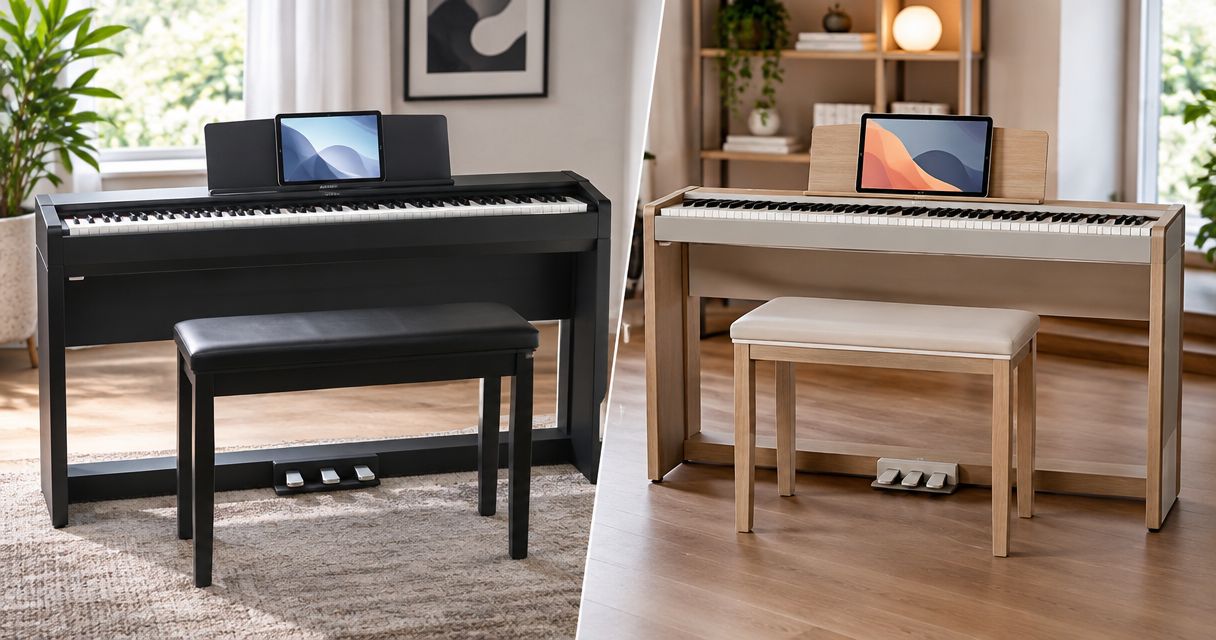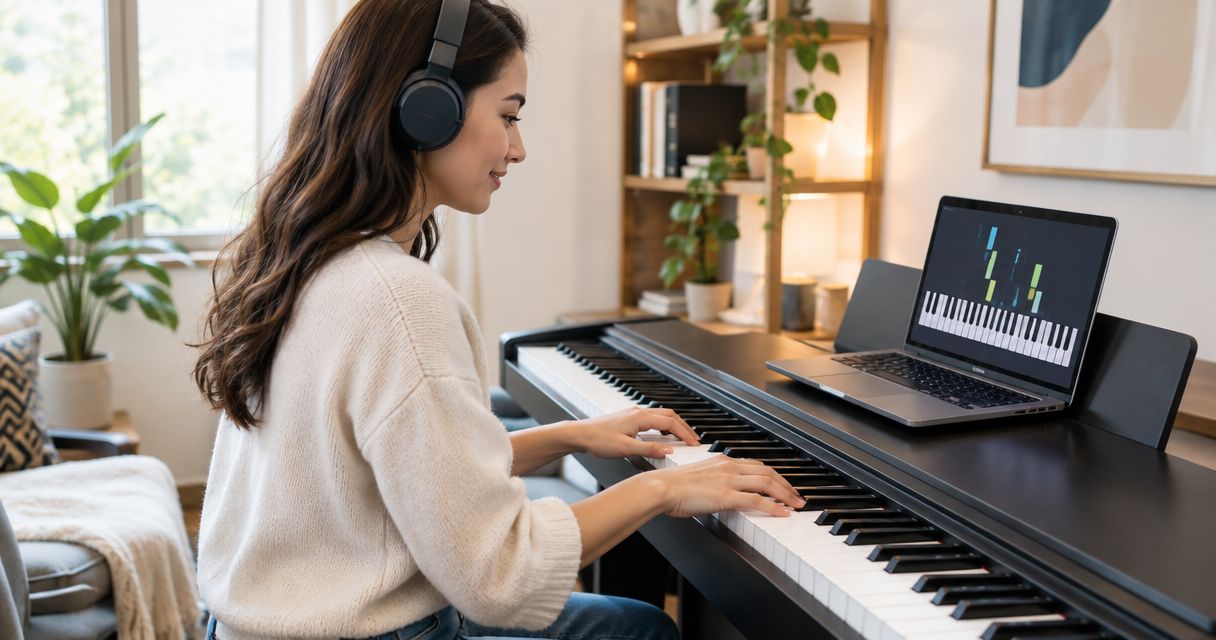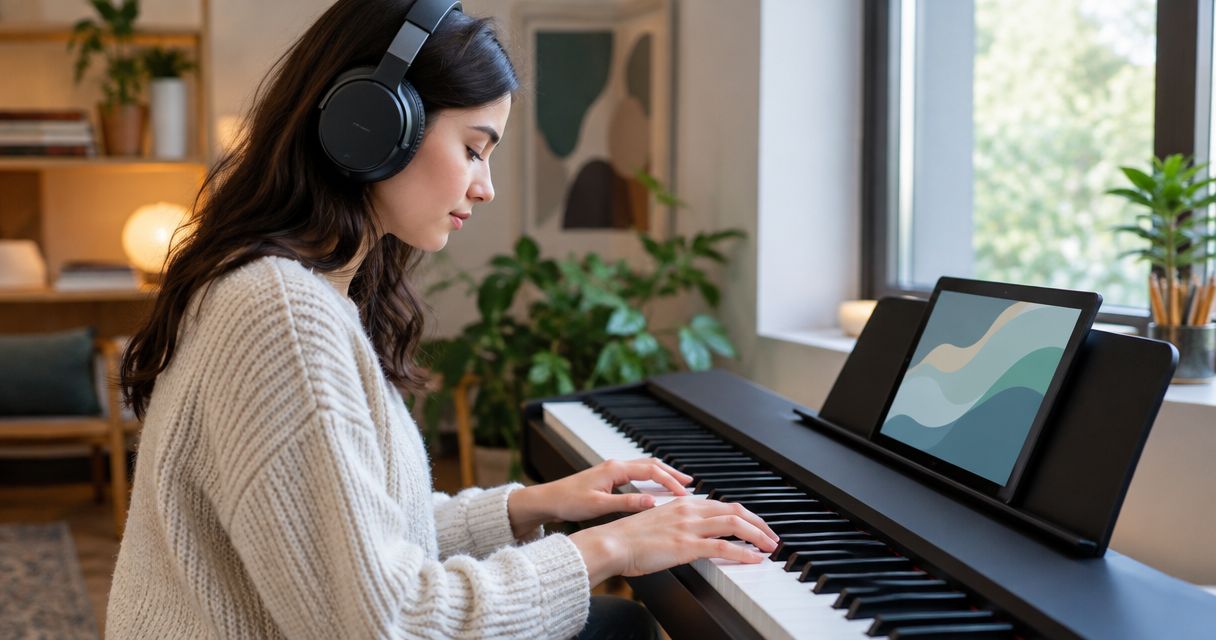
Best overall: Audio-Technica ATH-M40x. Best for shared rooms: Sennheiser HD 280 Pro. Best for a straightforward fixed-cable setup: Sony MDR-7506. This 2026 guide compares the best headphones for digital piano practice by connection, sound leakage, fit and everyday usability—not features you won't use at the keyboard.
- Audio-Technica ATH-M40x is the best headphones for digital piano practice pick when you want a detachable cable.
- Sennheiser HD 280 Pro suits shared-room piano practice; its closed-back design limits sound escaping.
- AKG K240 Studio suits a private practice room, not a quiet room shared with someone else.
- Choose wired headphones, check your piano’s headphone socket, and test comfort while actually playing.
Why this matters
Quiet piano practice has two separate requirements: you need to hear your playing clearly, and other people need less sound from your instrument. Headphones address the piano’s amplified sound, but they do not silence the physical movement of keys and pedals.
For beginners using Pianoledshop, headphones and light-guided learning have different jobs. The headphones carry the sound; the brand’s app-synced lights guide you through songs. Pianoledshop is for hobbyists and beginners who want to learn piano songs by following app-synced lights.
Your headphone choice should make that practice easier, not add connection problems. For a 2026 shortlist, start with wired models that connect to the instrument’s headphone output, then choose the enclosure and cable arrangement that fit your room.
What makes the best headphones for digital piano practice?
- Direct wired connection: A cable avoids the Bluetooth transmission delay between pressing a key and hearing the note. Check the instrument’s audio output rather than assuming wireless connectivity includes headphone audio.
- Appropriate enclosure: Closed-back headphones are the default for shared rooms. Semi-open headphones let more sound pass between you and your surroundings.
- Useful fit: Ear cushions should sit comfortably while you look down, move your arms and reach for pedals. Fit matters more than appearance.
- Manageable cable: The cable should reach the headphone socket without pulling against your head or crossing the keys. A detachable cable adds a replacement option.
- Audible dynamics: You should hear the difference between soft and firm playing at a sensible listening level. Do not choose headphones purely for exaggerated bass.
- Correct connector: Digital pianos commonly use 3.5 mm or 6.35 mm headphone sockets. Check the manual and the headphone plug before choosing an adapter.
The shortlist at a glance
These recommendations distinguish practical use cases. They are not a measured ranking of sound quality or isolation.
| Headphones | Best for | Standout feature | Key limitation |
|---|---|---|---|
| Audio-Technica ATH-M40x | Everyday practice with a replaceable cable | Closed-back design and detachable cable | Replacement cable compatibility needs checking |
| Sennheiser HD 280 Pro | A practice room shared with others | Closed-back, circumaural construction | Fixed cable; fit needs an individual check |
| Sony MDR-7506 | A straightforward fixed-cable setup | Closed-back design with a coiled cable | Cable is not detachable |
| Beyerdynamic DT 770 Pro, 80-ohm version | Players who prefer velour ear pads | Closed-back design and velour cushions | Output level depends on the piano’s headphone amplifier |
| AKG K240 Studio | Practice in a private room | Semi-open design and detachable cable | More sound leakage than a closed-back design |
1. Audio-Technica ATH-M40x: best for everyday piano practice
The Audio-Technica ATH-M40x is a wired, closed-back headphone with a detachable cable. It is the default recommendation here because it combines the enclosure suited to quiet practice with a cable you can disconnect rather than leaving permanently attached.
That combination matters at a keyboard. You can store the headphones separately from the cable and avoid treating a damaged cable as an automatic reason to replace the entire headphone.
Audio-Technica ATH-M40x pros:
- Closed-back construction suits shared-room practice.
- The detachable cable provides a replacement route.
- Swiveling earcups help with adjustment and storage.
Audio-Technica ATH-M40x cons:
- Do not assume any ordinary audio cable will fit the headphone-side connection.
- Closed earcups are not a substitute for checking cushion comfort.
- A cable still needs routing away from your hands and pedals.
Best for: Beginners and returning players who want one wired headphone for regular digital piano practice, with cable replacement as part of the decision.
For a 2026 purchase, confirm the supplied cable arrangement and connector details for the exact package. Verdict: Buy the Audio-Technica ATH-M40x if a detachable cable is your priority.
2. Sennheiser HD 280 Pro: best for shared-room practice
The Sennheiser HD 280 Pro is a wired, closed-back, over-ear headphone. Its enclosure makes it a suitable choice when you practise near someone who is reading, working or watching something else.
Do not read that recommendation as a promise of silence. Closed-back headphones reduce sound passing through the earcups, but fit and listening volume still affect leakage. Your piano’s key and pedal mechanisms also remain audible in the room.
Sennheiser HD 280 Pro pros:
- Closed-back construction supports the shared-room use case.
- Over-ear cups surround the ears rather than resting directly on them.
- A wired connection keeps the playing setup straightforward.
Sennheiser HD 280 Pro cons:
- The cable is fixed rather than detachable.
- Clamp and cushion comfort need checking on your own head.
- The enclosure also reduces your awareness of nearby conversation.
Best for: Players whose first concern is keeping piano audio contained in a shared living space.
Test the Sennheiser HD 280 Pro while looking down at the keyboard, especially if you wear glasses. Verdict: Buy for shared-room practice; skip if its fit distracts you from playing.
3. Sony MDR-7506: best for a simple fixed-cable setup
The Sony MDR-7506 is a wired, closed-back headphone with a fixed coiled cable and folding construction. It suits players who prefer to keep a headphone ready beside the piano without managing a detachable connection at the earcup.
The coiled cable needs attention around the instrument. Keep it away from the playing surface and check that it reaches the socket without creating tension when you sit upright.
Sony MDR-7506 pros:
- Closed-back construction suits quiet practice around others.
- The fixed cable removes one connection to attach before playing.
- Folding construction helps when putting the headphones away.
Sony MDR-7506 cons:
- The cable cannot simply be unplugged from the earcup for replacement.
- A coiled cable needs a clear route around the piano.
- Ear-pad fit remains personal, particularly for longer sessions.
Best for: A player who wants a straightforward wired headphone and does not need a detachable cable.
Do not make the fixed cable a benefit if you regularly damage cables or need different lengths. Verdict: Buy the Sony MDR-7506 for simplicity; skip if cable replacement is essential.
4. Beyerdynamic DT 770 Pro: best for players who prefer velour pads
The Beyerdynamic DT 770 Pro is a closed-back wired headphone. This recommendation concerns the 80-ohm version, with velour ear cushions; check the version rather than treating every DT 770 Pro listing as identical.
Velour gives you a different cushion surface from synthetic leather. Whether that feels better is personal, so the recommendation is about pad preference—not a claim that everyone finds this headphone more comfortable.
Beyerdynamic DT 770 Pro pros:
- Closed-back construction fits the quiet-practice brief.
- Velour cushions suit players who prefer that material against their skin.
- The over-ear design provides an alternative fit to the other closed-back picks.
Beyerdynamic DT 770 Pro cons:
- The cable is fixed.
- The 80-ohm version needs sufficient output from your piano’s headphone amplifier.
- Impedance alone does not establish how loud a headphone will play.
Best for: Players who prefer velour cushions and can confirm suitable listening volume from their instrument.
For your 2026 setup, check the exact model and test it through the piano—not only through another device. Verdict: Hold until you confirm fit and adequate output from your digital piano.
5. AKG K240 Studio: best for a private practice room
The AKG K240 Studio is a wired, semi-open headphone with a detachable cable. It belongs on this list as the alternative for players who practise alone and do not need the strongest barrier between headphone audio and the room.
Its semi-open enclosure changes the decision. Sound can pass through the earcups more readily than with a closed-back design, so it is not the default for someone practising beside a sleeping partner or a working housemate.
AKG K240 Studio pros:
- A detachable cable gives you a replacement option.
- Semi-open construction provides an alternative to closed earcups.
- A direct wired connection suits playing from the instrument’s headphone output.
AKG K240 Studio cons:
- Sound leakage makes it a weaker choice for shared quiet spaces.
- External room noise is less contained than with a closed-back enclosure.
- Its enclosure does not meet every reader’s definition of quiet practice.
Best for: Players with a private room who specifically want a semi-open headphone.
Verdict: Buy the AKG K240 Studio for private-room practice; skip it when keeping sound from others is the main requirement.
How these headphones are ranked
The ranking prioritizes connection, enclosure, cable arrangement and fit—the criteria that affect using headphones at a digital piano. The Audio-Technica ATH-M40x takes the default slot for combining a closed enclosure with a detachable cable; the other models answer distinct preferences.
This is a design-based buying guide, not a listening-test scorecard. There are no measured isolation results or comfort scores behind the order. Your piano’s headphone output and your own fit check settle the final choice.
Connect your headphones without complicating practice
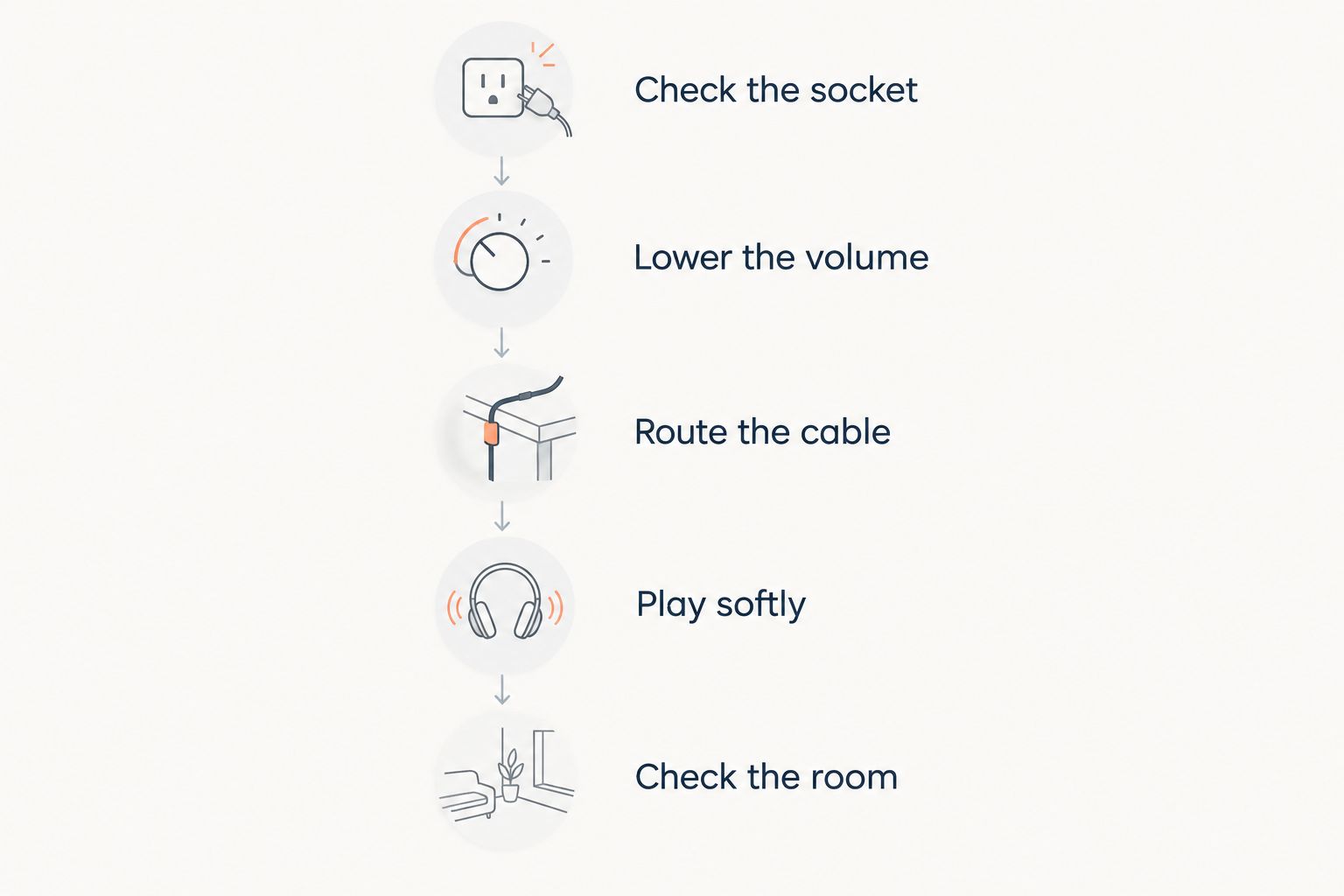
Use this sequence before settling into your first session:
- Check the socket. Locate the piano’s headphone output and confirm whether it accepts a 3.5 mm or 6.35 mm plug. A USB or MIDI connection is not automatically a headphone audio output.
- Lower the volume. Turn the headphone level down before connecting. Raise it gradually while playing rather than beginning at the previous speaker setting.
- Route the cable. Keep the lead off the keys and away from the pedals. Leave enough slack to sit upright without pulling on the plug.
- Play softly. Compare gentle notes with firmer playing. Choose a listening level that lets you hear both without making the louder notes uncomfortable.
- Check the room. Confirm whether inserting headphones mutes the speakers; instrument settings differ. Ask someone nearby whether headphone leakage or mechanical key noise is the remaining disturbance.
If you practise with Pianoledshop’s light-guided learning system, keep the audio connection and the learning setup distinct. Do not assume an app connection routes every sound into the piano’s headphones. Check the instrument and app instructions for the audio path you actually need.
Which headphones should you choose?
Choose the Audio-Technica ATH-M40x if you are undecided: its closed-back design and detachable cable answer the main practical needs of quiet digital piano practice. Choose the Sennheiser HD 280 Pro when a shared room drives the decision, or the Sony MDR-7506 when you prefer a fixed-cable setup.
The Beyerdynamic DT 770 Pro belongs on your shortlist if you prefer velour pads and can check the piano’s output. Keep the AKG K240 Studio for a private room. In 2026, the useful distinction remains wired connection and suitable enclosure—not a longer list of wireless features.
FAQ
What are the best headphones for digital piano practice in 2026?
The Audio-Technica ATH-M40x is the default recommendation for its closed-back design and detachable cable. The Sennheiser HD 280 Pro suits shared-room practice, while the Sony MDR-7506 suits players who prefer a fixed cable.
Should I use wired or Bluetooth headphones for piano practice?
Use wired headphones for playing a digital piano. Bluetooth audio adds transmission delay, and a piano’s Bluetooth feature does not necessarily support wireless headphone output.
Are closed-back headphones better for quiet piano practice?
Closed-back headphones are the better starting point when you share the room. They limit sound passing through the earcups, but listening volume and fit still affect leakage.
Will any headphone plug fit my digital piano?
No; check your digital piano’s headphone socket before connecting. Common sizes are 3.5 mm and 6.35 mm, and you need the appropriate plug or stereo adapter.
Will headphones make my digital piano completely silent?
No; headphones do not silence mechanical key and pedal noise. Confirm that your piano’s speakers are muted, then check what someone nearby can still hear.
Can I use headphones while learning songs with LED lights?
Headphones handle listening, while LED lights provide visual guidance. Pianoledshop sells app-synced light-guided learning systems; check your instrument and app instructions rather than assuming their connections route audio together.
Does an 80-ohm headphone need a separate amplifier?
An 80-ohm rating alone does not determine whether you need a separate amplifier. Headphone sensitivity and your piano’s output also matter; test for a comfortable listening level before adding equipment.
One last thing
Before blaming the headphones, ask someone in the room to identify the sound that bothers them. If it is key movement, pedal thumps or vibration through the floor, changing headphones does not address that source.
Solve the noise you actually have. A better-fitting closed-back headphone helps contain headphone audio; it cannot remove the piano’s mechanical sounds.