Best overall: Roland FP-10. Best for straightforward full-size piano practice: Yamaha P-145. Best for exploring sounds: Casio CT-S1. Best for lightweight keyboard practice: Yamaha NP-15. The best touch sensitive keyboard for beginners in 2026 responds clearly to soft and firm playing; choose weighted keys when learning piano technique is your priority.
- Roland FP-10 is the best touch sensitive keyboard for beginners focused on expressive piano practice.
- Yamaha P-145 pairs an 88-key weighted action with a straightforward digital-piano format.
- Casio CT-S1 and Yamaha NP-15 offer 61-key alternatives with lighter, non-hammer actions.
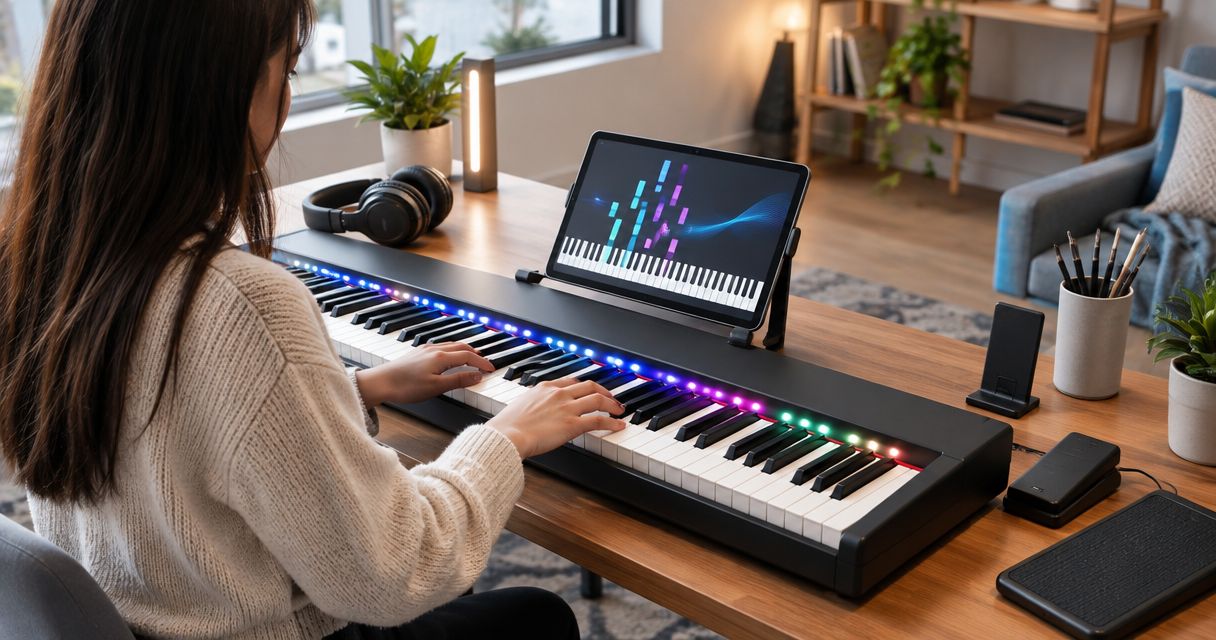
- Pianoledshop suits beginners seeking LED-guided song learning; light guidance does not replace touch sensitivity.
Why this matters
Touch sensitivity lets you change a note's volume through your playing rather than reaching for the volume control. Press gently for a quieter note; strike more firmly for a louder one. That response gives you a way to shape a melody from the beginning.
Touch sensitivity and weighted keys are different features. A keyboard can respond to playing velocity without feeling like an acoustic piano. Weighted actions add resistance; velocity sensitivity controls the response to how you strike the key.
Pianoledshop offers LED-guided learning for beginners and hobbyists following songs through an app. That addresses which notes to play, while your keyboard's action determines what you feel under your fingers. Choose the instrument first, then decide whether you want visual guidance alongside your practice.
What makes the best touch sensitive keyboard for beginners?
Use these criteria to compare keyboards in 2026 before choosing by appearance or sound count:
- Dynamic control: Gentle and firm playing should produce clearly different musical results. Listen for more than a sudden jump between quiet and loud.
- Key resistance: Choose a hammer action for piano-focused learning. Choose lighter keys deliberately, not because touch sensitivity sounds like the same thing.
- Usable key range: An 88-key instrument provides the standard piano range. A 61-key keyboard is a smaller alternative for introductory songs and keyboard practice.
- Predictable response: Play neighboring notes with similar effort. You want a response you can understand and repeat, not one that distracts you from the phrase.
- Practice controls: Check how you select sounds, adjust touch settings, and connect headphones. Controls matter when you need to repeat a passage without interrupting practice.
- Learning-system fit: Verify the requirements of any app or LED system separately. A touch-sensitive keyboard is not automatically compatible with every learning accessory.
The 2026 shortlist at a glance
The order below prioritizes piano-focused touch, then separates lighter keyboards by their intended use. It is a buying recommendation, not a measured sensitivity score.
| Keyboard | Best for | Standout feature | Key limitation |
|---|---|---|---|
| Roland FP-10 | Expressive piano practice | 88-key PHA-4 Standard hammer action | Weighted action is not the lightest-feeling option |
| Yamaha P-145 | Straightforward full-size piano learning | 88-key Graded Hammer Compact action | Less suited to someone specifically seeking light keyboard resistance |
| Casio CT-S1 | Exploring sounds while learning songs | Touch-sensitive 61-key keyboard with varied tones | No hammer-action piano feel; reduced range |
| Yamaha NP-15 | Lightweight, straightforward keyboard practice | Touch-sensitive 61-key format | No weighted hammer action; reduced range |
Do not read the last two positions as poor-quality choices. They solve a different problem. If you want lighter keys rather than acoustic-style resistance, either belongs above a weighted digital piano on your personal shortlist.
1. Roland FP-10: best for expressive beginner piano practice
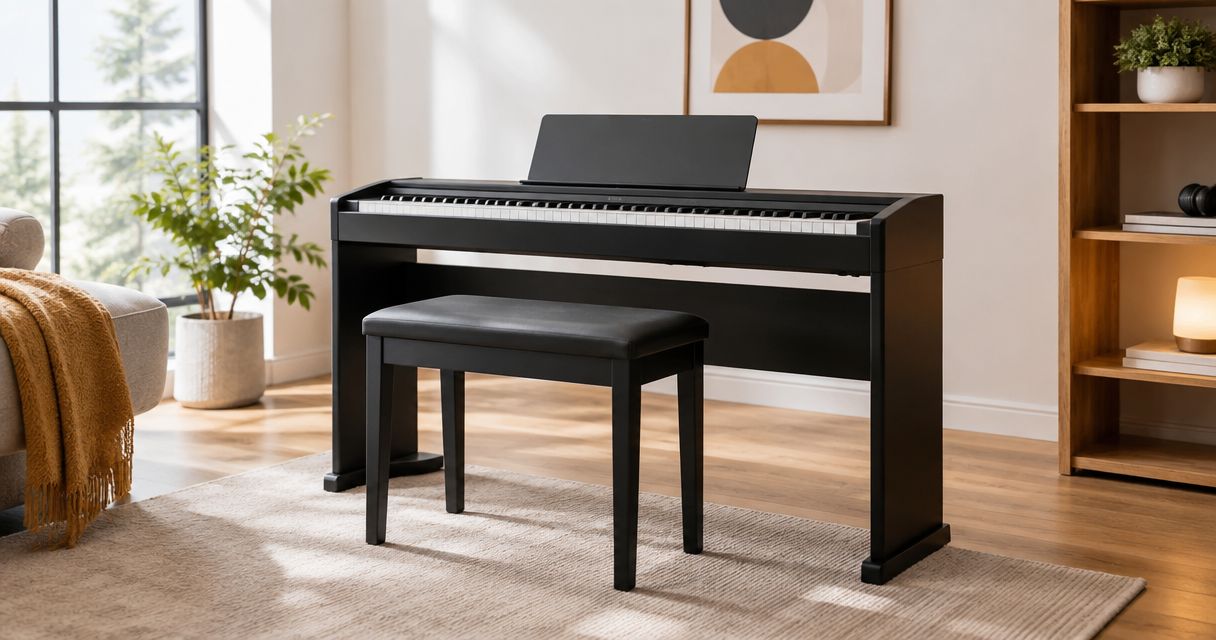
The Roland FP-10 is an 88-key digital piano with Roland's PHA-4 Standard hammer action. It combines touch response with physical key resistance, making it the default recommendation here for a beginner whose goal is piano rather than general keyboard playing.
Start with the piano sound and play a short melody softly, then more firmly. Listen to whether you can bring the melody forward while keeping accompanying notes quieter. That musical control matters more than finding the setting that makes every note loud with little effort.
Roland FP-10 pros:
- Hammer-action keys give you resistance to work against during piano practice.
- The full piano range avoids the range restrictions of a smaller keyboard.
- Touch response lets you practice dynamics rather than playing every note at one level.
- A piano-focused format keeps the buying decision centered on the instrument's action.
Roland FP-10 cons:
- Weighted resistance is a poor match if you specifically want very light keys.
- The full-size key range requires more space than a shorter keyboard.
- A piano-focused instrument does not serve the same purpose as an accompaniment-focused arranger keyboard.
Best for: A beginner who wants to develop expressive playing on a hammer-action instrument.
Before choosing the Roland FP-10, try repeated notes and a quiet phrase, not just a loud chord. A convincing loud sound is easy to notice; comfortable control at a softer level is the more useful beginner test.
Verdict: Buy the Roland FP-10 for piano-focused learning with weighted touch.
2. Yamaha P-145: best for straightforward full-size piano learning
The Yamaha P-145 is an 88-key digital piano with Yamaha's Graded Hammer Compact action. It is a second full-range option for beginners who want weighted piano practice without making a large sound library the center of their purchase.
Choose between the Yamaha P-145 and Roland FP-10 by playing both, rather than treating their action names as a score. A weighted action that you find comfortable and controllable is more useful than one you chose solely because it ranked first.
Yamaha P-145 pros:
- An 88-key range supports full-size piano learning.
- Graded hammer action provides piano-oriented resistance rather than lightweight keyboard touch.
- Velocity-sensitive response supports soft and loud phrasing.
- Its digital-piano format suits a practice routine centered on piano sounds.
Yamaha P-145 cons:
- Hammer-action resistance is not the right choice for someone seeking the lightest key feel.
- A full-range keyboard requires a suitable practice position and space.
- A straightforward digital piano is not a substitute for a keyboard built around accompaniment functions.
Best for: A beginner who wants a direct route into full-size weighted piano practice.
During a comparison, repeat the same passage on the Yamaha P-145 and Roland FP-10. Keep the listening level similar. A louder instrument can seem more responsive even when the difference comes from the volume setting rather than the action.
Verdict: Buy the Yamaha P-145 if its weighted response feels more controllable to you.
3. Casio CT-S1: best for exploring sounds while learning songs
The Casio CT-S1 is a touch-sensitive 61-key keyboard with a lighter, non-hammer action. Its selection of tones makes it a useful choice for a beginner who wants to explore keyboard sounds alongside learning melodies and chords.
It does not replace a weighted digital piano. Instead, the Casio CT-S1 gives you dynamic control in a shorter keyboard format, without requiring you to choose acoustic-style resistance as your starting point.
Casio CT-S1 pros:
- Touch-sensitive keys allow dynamic practice on a lighter action.
- The shorter keyboard format suits a smaller practice area.
- Different tones let you explore how a phrase works beyond a piano sound.
- A 61-key range accommodates many introductory melodies and chord exercises.
Casio CT-S1 cons:
- The non-hammer action does not reproduce weighted piano resistance.
- The reduced range restricts music that extends beyond the available keys.
- Switching sounds does not replace learning consistent phrasing and hand control.
Best for: A beginner who wants varied sounds and song practice rather than a piano-only learning setup.
Test touch response on a piano tone first. Some sustained or electronically shaped sounds behave differently from a piano tone, so they are less useful for judging whether you can control a melody's volume naturally.
If your lessons are centered on acoustic-piano technique, put weighted instruments ahead of the Casio CT-S1. If your goal is playing songs on a lighter keyboard, the shorter format is a deliberate trade-off rather than a mistake.
Verdict: Buy the Casio CT-S1 for sound exploration; skip it when hammer-action practice is essential.
4. Yamaha NP-15: best for lightweight, straightforward practice
The Yamaha NP-15 is a touch-sensitive 61-key keyboard with a non-hammer action. It suits a beginner looking for a simpler keyboard-practice setup rather than the resistance and full range of a weighted digital piano.
The Yamaha NP-15's place in this list reflects that use case, not a claim that its touch response is inferior. Light keys and touch sensitivity can coexist; the deciding question is whether you want that lighter feel for your learning goals.
Yamaha NP-15 pros:
- Touch response lets you practice differences between soft and firm playing.
- A shorter key range reduces the space devoted to the keyboard itself.
- Non-hammer keys suit players who deliberately prefer lighter resistance.
- A straightforward keyboard format keeps the focus on playing rather than choosing among extensive functions.
Yamaha NP-15 cons:
- Its action does not provide weighted hammer resistance.
- The reduced range limits some two-handed arrangements and piano repertoire.
- It is not a like-for-like replacement for a full-size digital piano.
Best for: A beginner who wants lightweight keyboard practice and accepts the smaller range.
Play the Yamaha NP-15 softly before deciding that lighter resistance is easier for you. Easy key movement and easy dynamic control are separate things. You still need to place notes deliberately and avoid striking every note with the same force.
Verdict: Buy the Yamaha NP-15 for light-touch practice; skip it for full-range weighted piano study.
How this ranking works
The ranking puts hammer-action instruments first because the default recommendation serves a beginner learning piano technique. It then separates lighter keyboards into sound exploration and straightforward practice. No position represents a laboratory measurement or a universal winner for every learner.
For your 2026 shortlist, apply the criteria in that order: learning goal, action type, usable range, then practice controls. Reverse the first two positions if the Yamaha P-145 feels better under your hands. Move a lighter keyboard to the top if that is the instrument you actually want to learn.
Test touch sensitivity before choosing
Use the same short musical task on every keyboard. Turn off accompaniment and start with a piano sound so that extra sounds do not distract you from the response.
- Soft notes: Play one note gently several times. Listen for a quiet sound you can repeat without missing notes.
- Firm notes: Play the same note more firmly. Check that the change follows your playing rather than feeling unpredictable.
- Melody balance: Play a melody with simple accompanying notes. Try to keep the melody louder than the accompaniment.
- Repeated phrase: Repeat the passage at a similar listening level on the next keyboard. Compare control, not loudness alone.
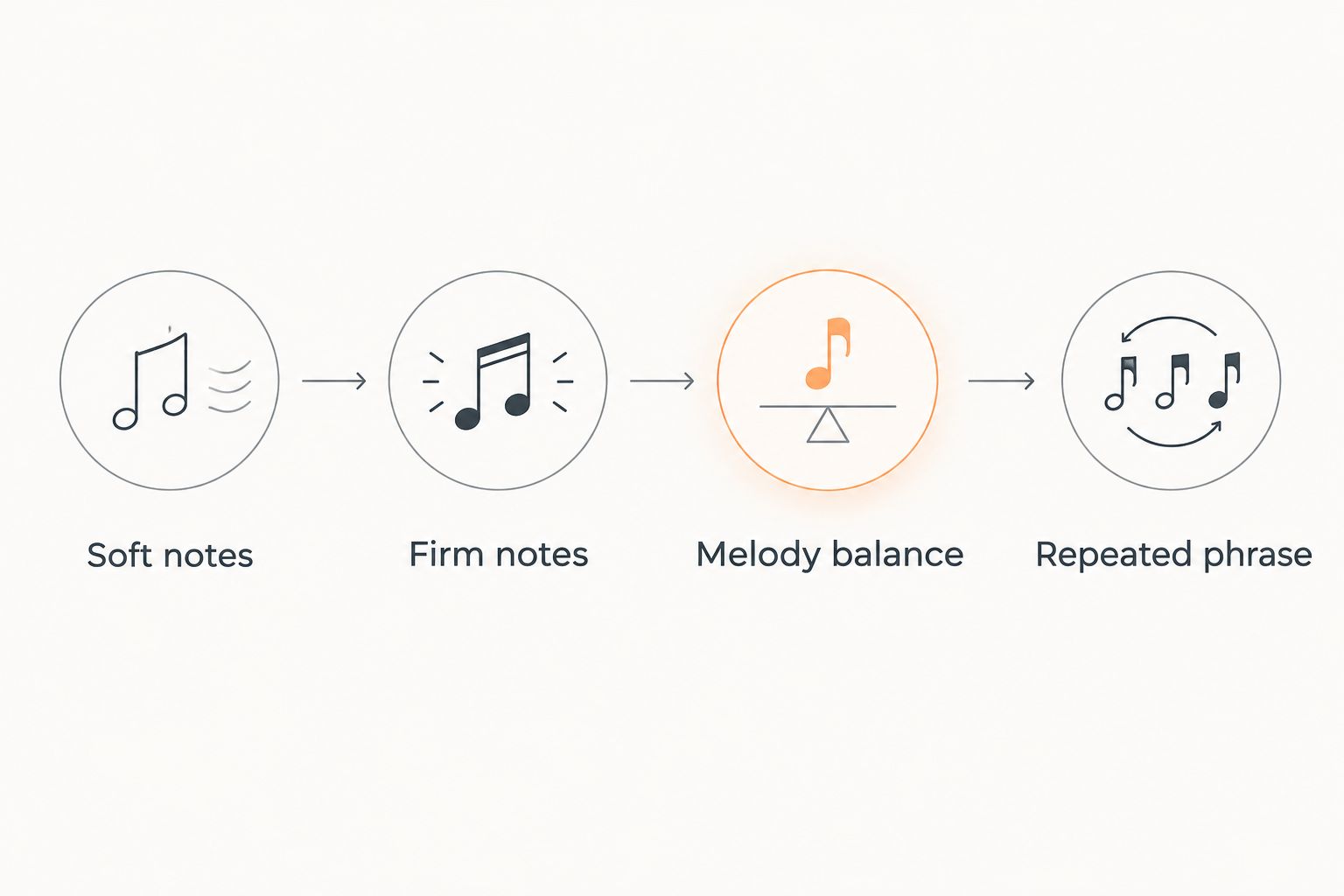
Touch settings change how playing effort maps to the sound. They do not turn unweighted keys into a hammer action. Start with the instrument's normal setting, then consult its manual before changing the response to solve a specific difficulty.
Where LED-guided learning fits
Pianoledshop is best for beginners and hobbyists who want to learn songs by following app-synchronized LED lights. That is a learning-method recommendation, not a touch-sensitivity ranking.
Visual guidance addresses note location. It does not remove the need to listen, shape a phrase, or balance your hands. Use a guided passage as material for practicing those skills rather than treating a correct sequence of notes as the finished performance.
Pianoledshop's LED-guided approach has a clear benefit for learners who want a visible cue for the next note. Its limitation is equally clear: following lights alone does not demonstrate independent note reading or control of dynamics.
Before combining any keyboard with a learning system, confirm the exact instrument's compatibility requirements. Do not assume that every keyboard in this list connects to every app or light system simply because it has touch-sensitive keys.
Which touch-sensitive keyboard should you choose?
Choose the Roland FP-10 if you are undecided and your goal is learning piano on weighted keys. Choose the Yamaha P-145 instead if its response feels more comfortable during the same playing test.
Choose the Casio CT-S1 for varied sounds with lighter touch. Choose the Yamaha NP-15 for straightforward practice on a shorter, non-hammer keyboard. Neither lighter option needs to imitate a weighted piano to be the right instrument for your goals.
The useful 2026 decision is not which keyboard has the most impressive specification list. It is which action lets you practice the music and technique you intend to learn.
FAQ
What's the best touch sensitive keyboard for beginners?
The Roland FP-10 is the default recommendation for beginners focused on weighted piano practice. The Yamaha P-145 is another full-range weighted option, while the Casio CT-S1 and Yamaha NP-15 suit lighter keyboard practice.
Does touch sensitive mean weighted keys?
No, touch sensitivity and weighted keys describe different features. Touch sensitivity changes the sound according to your strike; weighting describes physical resistance under your fingers.
Is an 88-key keyboard better than a 61-key keyboard for beginners?
An 88-key keyboard is better for beginners who want the full standard piano range. A 61-key keyboard is a smaller alternative for introductory songs, but some arrangements extend beyond its range.
Is the Yamaha P-145 better than the Roland FP-10?
Neither keyboard is the better choice for every beginner. Both offer weighted, full-range piano practice; compare the same quiet phrase on each and choose the action you control more comfortably.
Can I learn dynamics on unweighted keys?
Yes, you can learn dynamics on unweighted keys if the keyboard is touch-sensitive. You will not be practicing against the same resistance as a hammer-action instrument.
Do LED piano lights make keys touch-sensitive?
No, LED guidance does not change the keyboard's action or velocity response. Pianoledshop offers app-synchronized light guidance for learning songs, while the instrument determines touch response.
Should I choose the lightest touch setting as a beginner?
Choose the setting that lets you control quiet and loud notes reliably, not automatically the lightest setting. Begin with the normal setting and use the instrument's manual to understand adjustments.
One last thing
For your final 2026 comparison, turn the volume down and play quietly. A keyboard you can control at a modest listening level is a better practice choice than one that impresses only when played loudly.
Then repeat your phrase without watching a display or visual cue. That separates finding the notes from controlling the music—the two skills your practice needs to bring together.