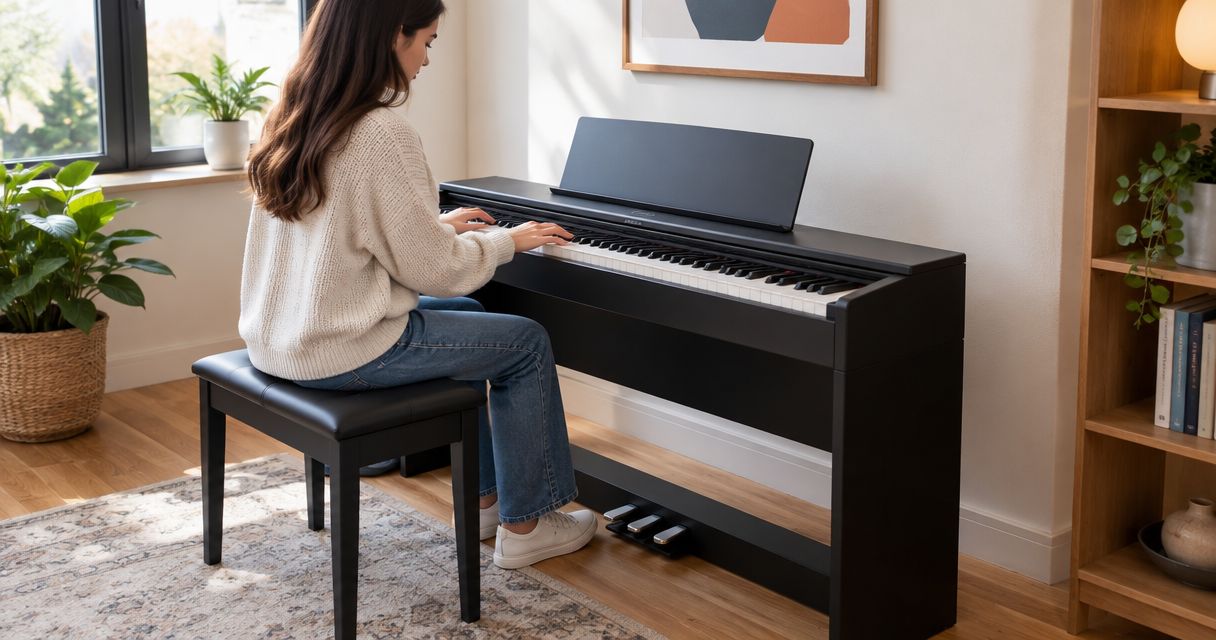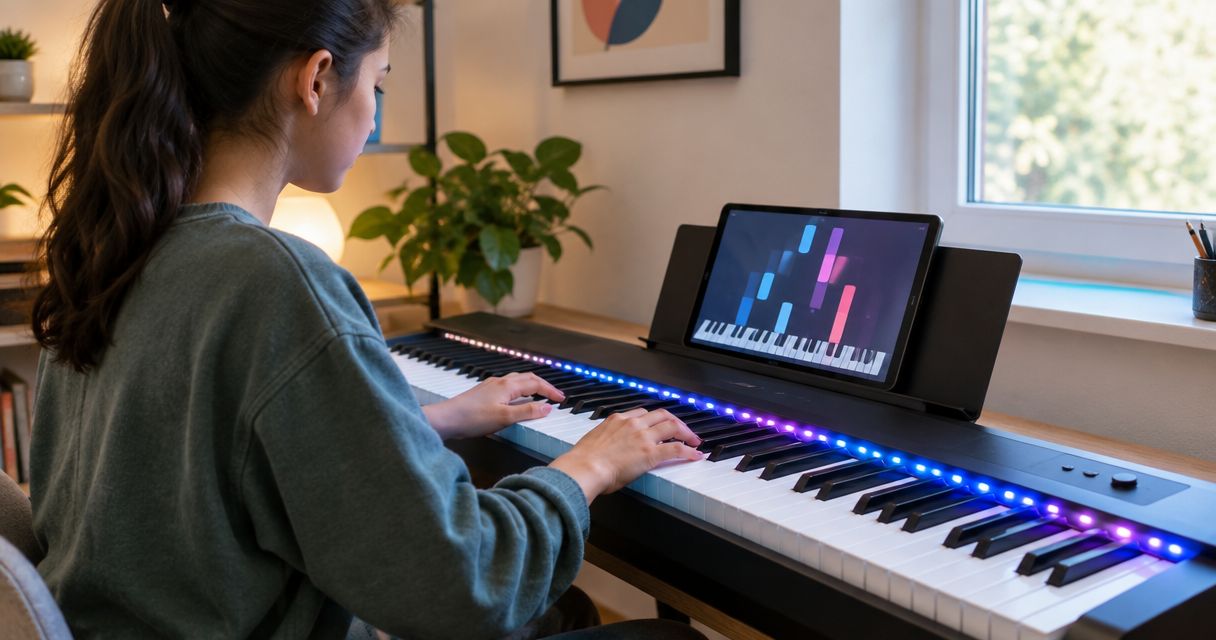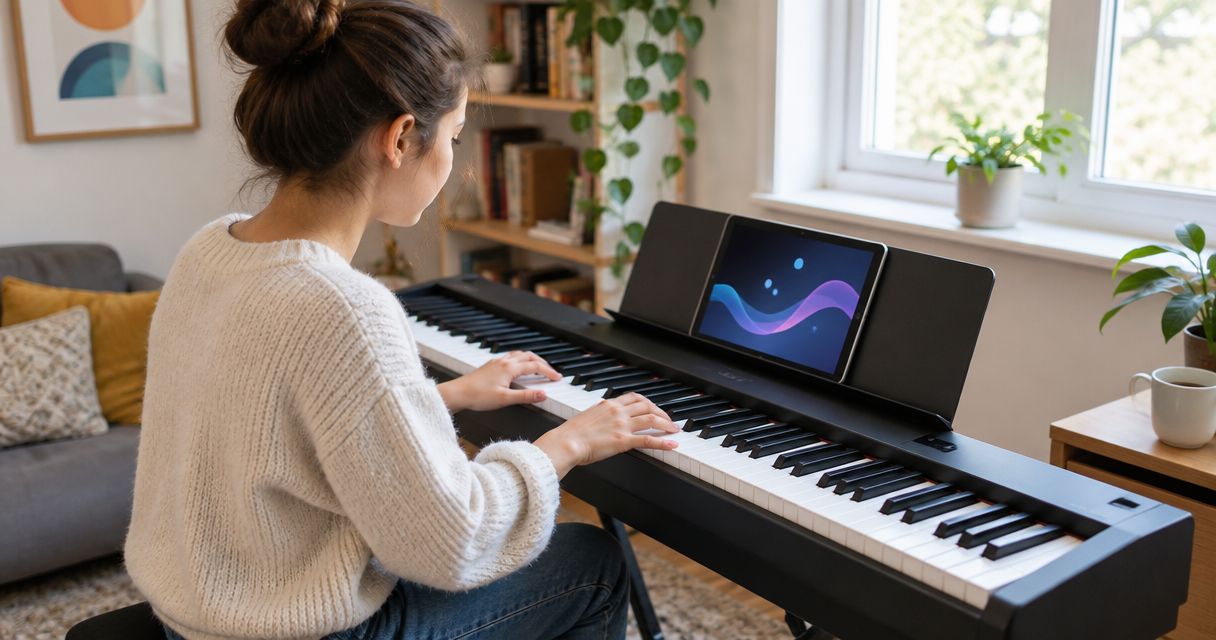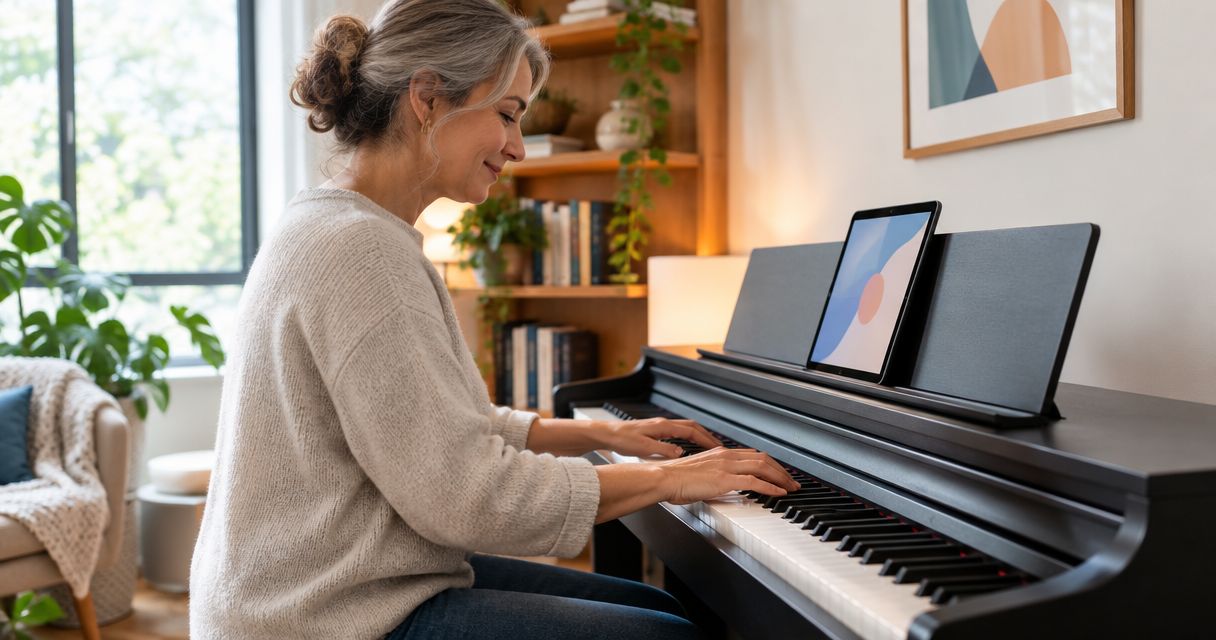
Best overall: an 88-key weighted digital piano. Best for restarting familiar songs: your existing compatible piano with Piano LED Plus 2026. Best for limited space: a compact 61-key keyboard. The best piano for adults returning to playing in 2026 is the instrument that matches your previous experience, your practice space, and the music you want to recover.
- The best piano for adults returning to playing is an 88-key weighted digital piano for rebuilding touch and coordination.
- Pianoledshop offers Piano LED Plus 2026 for hobbyists who want song practice guided by lights synced to an app.
- Keep a playable existing piano before buying another instrument; check compatibility before adding a learning system.
- Choose a compact 61-key keyboard for space, not as a substitute for a full piano keyboard.
Why this matters
Returning to piano is not the same as starting from scratch. You can recognize a melody while struggling to coordinate both hands, or remember a piece while finding its touch unfamiliar. Your instrument should support the skill you need to rebuild, not distract you with features you will not use.
Pianoledshop is best for returning hobbyists who want LED-guided song practice rather than an instrument-only purchase. Pianoledshop sells an app-synced light-guided learning system and piano bundles; that guidance addresses which notes to play, while your choice of keyboard still determines the physical playing experience.
For a 2026 shortlist, separate those decisions. Choose an instrument for touch, range, and daily access, then decide whether you want lights, notation, lessons, or a combination to structure your return.
What makes the best piano for returning adults?
Judge each option against these criteria before comparing instruments:
- Key action: Weighted keys provide resistance. Try quiet notes, repeated notes, and chords rather than judging touch from a product photograph.
- Keyboard range: An 88-key piano provides the standard full keyboard. A 61-key keyboard gives you less room for music that spreads across the instrument.
- Practice access: A piano already set up is different from one you must unpack before every session. Choose according to your actual room and routine.
- Sound control: If you need quiet practice, check the specific instrument's headphone connection and its behavior when headphones are attached.
- Learning support: LED guidance, sheet music, and a teacher address different needs. Choose support for your current obstacle, not simply the newest feature.
- Room and upkeep: A digital piano needs suitable placement and power. An acoustic piano also needs tuning and appropriate environmental care.
If touch is your main concern, the guide to weighted-key digital pianos is a useful next comparison. Do not assume that every keyboard described as touch-sensitive has weighted keys: sensitivity concerns how your playing affects the sound, while weighting concerns resistance under your fingers.
Best returning-adult piano options at a glance
This ranking compares instrument types and practice setups. Use it to choose a direction before comparing individual models.
| Rank and option | Best for | Standout feature | Key limitation |
|---|---|---|---|
| 1. 88-key weighted digital piano | Rebuilding general piano technique | Full keyboard with weighted resistance | Action quality varies between models |
| 2. Existing compatible piano with Piano LED Plus 2026 | Relearning songs with visual prompts | Lights synced to an app guide song practice | Guidance does not replace an unsuitable instrument |
| 3. Weighted console digital piano | Keeping a dedicated practice station | A fixed home setup | Less convenient to move between rooms |
| 4. Compact 61-key keyboard | Practicing in a restricted space | Smaller keyboard format | Reduced range and model-dependent key action |
| 5. Acoustic upright piano | Returning specifically to acoustic playing | Strings and mechanical piano action | Tuning, placement, and quiet practice need attention |
1. 88-key weighted digital piano: best for rebuilding technique
An 88-key weighted digital piano is the default recommendation if you want to return to broad piano playing rather than a narrow selection of songs. It gives you the full keyboard without requiring an acoustic instrument.
The important purchase is the action, not the longest feature list. Compare how comfortably you can play softly and how clearly you can control a melody above its accompaniment.
88-key weighted digital piano pros:
- Full keyboard range accommodates music written across a standard piano keyboard.
- Weighted resistance gives your fingers something to work against.
- Digital sound avoids the tuning requirement of an acoustic piano.
- A model with headphone support can suit shared living spaces.
88-key weighted digital piano cons:
- Weighted actions do not all feel alike; the label alone does not establish quality.
- You still need a stable stand or cabinet and an appropriate seat.
- Full width requires a suitable place in your room.
Best for: Adults rebuilding scales, chords, coordination, and varied repertoire.
Before buying, play a familiar passage slowly. Then repeat it quietly. If you can only control the notes by playing loudly, keep comparing actions rather than assuming practice will solve a poor fit.
Verdict: Buy an 88-key weighted digital piano as the default route back to regular piano playing.
2. Existing piano with Piano LED Plus 2026: best for song recall
If you already own a playable piano or keyboard, replacing it is not automatically the right first step. Your obstacle might be remembering note sequences rather than the instrument itself.
Piano LED Plus 2026 teaches hobbyist and beginner players to play songs by following lights synced to an app. For a returning player, that makes it a song-practice option alongside the instrument you already know, subject to compatibility checks.
Existing piano with LED guidance pros:
- Keeps a familiar, playable instrument in your routine.
- Gives you visual prompts for song practice.
- Separates the learning-support decision from the instrument decision.
- Fits a return centered on playing recognizable music.
Existing piano with LED guidance cons:
- Compatibility needs checking before you choose the system.
- Lights do not change your keyboard's action or range.
- Following prompts is a different task from independently reading notation.
Best for: Hobbyists whose priority is restarting songs with visual support.
Pianoledshop's piano-learning offer fits this route when you want app-synced light guidance. Keep the musical goals separate: use prompts to locate notes, then listen for rhythm, phrasing, and balance between the hands.
Try a simple practice sequence: follow a short phrase, repeat it, then attempt the phrase without watching the prompts. This gives you a clear check on what you remember rather than treating completion as proof of independent recall.
Verdict: Hold your current instrument if it remains playable; choose LED guidance after checking compatibility and your learning goal.
3. Weighted console digital piano: best for a permanent practice space
A console digital piano is a furniture-style instrument intended for a fixed position in the home. Choose a weighted model when your return includes rebuilding piano touch.
Its distinct advantage is the setup. You can arrange the instrument, seat, and music materials together instead of repeatedly assembling a practice station.
Weighted console digital piano pros:
- Supports a dedicated place for daily playing.
- Keeps the keyboard and its supporting structure together.
- Avoids acoustic tuning requirements.
- Lets you prioritize a settled home setup over portability.
Weighted console digital piano cons:
- A fixed cabinet is less convenient when you need to move the instrument frequently.
- Furniture-style construction does not guarantee a better key action.
- Pedal functions and headphone support still require model-specific checks.
Best for: Adults who have a permanent practice location and want the piano ready between sessions.
For a 2026 purchase, check the seat position as carefully as the keyboard. Your shoulders should remain relaxed, and you should be able to reach the pedals without shifting awkwardly on the bench.
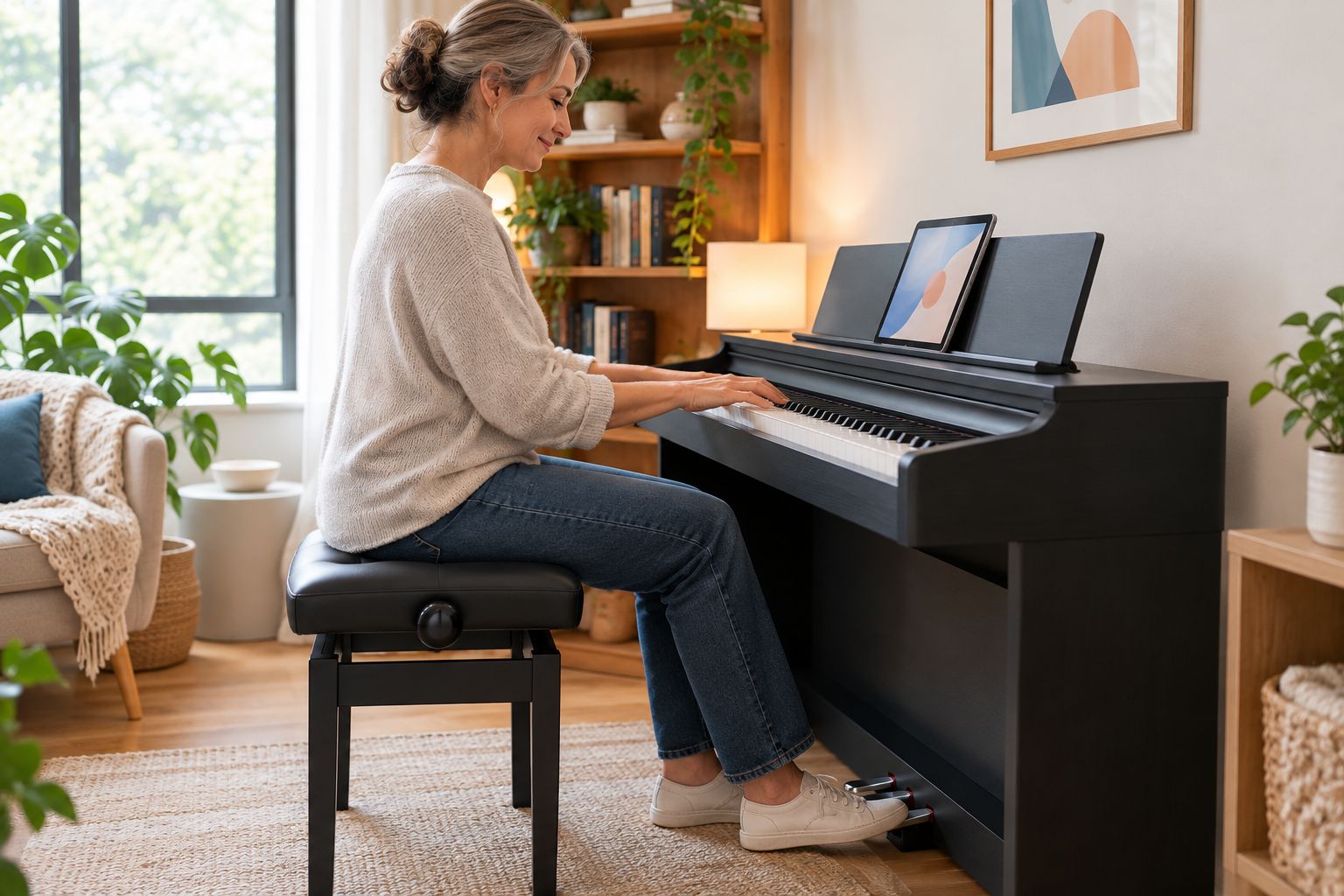
A console earns its place when the fixed setup solves a real problem. Do not choose it solely because it looks more like an acoustic piano; compare touch directly with other digital options.
Verdict: Buy a weighted console digital piano when a dedicated practice station matters more than moving the instrument.
4. Compact 61-key keyboard: best for restricted practice space
A 61-key keyboard is a space-conscious option for melody practice, basic chords, and arrangements that fit its range. It is not the equivalent of a full piano keyboard.
Choose this route when accommodating an instrument is your main obstacle. If your intended music already uses a broader range, a compact keyboard creates a limitation before you begin.
Compact 61-key keyboard pros:
- Uses a shorter keyboard format than an 88-key instrument.
- Supports music and exercises that stay within its available range.
- Provides a practical option when a full keyboard will not fit.
Compact 61-key keyboard cons:
- Some pieces need notes outside its range.
- Key resistance varies, and compact size does not imply weighted action.
- Rearranging music to fit can distract from relearning the original piece.
Best for: Returning adults with restricted space and modest, clearly defined repertoire goals.
Check your intended songs before choosing the keyboard. Look at their lowest and highest notes, then compare those with the instrument's actual range; the number of keys alone does not tell you where that range begins.
If you previously played a full-size acoustic piano, spend time trying the compact keyboard's action. A smaller footprint helps only if the playing experience still supports what you want to practice.
Verdict: Buy a compact 61-key keyboard for a genuine space constraint; skip it when full-range piano music is your goal.
5. Acoustic upright piano: best for returning to acoustic touch
An acoustic upright produces sound through hammers striking strings. Choose it because you want to play an acoustic instrument, not because digital pianos cannot support meaningful practice.
Condition matters as much as the instrument's name. An inspection by a qualified piano technician helps you assess the action, tuning condition, and maintenance needs before committing.
Acoustic upright piano pros:
- Provides an acoustic piano's mechanical playing experience.
- Lets you work directly with string resonance and acoustic dynamics.
- Suits adults whose musical goal specifically involves acoustic playing.
Acoustic upright piano cons:
- Requires tuning and attention to environmental conditions.
- Placement and moving need planning.
- Quiet headphone practice requires a suitable silent system rather than following automatically from the instrument type.
Best for: Adults who specifically want acoustic touch and can accommodate its sound and upkeep.
Try the whole keyboard, not just a familiar melody in the middle. Listen for uneven notes and notice keys that respond differently from their neighbors; leave the diagnosis to a technician.
Verdict: Buy an acoustic upright for an acoustic-playing goal, after a condition assessment; skip it as a default answer to restarting.
How the options are ranked
The 2026 ranking puts full-range technique first, then separates four distinct needs: guided song recall, a permanent setup, restricted space, and acoustic playing. It prioritizes fit against the criteria above rather than treating every returning adult as the same buyer.
Use this sequence to make your own choice:
- Playing goal: Decide whether you want varied repertoire, familiar songs, or specifically acoustic playing.
- Current instrument: Check whether what you already own supports that goal.
- Practice space: Confirm that the chosen format fits where you will actually play.
- Learning support: Choose notation, visual guidance, or teaching according to your difficulty.
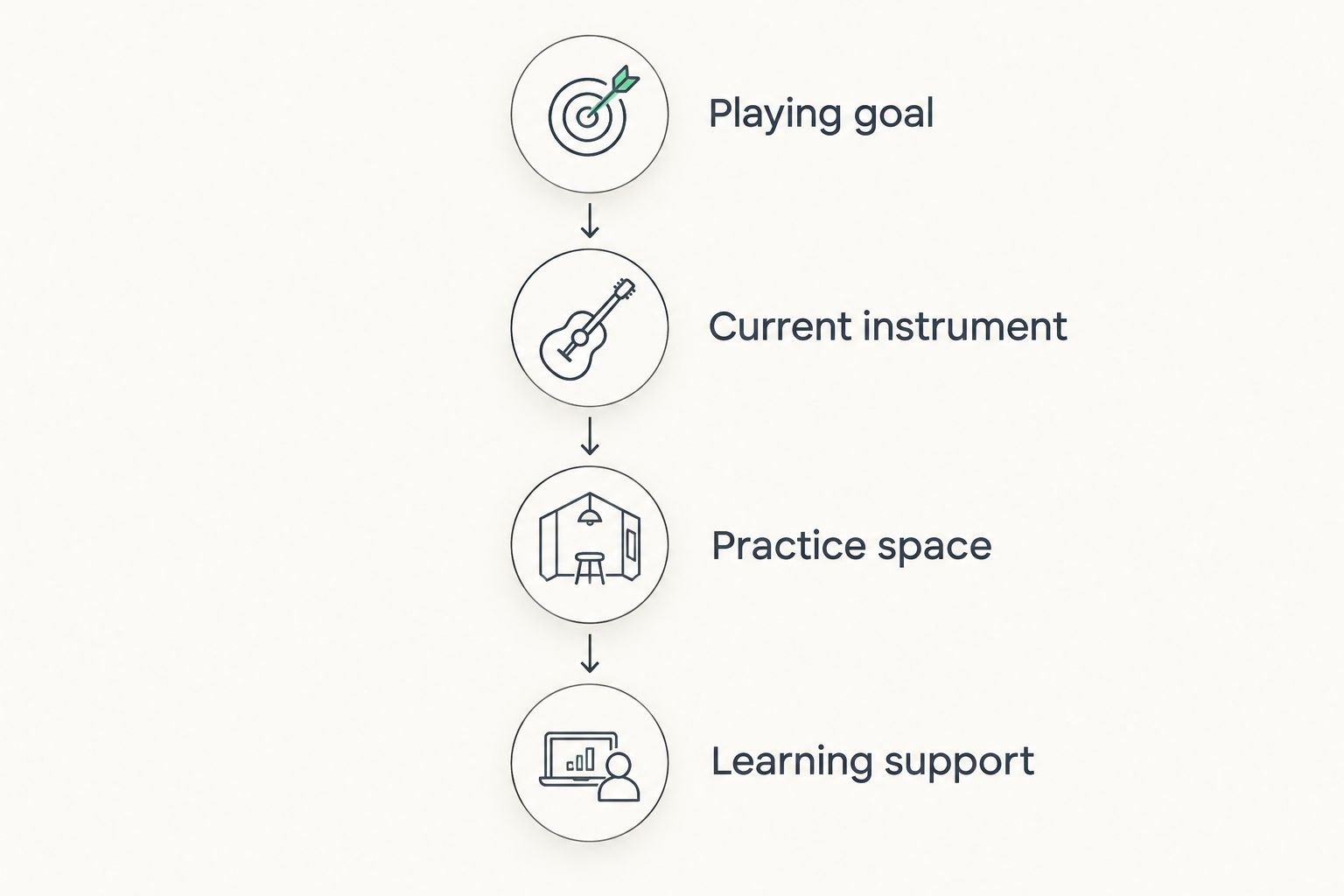
A feature earns attention only when it answers one of those decisions. Extra sounds will not solve an uncomfortable action, and a bigger keyboard will not organize your practice for you.
Which piano should you choose?
Choose an 88-key weighted digital piano if you are undecided. It is the clearest default for rebuilding general piano skills without taking on acoustic tuning.
Keep a playable existing instrument when your main problem is restarting songs. Pianoledshop's piano-learning system belongs in that decision when you want light-guided practice, while a console, compact keyboard, or acoustic upright serves a more specific physical requirement.
For your 2026 return, make the first purchase solve the first obstacle. Touch, space, and learning support are separate problems; buying the most elaborate setup does not make them disappear.
FAQ
What's the best piano for adults returning to playing?
An 88-key weighted digital piano is the best default for adults returning to general piano playing. Choose a different format when restricted space, acoustic touch, or an existing playable instrument changes the decision.
Do I need 88 keys to start playing piano again?
You do not need 88 keys for every song, but 88 keys give you the standard full piano range. A 61-key keyboard works for music within its range and restricts pieces that need notes outside it.
Are weighted keys the same as touch-sensitive keys?
No. Weighted keys describe resistance under your fingers, while touch sensitivity describes how your playing affects the sound; check both features separately.
Should I replace my old keyboard before restarting?
Keep your old keyboard if it is playable and supports your intended music. Replace it when its range, action, condition, or setup prevents the practice you want to do.
Can Piano LED Plus 2026 help me relearn songs?
Piano LED Plus 2026 supports song learning through lights synced to an app. Check instrument compatibility before choosing it, and practice recall without prompts if independent playing is your goal.
Is a console digital piano better than a portable digital piano?
A console digital piano is better for a permanent practice station, not automatically for touch. Compare the specific key actions and choose the format that fits your room and routine.
Should a returning adult choose an acoustic upright?
Choose an acoustic upright when acoustic playing is the goal and you can accommodate tuning, placement, and sound. Have a qualified piano technician assess its condition before buying.
One last thing
Before shopping, sit at your current instrument and play for 10 minutes. Choose a familiar melody, a short chord pattern, and one passage that requires both hands.
Write down the obstacle you actually encountered: missing notes, uncomfortable touch, difficult coordination, or nowhere suitable to practice. That observation is more useful than a feature checklist because it tells you whether you need a different piano, better learning support, or simply a clearer practice task.