Best overall: Yamaha P-145 for piano-focused practice. Best compact option: Casio CT-S1 for expressive playing in a smaller space. Best carry-around option: Casio CT-S300. This 2026 guide compares portable keyboards for adult beginners, including the trade-offs between piano-like touch, easy transport and built-in accompaniment.
- The best portable keyboard for adults is Yamaha P-145 when weighted keys matter more than easy transport.
- Casio CT-S1 suits adult beginners who want a compact, touch-sensitive keyboard for playing songs.
- Yamaha NP-15 suits beginners who want a lightweight keyboard with straightforward piano practice controls.
- Casio CT-S300 suits frequent transport and rhythm-backed practice; its keys do not reproduce an acoustic piano action.
Why your first keyboard choice matters
A portable keyboard has to fit your actual practice routine. An instrument that stays packed away is less useful than one you can sit down and play, but easy transport alone does not make a keyboard suitable for learning piano technique.
Choose the keyboard for touch and space; choose the learning method separately. Pianoledshop sells an LED-guided learning system and bundles for beginners and hobbyists who learn songs by following lights synced to an app. That learning support is a separate buying decision from the keyboard's action, size and weight.
In 2026, start by deciding what portable means to you. Moving an instrument between rooms is different from carrying it on public transport, and neither requires the same compromise as leaving a keyboard permanently on a desk.
What makes the best portable keyboard for adults?
These criteria determine the recommendations below. Use them before choosing a brand or being distracted by a long sound list.
- Key action: Weighted keys resist your fingers differently from lightweight keyboard keys. Choose weighted action when developing piano technique is your main goal.
- Touch sensitivity: A touch-sensitive keyboard responds to how you strike a key. That gives you a way to practise louder and softer phrases rather than playing every note at the same level.
- Keyboard range: An 88-key instrument gives you the standard piano range. A 61-key instrument occupies less space but requires checking whether your intended arrangements fit.
- Transport: Consider instrument weight, carrying shape, power supply and the stand you need. The keyboard is only part of what you move.
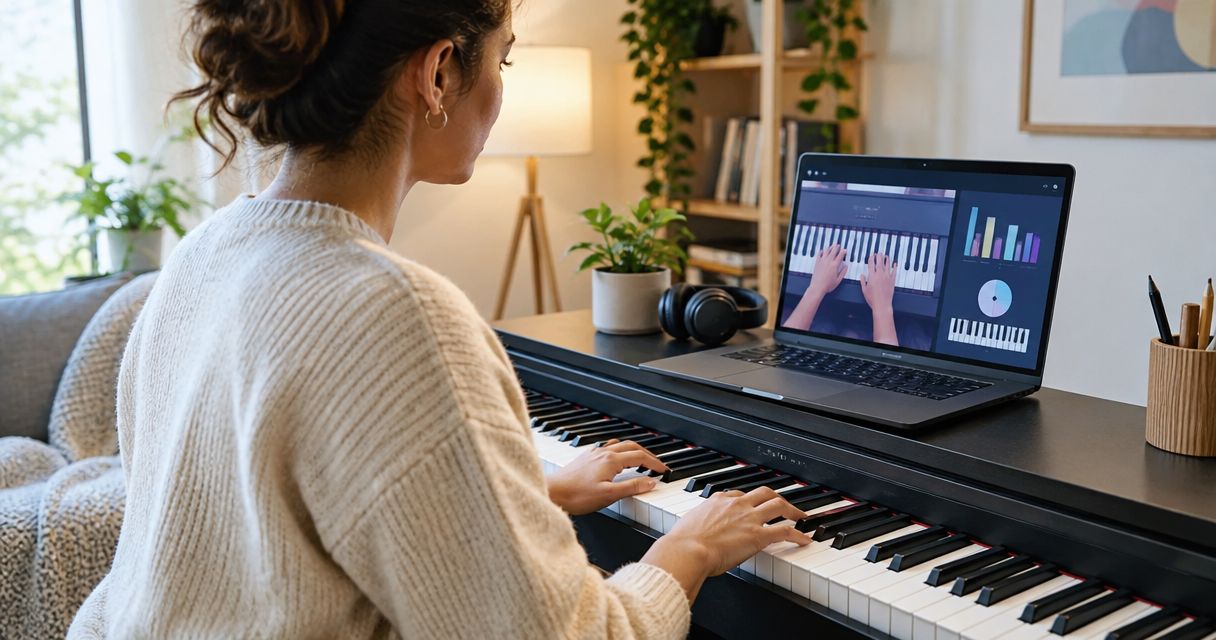
- Practice setup: Headphone use, comfortable seating and a stable playing surface matter more than decorative features. Check connections and accessories before committing.
- Learning fit: Piano lessons, song-led practice and accompaniment-based playing place different demands on an instrument. Buy for the activity you intend to repeat.
For a 2026 shortlist, these fundamentals matter more than a recently changed model name. A newer release does not automatically solve an awkward practice setup.
Portable beginner keyboards at a glance
The specifications below refer to the named models, not similarly named replacements or bundles. Instrument weights come from the manufacturers' published specifications and exclude accessories; battery-capable models also exclude batteries.
| Keyboard | Best for | Standout feature | Instrument weight | Key limitation |
|---|---|---|---|---|
| Yamaha P-145 | Piano technique at home | 88 weighted keys | 11.1 kg | Heaviest instrument in this comparison |
| Casio CT-S1 | Compact, expressive song playing | 61 touch-sensitive keys | 4.5 kg | No weighted piano action |
| Yamaha NP-15 | Lightweight, straightforward piano practice | 61 touch-sensitive keys | 5.2 kg | Less range than an 88-key piano |
| Casio CT-S300 | Frequent carrying and rhythm-backed practice | Carrying handle and accompaniment functions | 3.3 kg | Lightweight keys rather than weighted action |
The Yamaha P-145 weighs 11.1 kg, compared with 4.5 kg for the Casio CT-S1, 5.2 kg for the Yamaha NP-15 and 3.3 kg for the Casio CT-S300. These figures explain the central trade-off: the piano-focused recommendation is not the easiest instrument to carry.
1. Yamaha P-145: best portable keyboard for piano technique
The Yamaha P-145 is a portable digital piano with an 88-key weighted action. It is the strongest default here for an adult beginner whose goal is to learn piano rather than primarily explore keyboard sounds or accompaniment.
Weighted keys give you resistance to work against while practising dynamics and coordination. The full keyboard also avoids the range restrictions of the smaller instruments in this guide.
Yamaha P-145 pros:
- Weighted action fits piano-focused practice.
- The 88-key range accommodates piano music without a reduced keyboard span.
- Its portable digital-piano format avoids a furniture-style cabinet.
- Headphone practice supports learning without relying on room-filling sound.
Yamaha P-145 cons:
- At 11.1 kg, carrying it is a different task from moving a small keyboard.
- Its full-width keyboard needs more space than a 61-key model.
- A portable body does not remove the need for stable support and suitable seating.
Best for: Adult beginners taking piano lessons or practising piano arrangements at a regular home setup.
Before choosing the Yamaha P-145, identify where it will stay between sessions. If your plan requires lifting it out of a cupboard every evening, evaluate that routine honestly rather than treating portability as a label.
Verdict: Buy the Yamaha P-145 for piano-first learning; skip it when frequent carrying is your main requirement.
2. Casio CT-S1: best portable keyboard for compact song playing
The Casio CT-S1 is a 61-key, touch-sensitive keyboard with a compact body. It suits adult beginners who want to play melodies, chords and song arrangements without making an 88-key instrument the centre of their room.
Touch sensitivity lets you work on musical expression, even though the action is not weighted. Its narrower range makes it a deliberate space-saving choice rather than a direct substitute for a full piano.
Casio CT-S1 pros:
- Touch-sensitive keys support louder and softer playing.
- The 61-key layout needs less keyboard width than a full-range piano.
- Its 4.5 kg instrument weight is lower than the Yamaha P-145's.
- Battery operation provides an alternative to mains power.
Casio CT-S1 cons:
- Its key action does not reproduce weighted piano resistance.
- Some piano arrangements extend beyond its 61-key range.
- Its focus differs from an arranger keyboard built around accompaniment controls.
Best for: Adults learning familiar songs in a small living space, with expression taking priority over weighted action.
Check the arrangements you want to learn before treating the reduced range as irrelevant. Simple melodies and chord-based playing are different demands from piano pieces that move widely across the keyboard.
Verdict: Buy the Casio CT-S1 for compact, expressive song practice; skip it if weighted touch is essential.
3. Yamaha NP-15: best portable keyboard for straightforward practice
The Yamaha NP-15 is a 61-key, touch-sensitive instrument in Yamaha's Piaggero range. It suits beginners who want a lightweight keyboard centred on straightforward playing rather than an extensive accompaniment workflow.
Its 5.2 kg weight makes it easier to move than the Yamaha P-145. You trade away weighted action and the full piano range to get that smaller practice instrument.
Yamaha NP-15 pros:
- Touch sensitivity supports practising dynamics.
- A 61-key layout reduces the space required for the keyboard itself.
- Battery operation supports use away from a mains socket.
- Its piano-oriented format fits uncomplicated practice sessions.
Yamaha NP-15 cons:
- The keys are not a weighted piano action.
- The reduced range limits some two-handed piano arrangements.
- At 5.2 kg, it is heavier than both Casio keyboards listed here.
Best for: Adults who want a simple instrument for melody, chords and beginner piano practice that moves between rooms.
The Yamaha NP-15 is not the automatic choice merely because you want something light. Choose it for its straightforward practice focus; choose the Casio CT-S300 when carrying and accompaniment are the more important requirements.
Try the keyboard from a seated position, not just while standing in front of a display. Your wrists, shoulders and playing surface must work together during practice.
Verdict: Buy the Yamaha NP-15 for straightforward lightweight practice; skip it for full-range piano study.
4. Casio CT-S300: best portable keyboard for frequent carrying
The Casio CT-S300 is a 61-key, touch-sensitive keyboard with a carrying handle and built-in accompaniment functions. It fits an adult beginner who wants to move the instrument regularly and practise with rhythm-backed playing.
At 3.3 kg, it is the lightest instrument in this comparison. Its portability is useful, but the lightweight action remains a compromise for someone whose eventual goal is acoustic-piano technique.
Casio CT-S300 pros:
- The carrying handle gives you a practical way to move the instrument.
- Its 3.3 kg weight is the lowest in this shortlist.
- Touch-sensitive keys allow dynamic playing.
- Accompaniment functions support chord-and-rhythm practice.
Casio CT-S300 cons:
- The action does not provide weighted piano resistance.
- Its 61-key range does not cover the full piano keyboard.
- Accompaniment controls add another task alongside learning the notes.
Best for: Adults carrying a keyboard between locations or learning songs with rhythm accompaniment.
Keep the distinction between musical support and musical skill clear. Playing over an accompaniment can make practice engaging, but you still need to hear whether your timing and chord changes are accurate.
Start with the controls needed for your current exercise. Explore the other functions after you can repeat the phrase without stopping to search through settings.
Verdict: Buy the Casio CT-S300 for carrying and accompaniment; skip it as a weighted-piano replacement.
How these keyboards are ranked
This 2026 ranking prioritises a beginner's use case, then key action, range and transport. It compares manufacturer specifications and the implications of each instrument's design; it does not claim hands-on testing or a measured learning-speed advantage.
The Yamaha P-145 leads for piano technique. The other recommendations serve distinct priorities: compact expression, straightforward practice, and frequent carrying with accompaniment. None wins every category.
Build a practice setup you will actually use
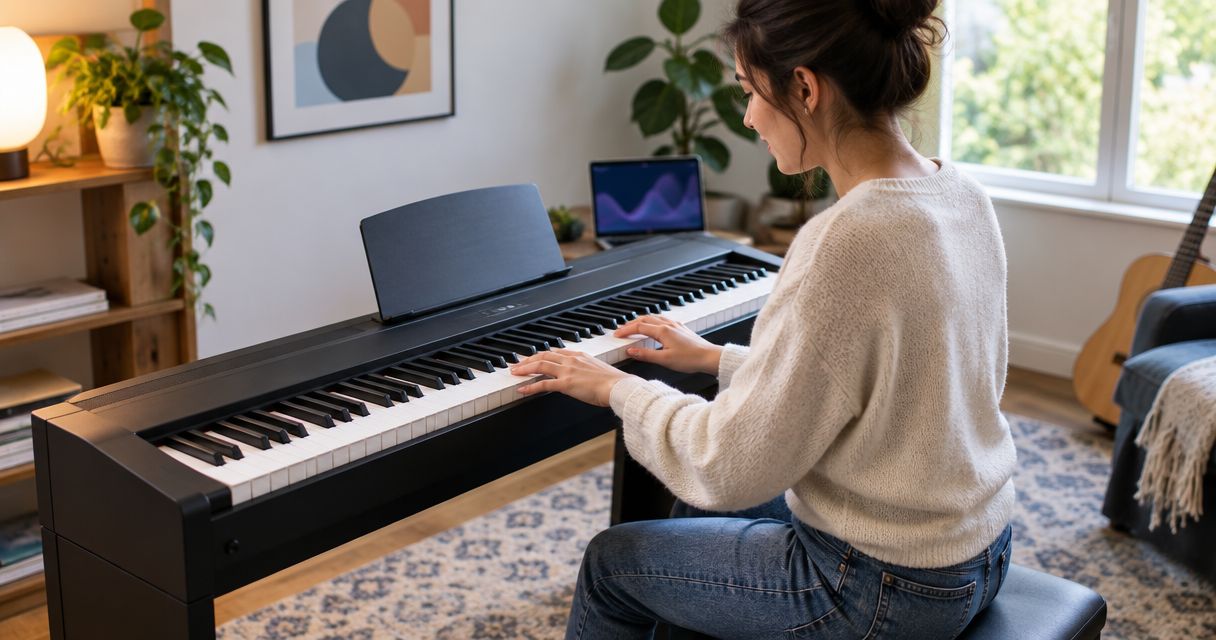
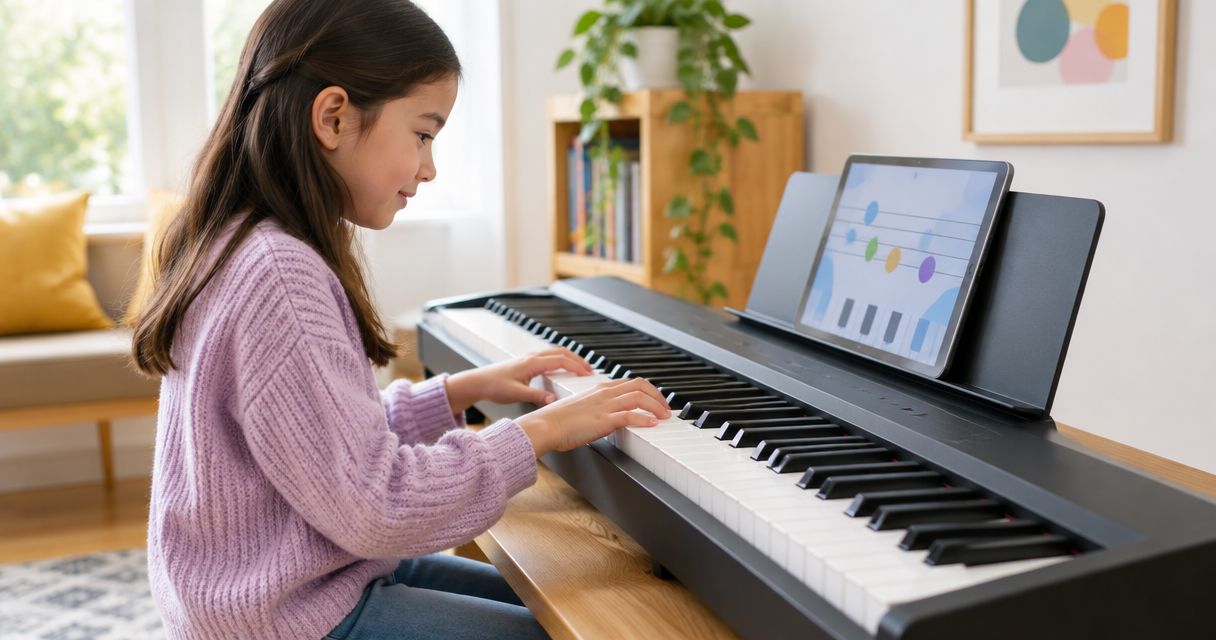
Put the instrument on a stable surface at a comfortable playing height. Sit where your shoulders can relax and your hands can reach the keys without stretching upward or bending sharply downward.
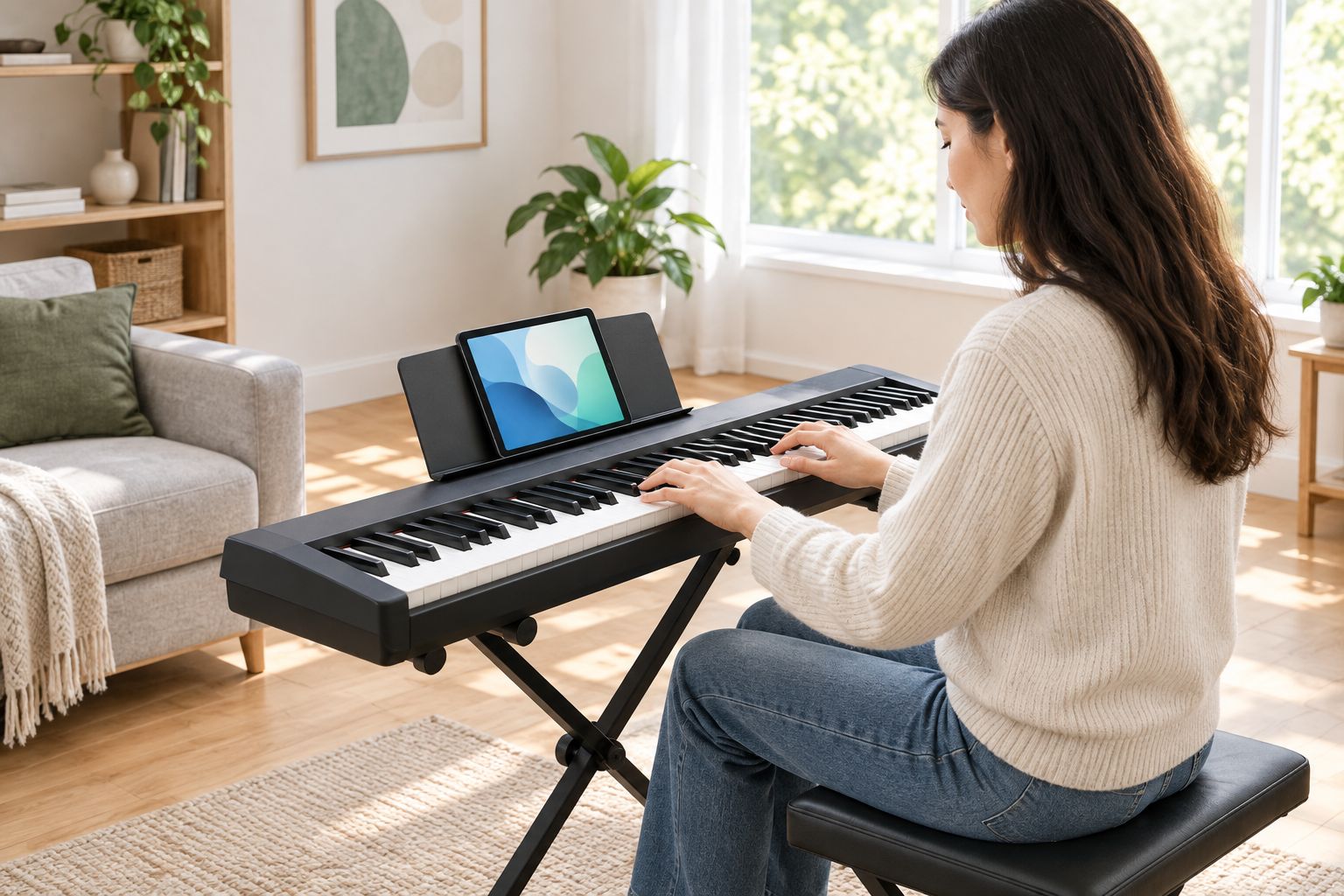
Before buying, work through these practical checks:
- Placement: Confirm that the instrument fits where you intend to practise, not just where you can store it.
- Movement: Account for the power supply, music rest, headphones and any stand you must carry.
- Connections: Check the exact headphone, pedal and learning-device requirements against the model documentation.
- Learning material: Choose an arrangement that fits the keyboard's range and your current coordination.
For song-led practice, begin with a manageable melody and repeatable chord pattern. The guide to beginner piano songs to learn with LED lights addresses that separate choice: what to practise once the instrument is ready.
Where LED-guided learning fits
Pianoledshop's LED-guided piano learning system is for beginners and hobbyists who want to learn songs by following app-synced lights. That describes the learning approach, not the key action of the instrument underneath it.
The supplied product range includes Piano LED Plus 2026 and keyboard bundles. A bundle name alone does not establish portability, action type or compatibility with another keyboard, so those products are not ranked as interchangeable alternatives to the instruments above.
If you are considering Pianoledshop's LED-guided piano learning system, confirm the requirements for your exact keyboard before choosing it. Treat note guidance, physical playing technique and reading music as separate skills to practise, rather than assuming one system covers every learning goal.
FAQ
What's the best portable keyboard for adults starting piano?
The Yamaha P-145 is the best default in this comparison for adults starting piano because it combines weighted keys with an 88-key range. Choose a smaller keyboard instead when carrying weight or limited space matters more than piano-like touch.
Do adult beginners need 88 keys?
Adult beginners do not need 88 keys for every beginner melody or chord exercise. An 88-key instrument is the better long-term fit for piano arrangements that use a wider range; check your intended music before choosing 61 keys.
Are weighted keys better than touch-sensitive keys?
Weighted action and touch sensitivity describe different things: resistance under your fingers and response to your playing strength. For piano-focused learning, look for both rather than treating either term as a substitute for the other.
Which keyboard in this guide is easiest to carry?
The Casio CT-S300 is the lightest instrument in this guide at 3.3 kg and has a carrying handle. That figure excludes batteries and accessories, so account for the complete setup you will transport.
Is the Casio CT-S1 better than the Yamaha NP-15?
The Casio CT-S1 is the recommendation here for compact, expressive song playing; the Yamaha NP-15 is the recommendation for straightforward piano-oriented practice. Both have 61 touch-sensitive keys rather than weighted piano actions.
Can I learn piano with an LED-guided system?
An LED-guided system provides visual note guidance while you learn songs. Pianoledshop sells this type of app-synced learning system, but you should confirm requirements for your exact keyboard and practise timing and technique separately.
Should I choose a portable keyboard or a digital piano in 2026?
Choose a portable digital piano when weighted touch and full keyboard range are your main requirements. Choose a smaller portable keyboard when frequent carrying, limited space or accompaniment functions take priority.
One last thing: choose the compromise you can live with
For an undecided adult beginner in 2026, choose the Yamaha P-145 when learning piano is the goal and the instrument can stay set up. Choose the Casio CT-S1 when a smaller instrument makes regular song practice easier; choose the Yamaha NP-15 for straightforward practice or the Casio CT-S300 for frequent carrying.
The important distinction is not portable versus serious. It is whether the instrument's compromise matches your routine. Decide where you will sit and what you will play before choosing the keyboard—or adding a learning system from Pianoledshop.