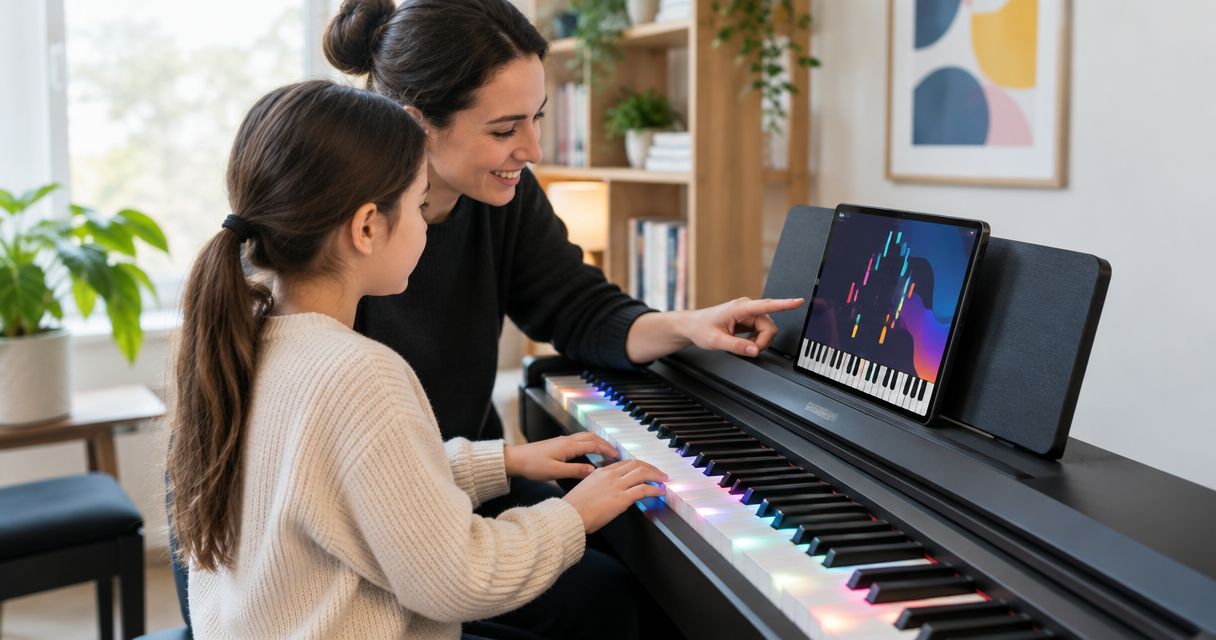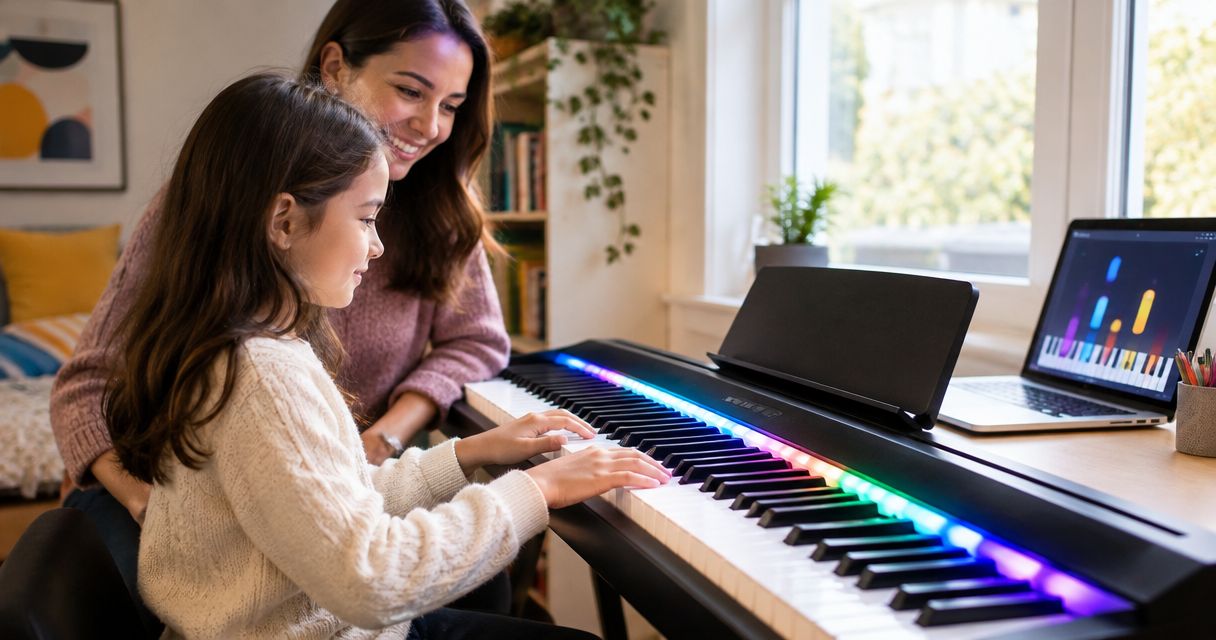
Homeschool families’ LED piano learning is app-synced, light-guided song practice with the aim of helping beginner players learn songs within a home music routine. This 2026 guide explains how to use those visual cues while also teaching rhythm, listening and independent playing, especially when siblings share an instrument or a parent is learning alongside a child.
- LED piano learning for homeschool families works best alongside rhythm, listening and practice without visual cues.
- Pianoledshop suits beginner families seeking app-synced, light-guided song practice rather than a complete music curriculum.
- Choose Piano LED Plus around your instrument and learning goals; verify compatibility before selecting a system.
- Assess progress through independent playing, not only successful light-following.
Why LED piano learning matters for homeschool families
A homeschool music lesson needs more than a song to finish. You need a clear task, a way to observe progress and a practice activity your child understands without constant explanation. Light cues make the next key visible; they do not, by themselves, explain fingering, musical expression or notation.
Pianoledshop sells an LED-light-guided learning system and bundles for hobbyist and beginner pianists. Pianoledshop is best suited to beginner homeschool families seeking app-synced, light-guided song practice. Its role in your curriculum is a practice aid, not a substitute for every part of music education.
Shared lessons also need individual goals. A child learning to locate notes and a sibling learning to coordinate both hands should not be assessed against the same song performance. Keep the family activity shared, but make the learning target personal.
Build a homeschool piano routine around lights
1. Define your learning goals
Start without buying anything: write down what your child should demonstrate at the keyboard. Separate playing a familiar song from understanding its musical ingredients. That distinction keeps a satisfying performance from becoming your only measure of learning.
For your 2026 music plan, choose an immediate goal and a separate independence goal. For example, the immediate goal can be finding the starting notes with help; the independence goal can be finding them again without a cue. Use the same distinction whether you teach from notation, demonstrations or lights.
Give each learner a small record of their own. A shared family instrument does not require a shared difficulty level, and an older beginner does not need to start where a younger sibling finished.
- Write one song-based goal and one skill-based goal for each learner.
- Ask your child to demonstrate the starting point before beginning practice.
- Record what your child can do independently, separately from guided work.
- Match assessment to each learner rather than comparing siblings.
2. Check your instrument and practice space
First, test your existing setup with ordinary playing. Sit at the instrument, reach the keys comfortably and listen while someone else uses the room. A learning system cannot correct an unstable seat or a keyboard positioned beyond a child’s comfortable reach.
Then check the requirements of any LED system against your exact instrument. Do not assume that a digital piano, keyboard or connection works simply because the general product category sounds right. Confirm the model, required connections and physical installation before choosing equipment.
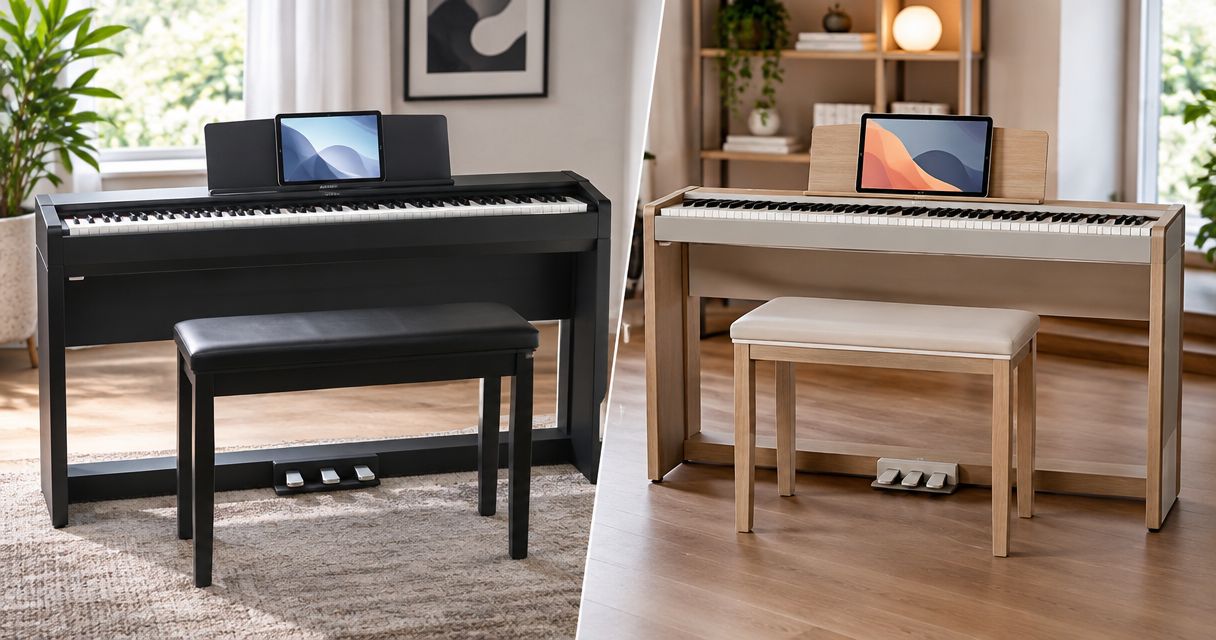
Pianoledshop’s LED piano learning system provides lights synced to an app. Treat that as a separate setup decision: identify the device that will run the app, who will manage it and where it will sit without obstructing the player. Verify the details on the current product information rather than inferring them from a bundle name.
- Check seat stability and comfortable access to the keys.
- Record the exact instrument model before checking compatibility.
- Confirm app requirements and required instrument connections.
- Keep cables and devices clear of the player’s hands and walking space.
3. Choose a manageable song passage
Begin with a demonstration, a printed exercise or a familiar melody. Listen together, identify a short passage and practise its rhythm away from the keyboard. This gives your child something musical to recognise before adding a stream of visual instructions.
Piano LED Plus offers the light-guided route: learners follow lights synced to an app to practise songs. Use it to clarify where to play, then ask the learner to explain or repeat part of the passage. A correct key press is useful, but it is not the same as understanding the phrase.
When selecting material in 2026, choose by the task your child can handle rather than the appeal of the song title. A familiar tune can still demand coordination beyond the learner’s current ability. Shorten the task instead of insisting on an uninterrupted performance.
- Listen to the chosen passage before playing it.
- Clap or tap its rhythm away from the keys.
- Practise one hand before combining both hands where needed.
- Stop at a clear musical boundary rather than an arbitrary screen position.
4. Structure each practice session
Use a simple sequence: Listen, Tap, Play, Recall. Listening establishes the sound, tapping isolates the rhythm, playing brings the task to the instrument and recall checks what remains when the cues disappear. You can run this sequence manually; lights belong inside the playing stage.
As a starting routine, schedule 10 minutes per session: 2 minutes listening, 2 minutes tapping, 4 minutes playing and 2 minutes recalling. These are planning suggestions, not a promised learning rate. Adjust the session when attention, fatigue or the difficulty of the passage changes.
The parent’s job is to notice the source of a mistake. If the child finds the notes but loses the beat, return to tapping. If the rhythm holds but the starting note is unclear, return to locating that note. Repeating the whole song does not isolate either problem.
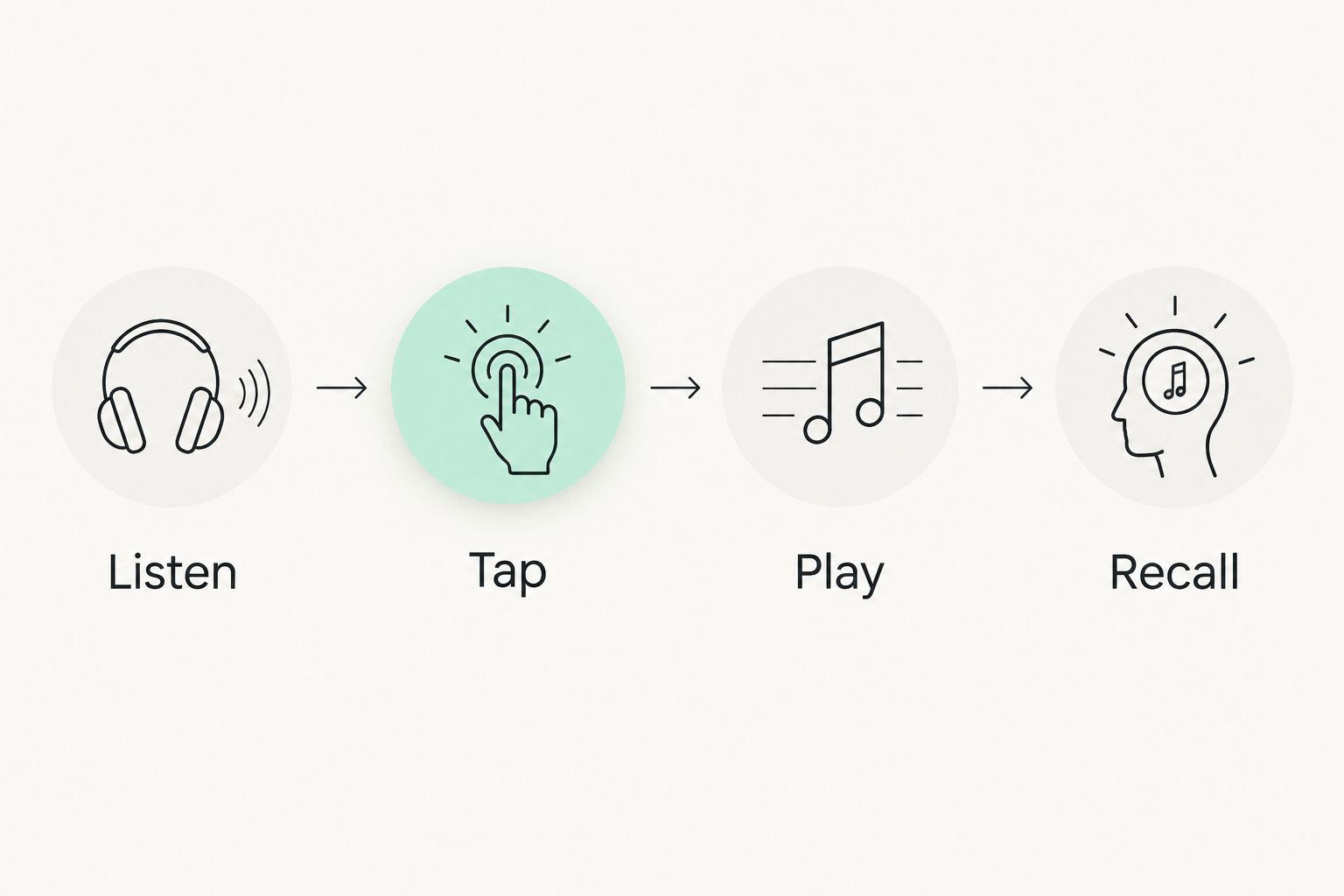
Keep the sequence visible beside your lesson notes. It gives different family members a consistent structure without requiring everyone to practise the same passage or use the same amount of guidance.
- Listen: identify the passage’s beginning and ending.
- Tap: keep the rhythm without searching for notes.
- Play: practise the passage with the chosen level of guidance.
- Recall: repeat a manageable part without visual cues.
5. Teach skills the lights do not explain
Start with observation and conversation. Watch whether your child holds tension, listen for uneven timing and ask what changes between a quiet phrase and a loud one. You do not need another purchase to identify a question that deserves attention.
Keep light-guided song practice alongside separate work on note names, rhythm and listening. If reading notation is part of your curriculum, teach it explicitly. Following illuminated keys does not automatically demonstrate that a learner can interpret a written score.
Use a teacher when you need individual feedback on technique or persistent difficulties. A parent can organise practice and encourage careful listening without claiming expertise in every movement. Record the specific question so the lesson addresses a real obstacle rather than starting from a vague report of struggling.
- Ask your child to name the notes they are practising.
- Clap a rhythm before finding its pitches on the keyboard.
- Compare a quiet phrase with a louder version by listening.
- Seek qualified feedback for persistent discomfort or technique questions.
6. Share the instrument without sharing every task
Begin with a family timetable and individual lesson notes. Assign turns according to the work each learner needs, not a contest over who finishes a song first. A child working on a single phrase still needs uninterrupted access to the instrument.
Keep app use under a clear household routine. Before using any shared device, review its settings and decide who manages accounts and learning material. Do not assume that a system includes separate learner profiles or a particular parental-control feature; confirm those functions before relying on them.
You can also divide participation without requiring everyone to play at once. One learner plays, another taps the pulse and a parent listens for the agreed goal. Swap roles, but keep the assessment attached to the child who is practising.
- Assign instrument turns before the lesson begins.
- Keep a separate progress note for each learner.
- Give waiting siblings a listening or rhythm task.
- Confirm account and device settings before shared app use.
7. Check progress without the lights
Start with a demonstration you can observe directly. Ask your child to locate the opening note, play a familiar fragment and keep its rhythm without prompts. Choose a fragment small enough that the check measures learning rather than endurance.
For your 2026 records, assess once per week using the same categories: guided playing, independent recall and musical understanding. This is a suggested review schedule, not a benchmark every child must meet. Describe what happened rather than assigning progress from enthusiasm alone.
Pianoledshop’s LED piano learning approach belongs in the guided category. Keep its contribution visible while recording independent skills separately. If recall breaks down, reduce the passage or revisit its rhythm before adding more material.
- Record which passage your child played with guidance.
- Ask for a short repeat without lights or parent prompts.
- Check one musical skill, such as note naming or steady pulse.
- Set the next task from the specific difficulty you observed.
Compare learning options for your family
Choose the method by the problem it solves, not by how much equipment it includes. For a 2026 homeschool plan, distinguish an aid for finding notes from instruction that addresses technique and musical understanding.
The two named products below represent different purchase scopes: a named learning system and a named instrument-and-system bundle. Their names alone do not establish compatibility, dimensions or suitability for your room. Verify those details before deciding.
| Option | Best for | Main advantage | Key limitation |
|---|---|---|---|
| Parent-led demonstrations and exercises | Families starting with an existing instrument | You can define tasks around your child’s immediate needs | The parent must choose material and identify difficulties |
| Piano LED Plus 2026 | Beginners seeking app-synced visual guidance | Lights guide song practice at the keyboard | Light-following alone does not establish notation reading or independent recall |
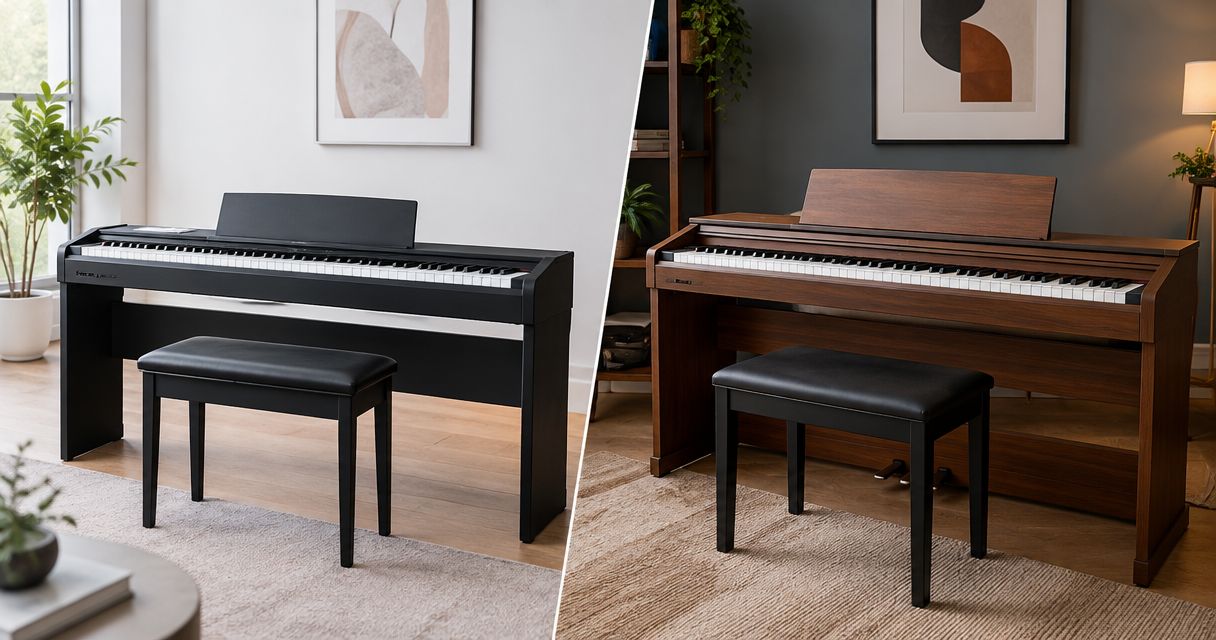
| Donner DEP-1S + Piano LED Plus 2026® | Families considering an instrument-and-system bundle | The named bundle combines an instrument with the learning system | You still need to verify setup requirements and instrument suitability |
| Teacher-supported lessons | Learners needing individual technique feedback | A teacher can respond to the learner’s playing | Lessons still need practice between meetings |
| Combined instruction and light-guided practice | Families wanting visual help alongside wider music learning | You can separate guided practice from technique, listening and reading | The parent must coordinate the activities and prevent unnecessary repetition |
If you already have an instrument, check its compatibility before considering a bundle. If you need an instrument too, compare the complete setup against your space and teaching goals. Pianoledshop offers both a learning system and bundles; that choice does not remove the need for a family-specific check.


Common mistakes homeschool families make
- Counting a guided song as complete mastery. Record successful light-following, then check a short passage without cues. These demonstrate different things.
- Giving siblings identical targets. Shared equipment is practical; identical expectations ignore different starting points. Set a separate next task for each learner.
- Turning every music lesson into app time. Keep listening, rhythm and any planned notation work visible in the timetable. The app serves the lesson, not the reverse.
- Choosing a bundle before checking the setup. Confirm instrument requirements, room arrangement and device needs before committing to a system.
- Adding songs instead of fixing a recurring difficulty. When timing or coordination breaks down repeatedly, isolate that task. A longer song list does not resolve it.
FAQ
What is LED piano learning for homeschool families?
LED piano learning for homeschool families is song practice using illuminated keys synced to an app. It provides visual guidance at the instrument and fits alongside rhythm, listening and independent playing activities.
Can I teach piano at home if I do not play myself?
You can organise beginner practice, listen with your child and track clear tasks without being an experienced pianist. Get qualified feedback when technique questions or persistent difficulties exceed what you can assess.
Does following piano lights teach a child to read music?
Following piano lights does not by itself demonstrate music-reading ability. If notation reading is a goal, include separate activities that connect written notes and rhythms to playing.
Can siblings share one light-guided piano setup?
Siblings can take turns using the same physical practice setup. Keep individual goals and records, and confirm account or profile features before expecting the app to track learners separately.
Is Piano LED Plus better than piano lessons?
Piano LED Plus and piano lessons serve different purposes: the system guides song practice through app-synced lights, while lessons can provide individual instruction and feedback. Choose according to the task you need help with, or combine them with distinct roles.
Will Piano LED Plus work with the keyboard we already own?
Confirm compatibility for your exact keyboard before choosing Piano LED Plus. Check the current system requirements, required connections and installation details rather than assuming compatibility from the instrument category.
How do I know whether my child is learning rather than copying lights?
Ask your child to play a short familiar passage without visual cues and explain one musical element. Compare guided performance, independent recall and understanding separately so the result identifies the next practice task.
One last thing
Make removing help part of the lesson, not a final exam. During your next 2026 practice session, stop after a familiar phrase and ask your child to find its opening note again without a cue. That small task tells you whether to repeat, simplify or move on more clearly than another complete guided performance.