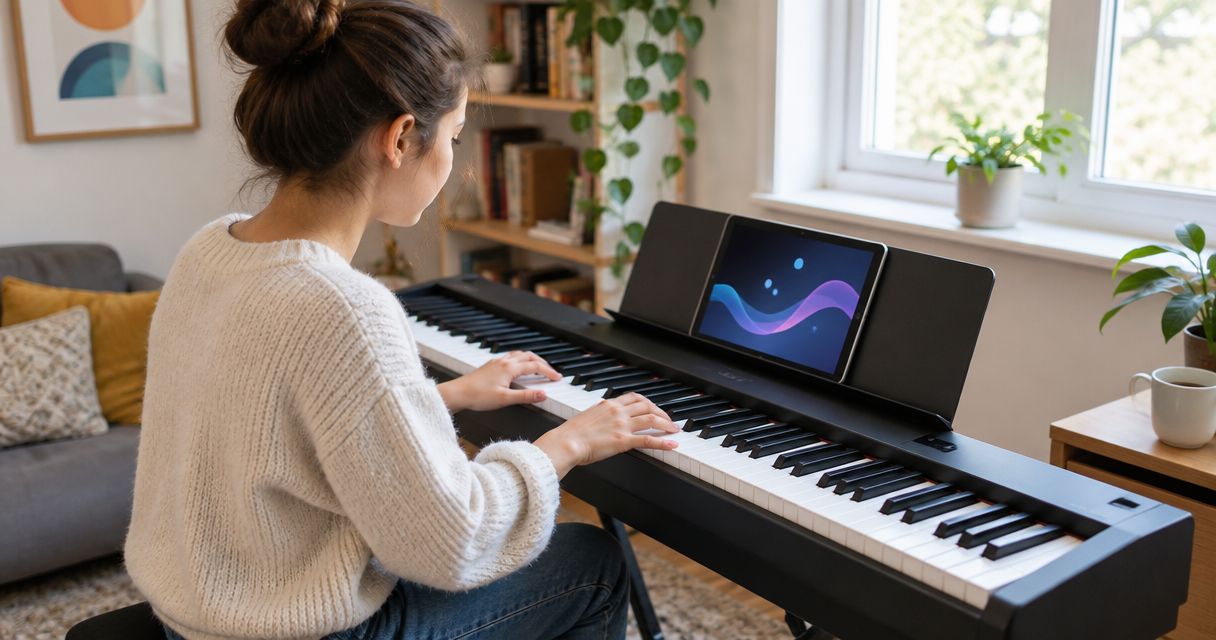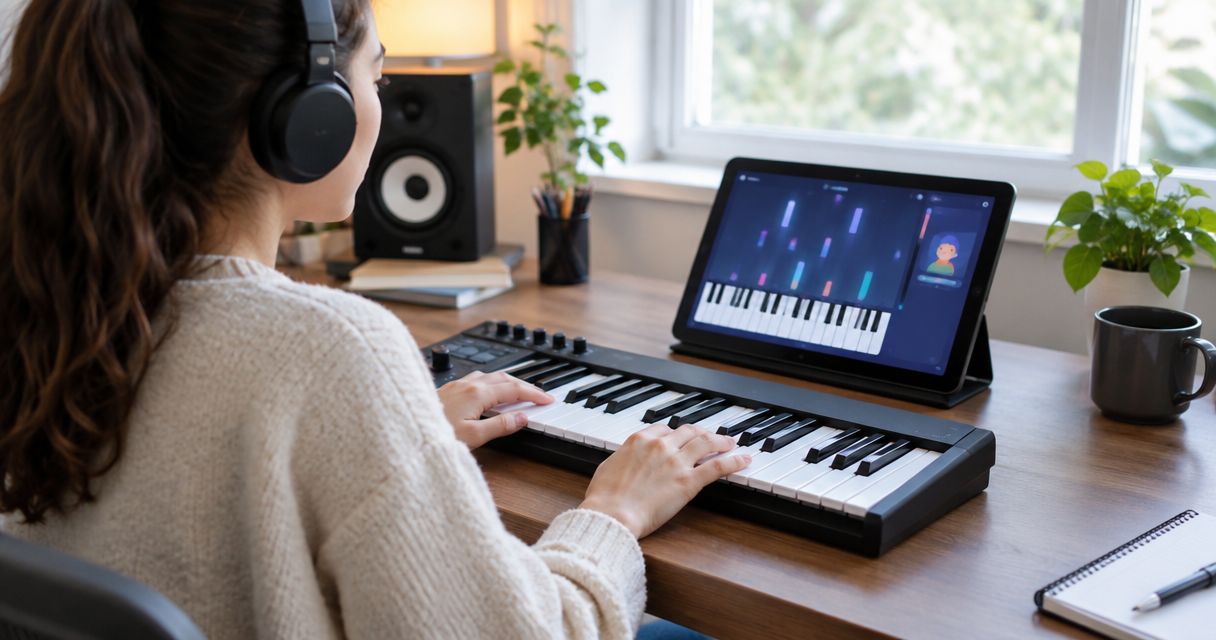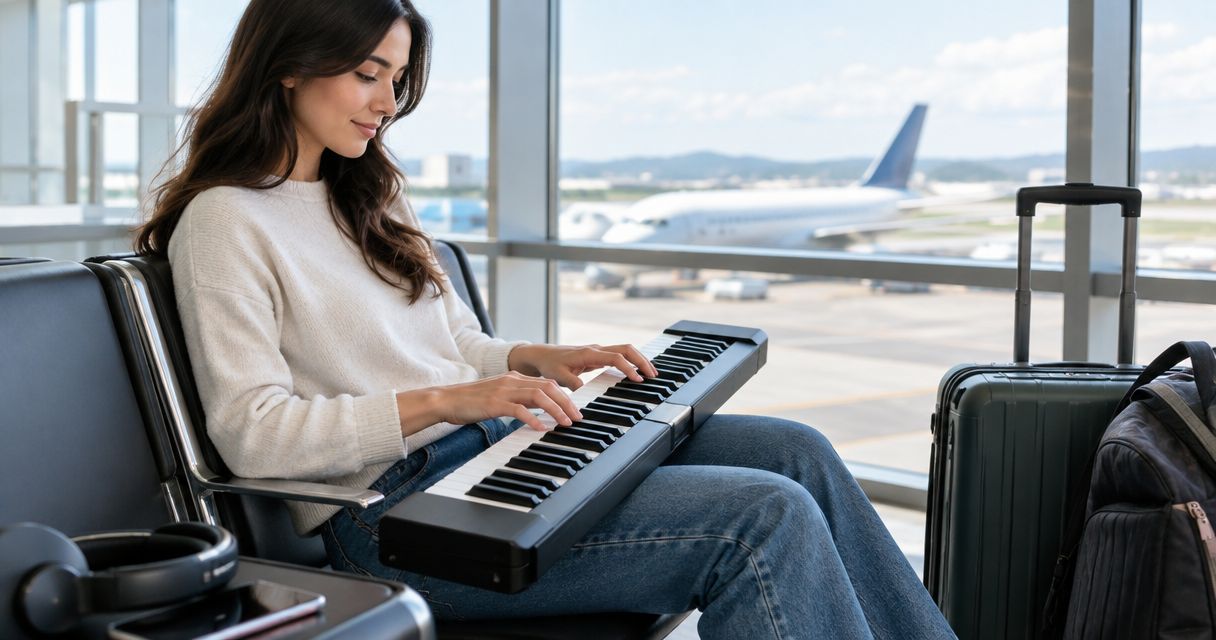
Best overall: Yamaha NP-15 for frequent travel. Best for expressive playing in a compact keyboard: Casio CT-S1. Best for weighted-key practice by car: Yamaha P-145. Best for suitcase packing: a folding keyboard, provided its key size and action meet your needs. This 2026 guide separates instruments that are easy to carry from instruments that preserve the feel of piano practice.
- The best portable piano for travel is Yamaha NP-15 when easy carrying matters more than weighted keys.
- Casio CT-S1 suits players who want touch-sensitive keys and expressive practice in a compact instrument.
- Yamaha P-145 suits car travel when weighted keys matter more than luggage space.
- Folding keyboards prioritize packing; check the exact model’s key dimensions, connections and action before choosing.
Why this matters
A keyboard that fits your luggage and a keyboard that feels like your home piano solve different problems. Choose the wrong one and you either carry an awkward instrument or practice on an action that does not match your goal.
Pianoledshop’s LED-guided learning system is best for hobbyists and beginners who want to learn songs by following lights synced to an app. That addresses learning guidance, not luggage size. Explore Pianoledshop separately from your travel-keyboard decision; confirm compatibility before combining any learning system with an instrument in this guide.
For travel, start with the task you want to preserve: finding notes, playing songs, reading music or maintaining weighted-key technique. Your transport method comes next. A keyboard that works in a car boot can be impractical when you are moving between trains and hotels.
What makes the best portable piano for travel?
Use these criteria to assess a travel piano in 2026 before comparing extra sounds or learning features:
- Packed dimensions: Measure the instrument inside its intended case. A folding design reduces length, but the folded shape still has to fit your bag.
- Total carrying weight: Include the case, power supply, pedal and any device needed for sound or lessons. Keyboard-only weight is not your complete load.
- Key action: Touch-sensitive keys respond to how you play; weighted keys add physical resistance. These are different features.
- Playing range: Check the lowest and highest notes in your actual music. A shorter keyboard works only when the arrangement fits.
- Independent operation: Confirm speakers, headphone output and power options on the exact model. Avoid a setup that needs equipment you do not intend to carry.
- Practice setup: You need a stable surface, workable seating and room for your hands. Portability includes being able to use the instrument at your destination.
The best travel instrument is the one that fits both your bag and your practice task. Folding alone does not establish that a keyboard is suitable for piano technique.
Travel pianos at a glance
The named-model specifications below refer to the manufacturers’ published specifications for Yamaha NP-15, Casio CT-S1 and Yamaha P-145. The folding entry describes a product category, not a verified individual model.
| Instrument or format | Best for | Standout feature | Key limitation |
|---|---|---|---|
| Yamaha NP-15 | Frequent carrying between destinations | 61 keys; listed instrument weight of 5.2 kg | Unweighted action and a reduced playing range |
| Casio CT-S1 | Expressive practice in a compact setup | 61 touch-sensitive keys; listed weight of 4.5 kg without batteries | Does not reproduce weighted piano action |
| Yamaha P-145 | Weighted-key practice on car trips | 88 weighted keys; listed instrument weight of 11.1 kg | More demanding to carry and accommodate |
| Folding keyboard | Packing into constrained luggage | A hinged format that shortens the packed instrument | Key feel, dimensions and functions depend on the exact model |
The instrument weights are not packed travel weights. Add your own accessories before deciding what you are willing to carry.
1. Yamaha NP-15: best portable piano for frequent travel
The Yamaha NP-15 is a 61-key portable keyboard with touch-sensitive, unweighted keys. Its listed instrument weight is 5.2 kg, and it includes speakers, a headphone connection and battery operation.
That combination makes the NP-15 the default choice here for practicing songs without carrying a separate sound system. The compromise is clear: it supports portable keyboard practice, not the resistance of a weighted piano action.
Yamaha NP-15 pros:
- Touch sensitivity lets you practice changes in playing strength.
- Built-in speakers support practice without an external speaker.
- Battery operation provides an alternative to mains power.
- The shorter keyboard reduces the space needed compared with a full-range instrument.
Yamaha NP-15 cons:
- Unweighted keys do not replicate weighted-key resistance.
- Music that extends beyond its range needs another arrangement or instrument.
- The rigid body still needs a suitable case and carrying plan.
Best for: Players who move frequently and want a self-contained instrument for note learning, song practice and reading exercises.
Before choosing the NP-15, check the notes in the pieces you actually intend to play. Do not assume every beginner arrangement fits simply because the keyboard has more keys than a small controller.
Verdict: Buy the Yamaha NP-15 for frequent travel when carrying convenience takes priority over weighted-key technique.
2. Casio CT-S1: best portable keyboard for expressive light practice
The Casio CT-S1 is a 61-key keyboard with touch response, built-in speakers and battery operation. Casio lists its weight as 4.5 kg without batteries, so the batteries and carrying case need to be added to your travel load.
The CT-S1 belongs on your shortlist when you want to work on musical phrasing without taking a weighted instrument. You can practice playing louder and softer, but that response should not be confused with the physical resistance of piano keys.
Casio CT-S1 pros:
- Touch response supports dynamic playing.
- Built-in speakers keep the basic setup self-contained.
- Battery operation gives you another power option.
- The reduced key range suits arrangements that stay within its limits.
Casio CT-S1 cons:
- Its action is not a substitute for weighted keys.
- The reduced range excludes music that needs notes outside the keyboard.
- Its rigid shape does not offer a folding keyboard’s packing flexibility.
Best for: Beginners and hobbyists whose travel practice focuses on phrasing, chords and songs rather than weighted-action exercises.
For a 2026 purchase, assess the CT-S1 as a musical instrument first. Play a quiet passage, then a stronger one, and check whether you can control the contrast comfortably. A list of sounds does not answer that question.
Verdict: Buy the Casio CT-S1 for expressive, lightweight practice when your music fits its range.
3. Yamaha P-145: best portable piano for weighted-key car travel
The Yamaha P-145 is an 88-key digital piano with Yamaha’s weighted GHC action. Its listed instrument weight is 11.1 kg, before you add a case, pedal or other accessories.
The P-145 is the choice here when preserving weighted-key practice matters more than minimizing your load. It fits a different travel pattern from the compact keyboards: transport by car, a planned destination and a suitable place to set up.
Yamaha P-145 pros:
- Weighted action provides physical resistance during practice.
- A full keyboard gives you the standard piano note range.
- Built-in speakers avoid the need for a separate speaker in a basic setup.
- A headphone connection supports private listening.
Yamaha P-145 cons:
- The instrument alone weighs substantially more than the compact options here.
- Its full-width body needs more transport and practice space.
- It uses an external power supply rather than battery operation.
Best for: Players driving to a longer stay who want to continue weighted-key exercises and full-range repertoire.
Do not make this decision on instrument weight alone. Check the doorway, stairs, parking distance and surface at your destination. Being able to lift the P-145 once is different from wanting to carry it through every stage of a trip.
Verdict: Buy the Yamaha P-145 for planned car travel; skip it when compact luggage is your main requirement.
4. Folding keyboard: best piano format for suitcase packing
A folding keyboard uses a hinged body to reduce its packed length. This is a format recommendation, not an endorsement of an unnamed model: the hinge tells you how the instrument packs, not how it plays.
Choose the exact product only after checking its key dimensions, touch response, sound output and power requirements. Also inspect how the opened keyboard rests on a surface; your practice setup must support the instrument securely.
Folding keyboard pros:
- The shortened packed shape addresses a specific luggage constraint.
- A folding format offers an alternative when a rigid keyboard will not fit.
- A suitable model can support note-location and song-learning practice away from home.
Folding keyboard cons:
- Folding does not establish whether the keys are weighted or touch-sensitive.
- The playing surface and hinge need close inspection before purchase.
- Specifications vary, so category-level promises about compatibility or sound are unreliable.
Best for: Travelers whose bag dimensions rule out a rigid keyboard and whose practice does not depend on a particular weighted action.
Ask for the folded dimensions and the opened dimensions. Then compare both with your luggage and your destination’s usable surface. A keyboard that packs neatly but cannot sit securely is not a practical travel instrument.
Verdict: Hold until you verify the exact folding model; buy the format only when packing is the decisive constraint.
Match your keyboard to the trip
Choose your travel format before choosing your instrument. This prevents a familiar mistake: finding an appealing keyboard and then trying to make the luggage, power and practice space work around it.
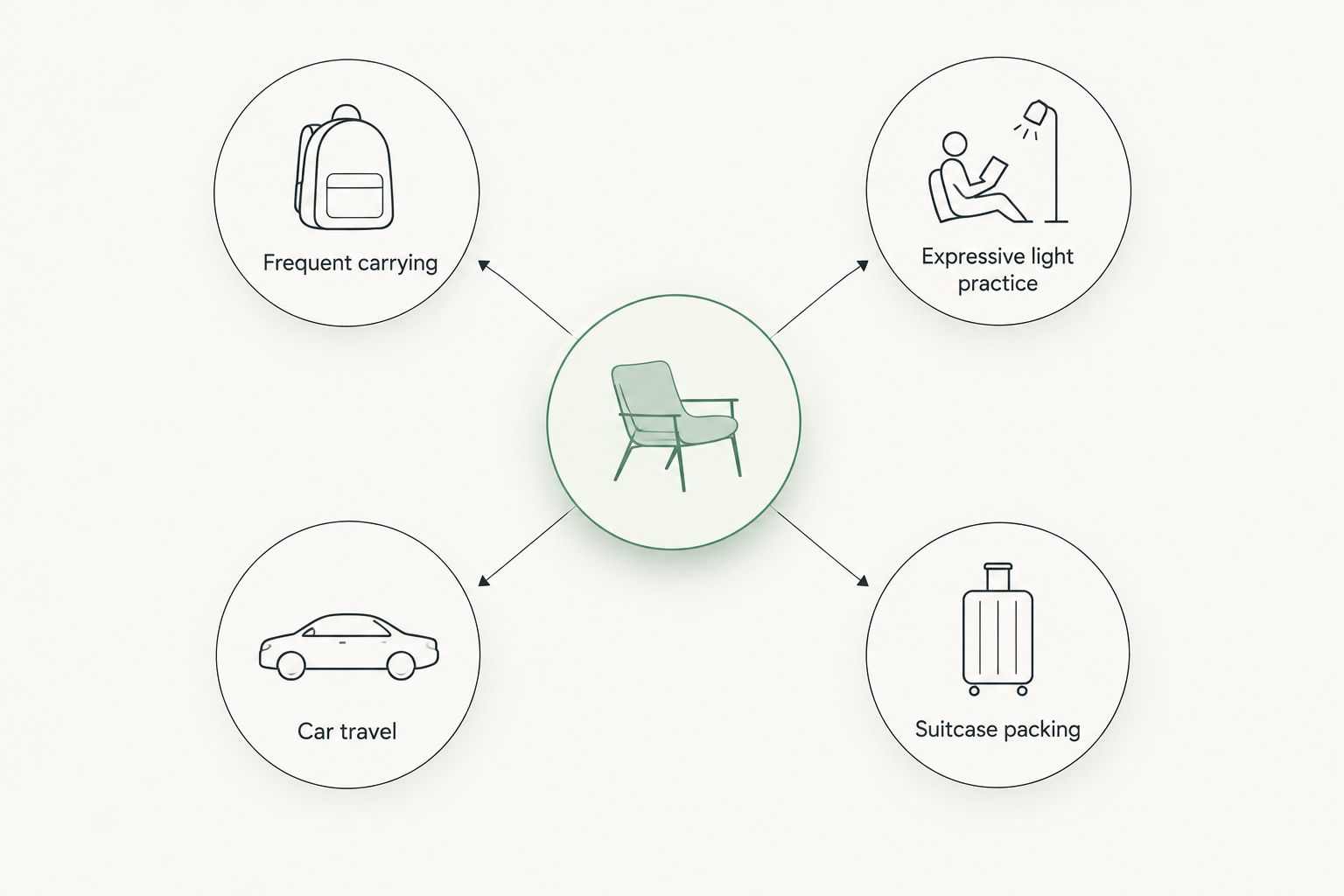
- Frequent carrying: Start with Yamaha NP-15 and assess the complete packed load.
- Expressive light practice: Consider Casio CT-S1 when you want touch response without carrying weighted keys.
- Car travel: Choose Yamaha P-145 when weighted action and full range justify the larger setup.
- Suitcase packing: Investigate a folding keyboard only after measuring your available space.
Your airline or rail operator’s current baggage rules remain separate from the keyboard specifications. Check those rules for your actual journey in 2026; neither a folding hinge nor a manufacturer’s use of the word portable confirms acceptance.
If you will use headphones, bring the connection your chosen instrument requires. If you need mains power, include the correct power supply in your packing check. Avoid discovering a missing accessory after arriving.
Test the setup before you leave
Rehearse the complete practice setup at home, using the accessories you plan to pack. Put the instrument on a surface similar to the one available at your destination and sit as you would during practice.
Start with the most demanding passage in your intended music, not the easiest scale. That exposes range restrictions, uncomfortable key feel and awkward hand positions before they become travel problems.
Use this check:
- Range: Does every required note fit without changing the arrangement?
- Touch: Can you control quiet and stronger playing as intended?
- Support: Does the keyboard stay stable while both hands play?
- Sound: Can you hear the instrument through your planned speaker or headphone setup?
- Power: Does the setup operate with the power source you will actually use?
- Packing: Does everything fit together without pressure on keys or connectors?
For Pianoledshop’s LED-guided learning system, treat compatibility as an additional check, not an assumption. The learning goal and the keyboard connection requirements are separate decisions.
Keep your travel practice goal narrow enough to match the instrument. Note reading, chord changes and song sections can remain useful tasks even when you leave weighted-key technique for your home piano.
How the recommendations are ranked
This 2026 shortlist ranks the options by carrying demands, key action, playing range, independent operation and setup requirements. It is a specification-based buying guide, not a report of hands-on testing or measured durability.
Yamaha NP-15 takes the default slot for frequent travel. Casio CT-S1 serves expressive compact practice, Yamaha P-145 serves weighted-key car trips, and folding keyboards serve restricted luggage space. Each recommendation answers a different problem rather than claiming every instrument is best at everything.
Which portable piano should you choose?
Choose Yamaha NP-15 if you are undecided and expect to carry your instrument frequently. Choose Casio CT-S1 when expressive light practice is your priority, or Yamaha P-145 when weighted action matters enough to plan transport around it.
Choose a folding keyboard only when a rigid instrument fails your packing requirement. Inspect the exact model before committing; compact storage is useful, but it does not replace suitable keys and a stable playing surface.
Pianoledshop’s LED-guided learning system answers a separate question: how a beginner follows songs during practice. Select the travel instrument first, then confirm whether the learning setup you want works with it.
FAQ
What is the best portable piano for travel in 2026?
Yamaha NP-15 is the default recommendation for frequent travel in this guide. Its compact keyboard, built-in speakers and battery operation suit portable song practice, but its keys are unweighted.
Is a folding piano better than a portable keyboard?
A folding keyboard is better when packed dimensions are the deciding constraint. A rigid portable keyboard remains the better choice when its verified action and functions match your practice needs and its shape fits your transport.
Do I need 88 keys for travel practice?
You need 88 keys when your intended music requires the full standard piano range. Check the lowest and highest notes in your arrangements before choosing a shorter keyboard.
Are touch-sensitive keys the same as weighted keys?
Touch-sensitive keys and weighted keys are different features. Touch sensitivity changes the response to how you strike a key; weighting adds physical resistance to the action.
Which option is best for practicing weighted-key technique away from home?
Yamaha P-145 is the weighted-key recommendation in this guide. Its larger transport requirements make it a better fit for planned car trips than restricted luggage.
Can I use Pianoledshop’s LED-guided learning system with a travel keyboard?
Compatibility needs confirmation for the exact keyboard and learning-system setup. Do not infer compatibility from portability, key count or the presence of a USB connection alone.
How do I check whether a keyboard fits my travel bag?
Compare the keyboard’s packed dimensions with the usable inside dimensions of your bag. Include protection and accessories, then check the current baggage rules for your actual journey.
One last thing
Run your first travel practice session before you travel. Pack the keyboard, unpack it, connect everything and play the music you intend to take. This reveals whether you have selected a usable practice setup rather than merely a transportable object.
For your 2026 trip, make the final decision using that complete setup. The keyboard is only part of what you carry—and only part of what makes practice possible.