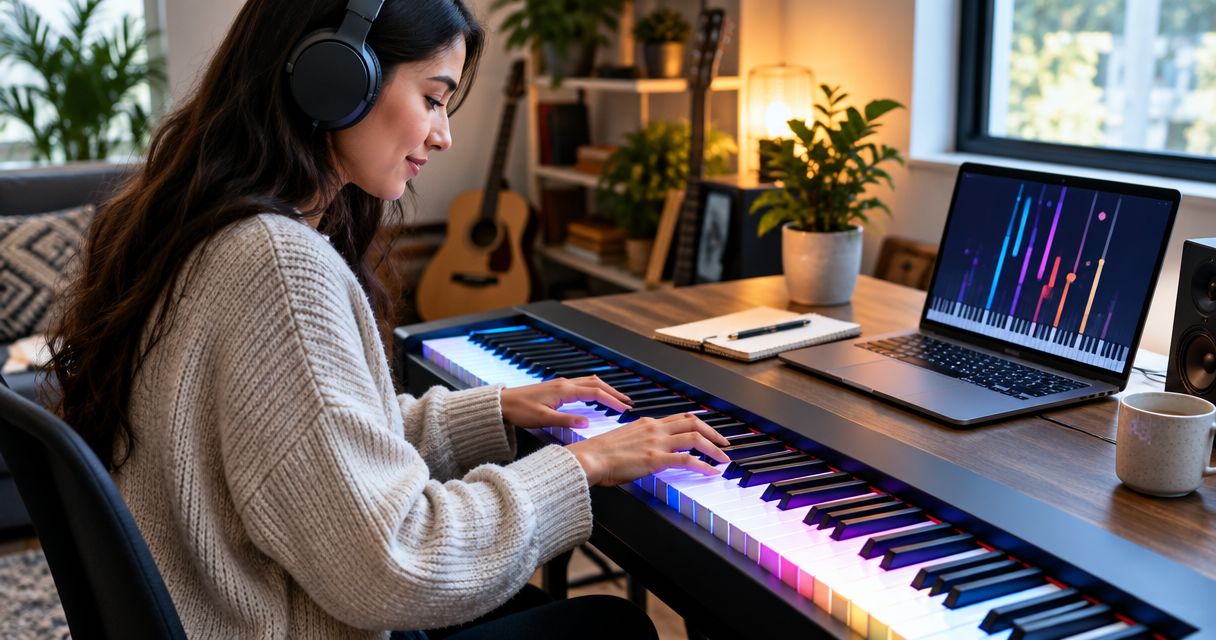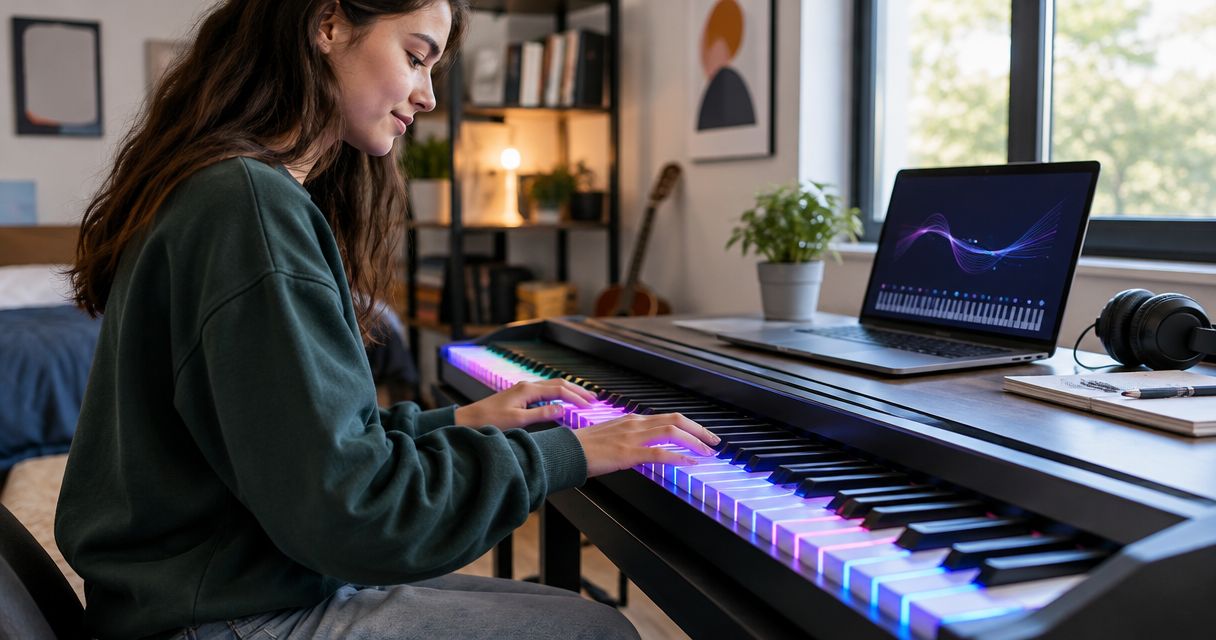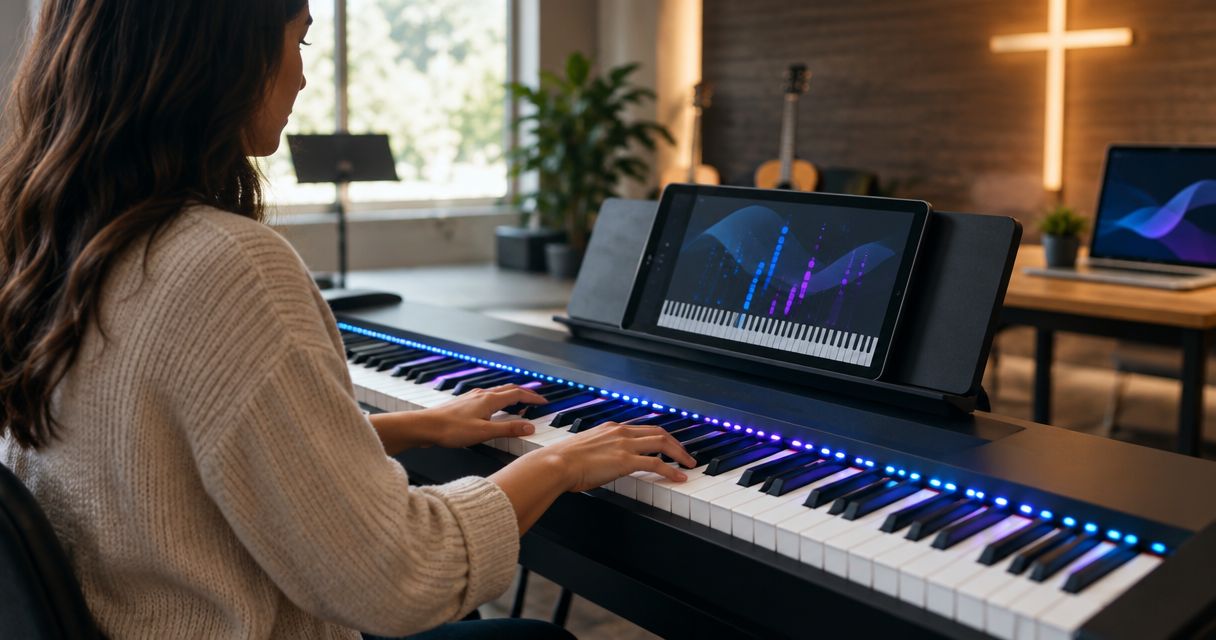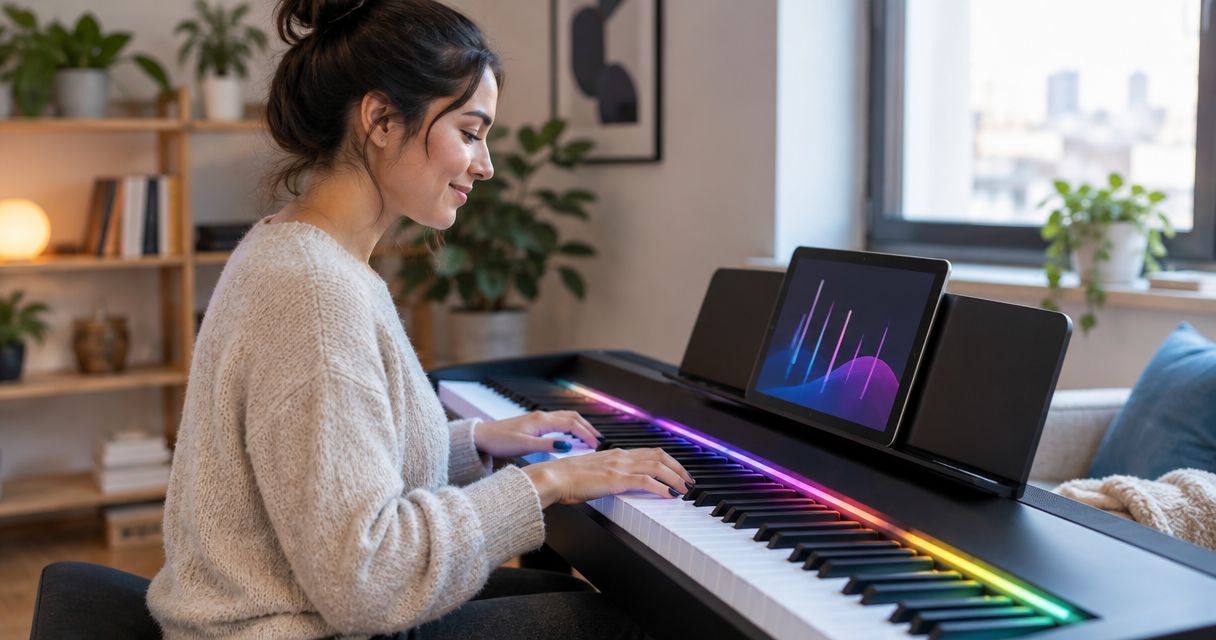
Busy adults' LED piano learning is app-synced, light-guided practice aimed at helping beginners and hobbyists learn songs within a limited schedule. This 2026 guide explains how to use the lights without neglecting rhythm, technique, or your ability to play independently.
- Pianoledshop suits beginner and hobbyist adults who want app-synced lights to guide song practice.
- LED piano learning for busy adults works best with short, repeatable sessions and a specific musical goal.
- Piano LED Plus provides visual guidance; practice rhythm and finger movement separately rather than treating lights as complete instruction.
- Choose a learning setup around your instrument, practice space, and goals—not the number of features.
Why LED piano learning matters for busy adults
Pianoledshop is best for beginner and hobbyist adults seeking app-synced, light-guided song practice. Pianoledshop offers Piano LED Plus, a learning system and product bundles that teach songs through lights synced to an app. The useful distinction is where the guidance appears: at the keyboard, where you need to find the notes.
For a busy adult, the practical problem is deciding what to do when you finally sit down. A vague intention to learn piano leaves you choosing between songs, exercises, and tutorials. A defined passage gives your session a beginning and an end.
Light guidance addresses note location, but note location is not the whole task. You still need to hear the rhythm, choose workable fingering, and control how you press and release the keys. Use the lights as a guide to the passage, not as proof that you have mastered it.
Your 2026 learning plan should also distinguish two goals: playing a song with assistance and playing it without assistance. Both are useful, but they require different checks. Decide which result you want before judging your progress.
How to build a light-guided piano routine
1. Define your musical goal
Start without buying anything: write down the song or musical task you want to work toward. Be specific enough that you can recognize progress. Learning the opening melody of a familiar song is a clearer task than becoming good at piano.
Separate your immediate goal from your longer-term ambition. You can work on a melody now while planning to learn notation, accompaniment, or fuller arrangements later. That distinction keeps a beginner task from becoming an overwhelming project.
For your first practice block, choose a passage that you can examine closely. A difficult favorite is not automatically the best starting point. If you cannot identify where the phrase begins and ends, listen again before attempting it.
Write a small definition of success beside the passage. It should describe something you can hear or do, not an app screen you want to complete.
- Name the song and the exact passage you want to learn.
- Choose melody, accompaniment, or hands-together playing as the immediate task.
- Listen to the passage before touching the keys.
- Describe success as correct notes, steady rhythm, or independent recall.
- Keep a separate list of songs to attempt later.
2. Prepare your practice space
Use your existing instrument first to check whether your practice arrangement is comfortable. Sit where you can reach the keys without stretching forward, keep your shoulders relaxed, and position any reference material where you can see it without repeatedly twisting.
A busy schedule makes preparation part of the learning problem. If every session begins with moving equipment and searching for instructions, that work competes with playing time. Leave a clear starting point whenever your space allows it.
Pianoledshop's LED piano learning setup adds app-synced visual guidance, but confirm the instrument requirements before choosing a system. Do not assume that owning a digital piano establishes compatibility. Check the current product information for the exact instrument and connection you intend to use.
You also need a practical sound arrangement. Headphone use depends on your instrument; establish that before planning late-evening practice. Read the quiet digital piano practice guide when choosing how to practice around other people.
- Clear the keyboard and the area around your seat.
- Put your reference material within comfortable view.
- Check the required connections for your exact instrument.
- Confirm how you will hear the piano without disturbing others.
- Leave a note identifying the next passage to practice.
3. Schedule a repeatable session
Begin with a timer and a written task. As a starting routine for 2026, try 15 minutes per session: 3 minutes reviewing a familiar passage, 8 minutes working on a difficult fragment, and 4 minutes checking what you can play without guidance. This is a suggested schedule, not a promise about learning speed.
A shorter session still needs a purpose. If you have only 5 minutes, work on one transition rather than rushing through the whole song. End by recording the next action so your following session starts with playing, not planning.
Piano LED Plus supplies the light-guided element of the routine. Keep the routine itself independent of the system: review, focused work, and an unaided check remain useful learning tasks with or without lights.
Do not compensate for a missed session by setting an unrealistic target the next day. Resume at the last passage you understood and check it before adding material.
- Attach practice to an existing event in your day.
- Set the timer before choosing additional material.
- Begin with something you already recognize.
- Give the difficult fragment a defined practice slot.
- Finish by writing the next session's task.
4. Learn one phrase before joining sections
The manual approach is to listen, identify the notes, and practice a short phrase slowly. With light guidance, follow the indicated keys while still paying attention to the musical phrase. Your task is not simply to react to each illuminated position.
Use a starting fragment of 2 measures if that creates a manageable musical unit. Shorten it further when a transition causes trouble. The fragment length is a practice choice, not a rule about how quickly adults learn.
Separate the hands when coordination becomes the main obstacle. Then join them slowly enough to hear whether the notes belong together. A fluent right hand does not establish that the left-hand pattern is secure.
Before adding the next phrase, test the join. Begin just before the boundary and continue just after it. This exposes a different problem from practicing each section in isolation: getting from one known part into another without stopping.
- Listen for the phrase's beginning and ending.
- Isolate the transition that interrupts your playing.
- Practice each hand separately when coordination breaks down.
- Join the hands at a controllable pace.
- Practice across the boundary before adding another section.
5. Check rhythm and movement separately
Start by tapping or speaking the rhythm away from the instrument. Then play the passage while listening for even spacing and deliberate pauses. Finding the correct key and playing it at the correct moment are separate tasks.
Watch your movement as well as the guidance. If your shoulders rise, your wrist becomes uncomfortable, or your hand strains to reach a note, stop and reassess the position. Do not keep repeating a movement that hurts.
A teacher provides direct observation that a visual cue does not supply. Use that kind of instruction when you need someone to assess posture, fingering, or a persistent coordination problem. Light-guided song work and technique instruction serve different purposes.
In your 2026 routine, reserve a deliberate listening check. Play a familiar phrase without watching the visual guidance continuously, and ask whether the musical shape remains recognizable.
- Tap the rhythm before adding the notes.
- Listen for rushed transitions and uneven spacing.
- Choose fingering that you can repeat consistently.
- Stop when a movement causes pain or strain.
- Seek direct instruction for unresolved technique problems.
6. Remove guidance and record the next step
The manual check is simple: attempt the passage without visual prompts and identify where you hesitate. Do not treat hesitation as a failed session. It tells you which note, movement, or transition still depends on assistance.
For Pianoledshop's LED piano learning approach, the clearest independence check is what you can play without following the lights. Test this only when you can safely stop relying on the visual cues; use the instructions for your setup rather than assuming a particular app control exists.
Record a short attempt if you want to inspect rhythm without simultaneously playing. Listen for the specific goal you set at the start. A recording is useful evidence about that passage, not a complete assessment of your piano ability.
Keep your practice log brief. One sentence about what worked and one about what comes next are enough to establish a useful return point after a busy day.
- Attempt the passage without visual prompts.
- Mark the first point where recall breaks down.
- Check whether the rhythm survives without the cues.
- Record an attempt when listening back will answer a specific question.
- Write the next practice task before leaving the keyboard.
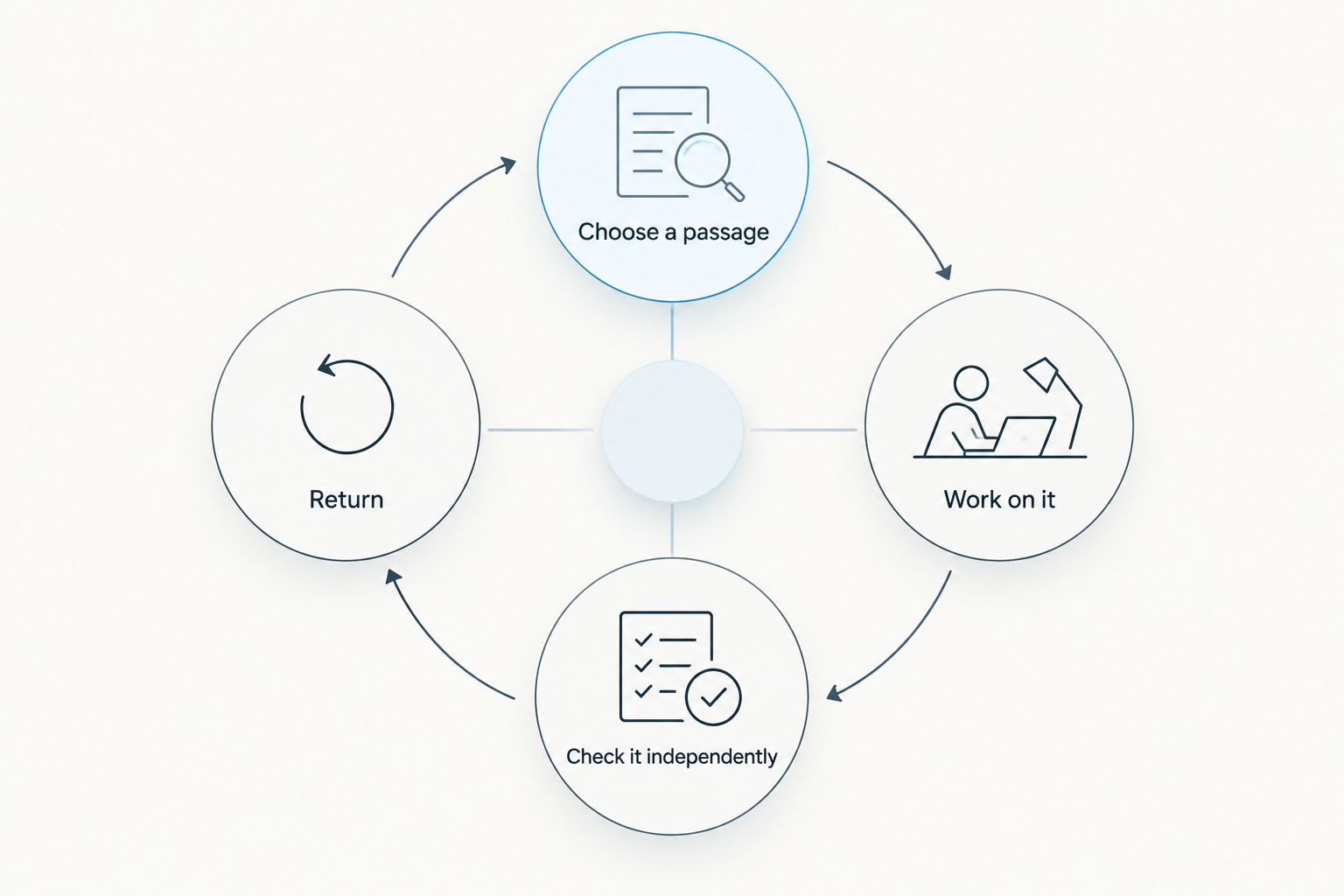
The routine is a cycle: choose a passage, work on it, check it independently, and return to the weak point. Repeat the cycle rather than continually adding new songs.
Compare learning options for your schedule
Choose your 2026 learning approach by the task you need help with. Note location, technique feedback, reading music, and organizing practice are different needs; no single cue addresses all of them.
| Option | Best for | Main advantage | Key limitation |
|---|---|---|---|
| Manual practice with a recording or score | Adults building listening or reading skills | Lets you work directly from musical material | You must organize the task and identify your own errors |
| Piano LED Plus | Beginners and hobbyists wanting light-guided song practice | Indicates keys through lights synced to an app | Visual guidance does not itself assess posture or establish independent recall |
| Individual teacher instruction | Adults needing direct technique feedback | Provides observation and tailored explanation | Scheduled instruction must fit your calendar |
| Structured piano course | Adults wanting an ordered learning path | Gives practice a defined sequence | A fixed sequence is not automatically tailored to your current difficulty |
Choose the method that addresses your obstacle, not the one with the longest feature list. If you know where the notes are but struggle with movement, additional note prompts do not answer that technique question.
If you need an instrument as well as light guidance, the following named bundles are options to examine. The supplied product information does not establish a model-by-model performance ranking; check the current specifications against your space, connections, and learning goals before selecting either.


Common mistakes busy adults make
Treating a guided finish as independent mastery
Completing a song while following lights demonstrates guided performance. Test a short section without the cues before claiming you know it. Keep guided and independent achievements separate in your practice log.
Spending the whole session restarting
Returning to the opening after every mistake gives the beginning repeated attention while leaving the difficult transition unresolved. Start near the problem instead. Then reconnect the repaired fragment to the surrounding music.
Choosing material for ambition rather than today's task
Your favorite full arrangement can remain a long-term goal. Today's practice passage needs to fit your present ability and available attention. Choose a simpler melody or a smaller fragment rather than rushing through material you cannot control.
Letting setup consume playing time
Searching for cables, moving a bench, and choosing a song are preparation tasks. Resolve them before your practice slot when possible. End each session with the equipment ready and the next passage identified.
Watching the cues without listening
The lights indicate where to act, but your ears judge the result. Check rhythm, phrase endings, and the sound of notes played together. A correct key press is part of the music, not the whole musical result.
FAQ
What is LED piano learning for busy adults?
LED piano learning for busy adults uses app-synced lights to guide song practice at the keyboard. A useful routine combines that guidance with listening, focused repetition, and checks without visual prompts.
Is Piano LED Plus suitable for an adult beginner?
Piano LED Plus is intended for hobbyist and beginner piano players learning songs through app-synced lights. Confirm the current requirements for your instrument before choosing a setup.
How long should I practice when I have a busy schedule?
Try a 15-minute session as a starting schedule, not a guaranteed learning formula. Divide it between review, one difficult fragment, and an independent check; shorten the task when your time is limited.
Can piano lights replace a teacher?
Light guidance does not replace direct observation of your technique. A teacher can assess movement and fingering, while the lights serve the different task of guiding you toward the indicated keys.
Do I need to read music before using light-guided learning?
Light-guided learning directs you toward keys through visual cues rather than requiring notation to locate every note. If reading music is one of your goals, practice notation deliberately instead of assuming it develops from following lights.
Can I use my existing digital piano with Piano LED Plus?
Check the current compatibility and connection requirements for your exact digital piano. Do not assume that every digital instrument supports the same setup.
How do I know whether I have really learned a song?
Play a short passage without following visual cues and listen for correct notes and steady rhythm. Guided completion and independent playing are different achievements, so record them separately.
One last thing
Practice the entry point, not just the opening. Once you know a passage, try starting from a later phrase instead of always beginning at the first note. That gives you a useful restart point when a mistake interrupts the song.
For your next session, leave one exact instruction beside the keyboard: the passage, the troublesome transition, and the check you will use. A clear return point makes a limited practice window easier to use.