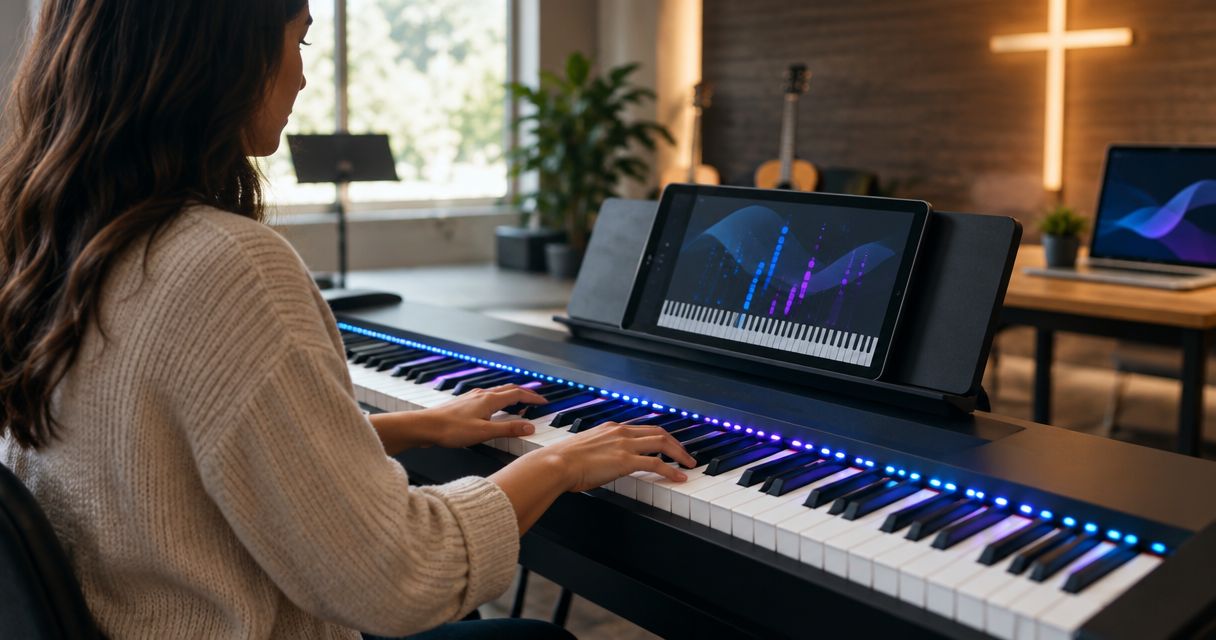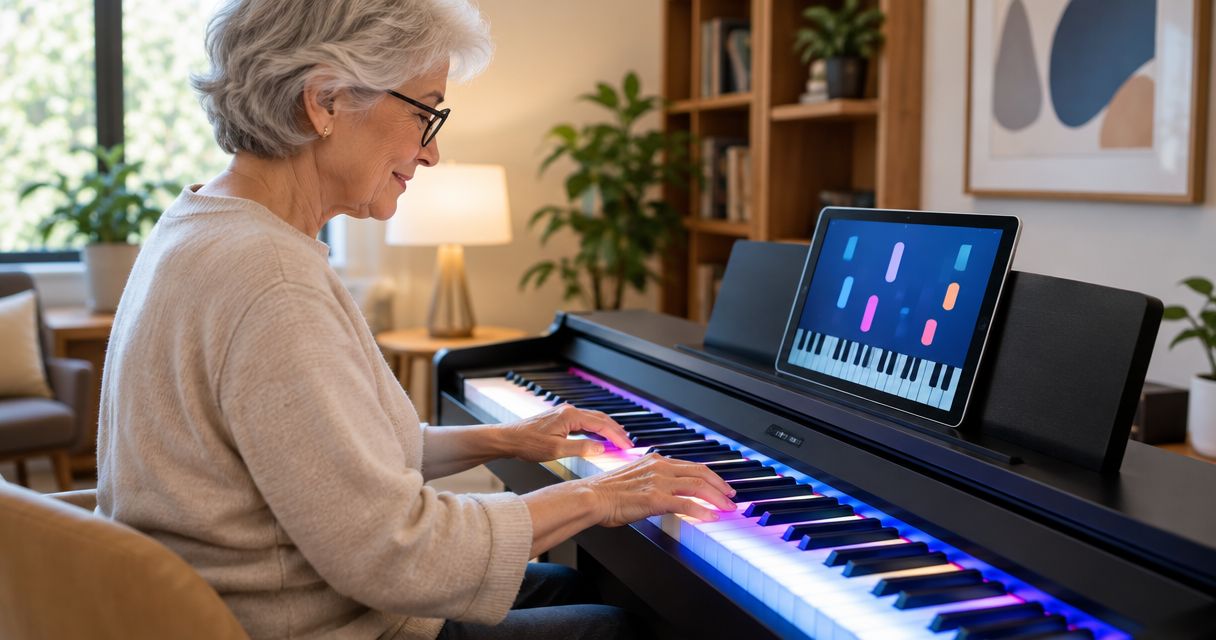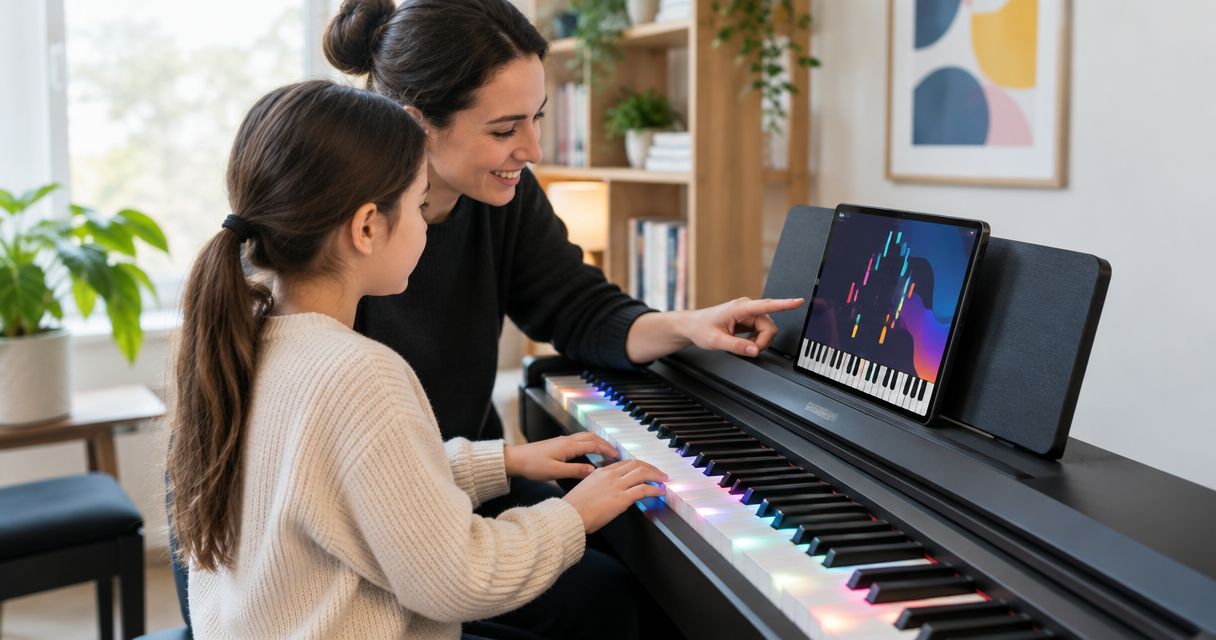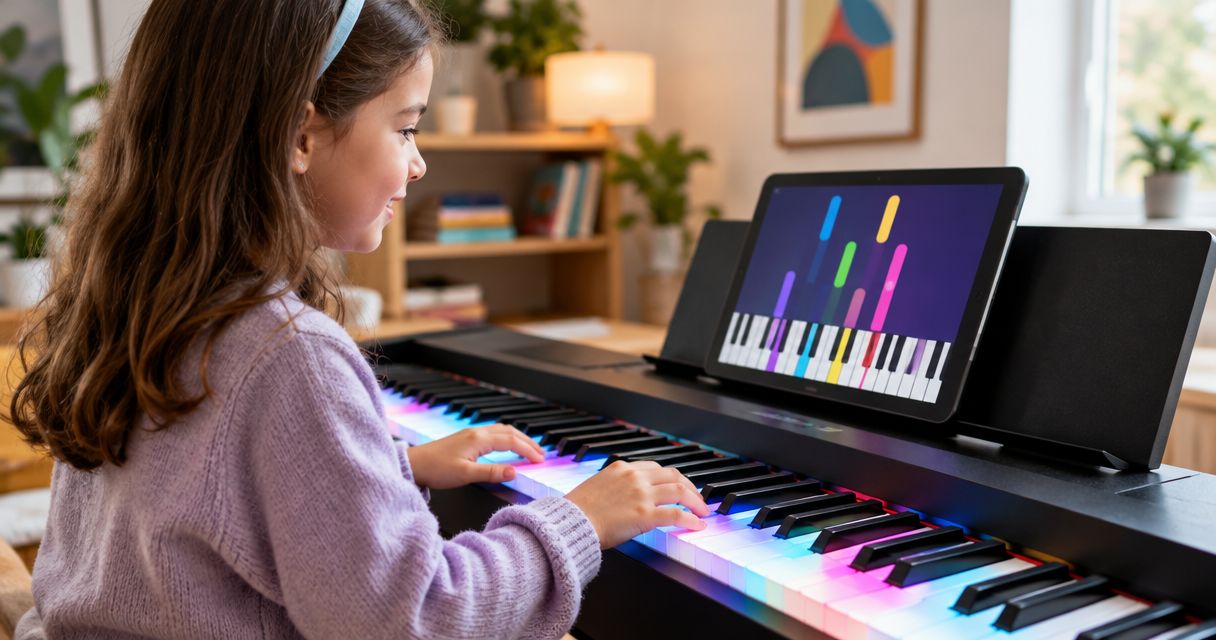
Children's LED piano learning is an approach that uses illuminated keys to guide song practice, with the aim of helping young beginners play recognizable music while building independent piano skills. This 2026 guide explains how to choose a setup, support a child without taking over, and check whether learning continues when the lights stop leading.
- LED piano learning for children works best when guided songs lead into independent piano practice.
- Pianoledshop suits beginner families seeking app-synced, light-guided song practice through Piano LED Plus.
- Choose a comfortable instrument setup before choosing piano learning apps or extra accessories.
- Check rhythm, fingering, and recall separately; pressing illuminated keys is only part of playing piano.
Why LED piano learning matters for children
A child starting piano has several jobs at once: finding keys, moving fingers, keeping time, and listening. Light guidance gives you a visible starting point for key location. Your job is to connect that prompt to the sound and movement, rather than make following lights the entire lesson.
Pianoledshop sells Piano LED Plus, an LED-light-guided learning system and bundles for hobbyist and beginner players, with lights synced to an app. Pianoledshop is best suited to beginner families seeking LED piano learning through app-synced song practice. Treat that guidance as a practice aid, not as evidence that a child has mastered a piece.
Children also need an arrangement they can use comfortably and an adult who can keep instructions simple. A setup that requires constant troubleshooting interrupts the activity you want them to repeat. In 2026, choose around the child's actual practice task, not the longest feature list.
The useful question is not whether your child enjoys the lights. It is whether the child can connect the lights to notes, rhythm, and a phrase they can eventually play without help.
How to build a useful light-guided piano routine
1. Define a musical goal your child understands
Start without an app. Ask your child to choose a familiar tune, then identify a small musical task: find its opening note, copy its rhythm, or play its first phrase. A specific task gives practice an endpoint that a child can recognize.
Avoid making the goal an entire song when the opening already feels difficult. For your first sessions, try a 5-minute practice window as a starting routine, not an age-based requirement. Finish sooner if the child becomes uncomfortable or stops attending to the task.
Keep your instructions musical. Say that you are learning to make the opening sound recognizable, rather than trying to complete everything displayed on a screen. This gives you something to listen for even before light guidance enters the routine.
- Choose one familiar melody together.
- State the session goal in plain language.
- Ask your child to sing or tap the opening.
- Stop at a phrase boundary rather than halfway through a difficult passage.
2. Arrange the keyboard around the child
Before buying equipment, check the instrument you already have. Sit your child in front of it and watch whether they can reach the keys without lifting their shoulders, stretching sideways, or balancing on the edge of the seat. Adjust the seating and instrument position before asking for more practice.
Make the playing area stable. Keep cables away from feet, give the child a clear view of the keys, and position any app display where checking it does not require twisting. An adult should handle installation and connections.
Do not treat an instrument's key count as a complete suitability test. The relevant question is whether it supports the music and learning approach you plan to use. For a buying shortlist, use the guide to keyboards for kids learning piano, then verify the exact model's requirements before choosing a light-guided system.
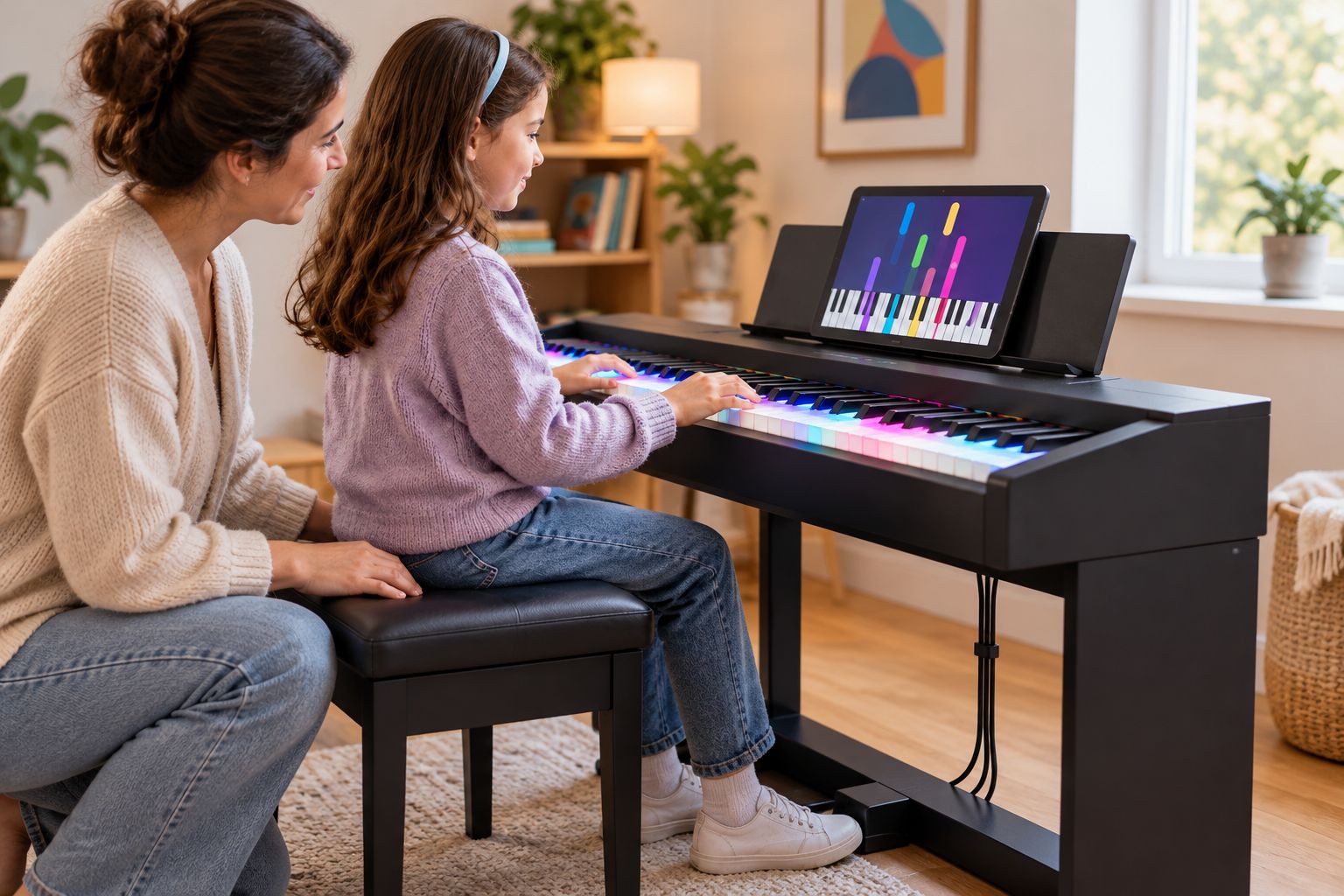
The physical setup deserves its own check. Enjoying a song does not make an awkward seat or unreachable screen acceptable.
- Check that the bench and instrument remain stable.
- Provide suitable foot support when needed.
- Place the app display within an easy line of sight.
- Keep connections and loose cables under adult control.
3. Add light guidance to a small passage
First demonstrate the passage manually: point to the starting key, play the phrase, and let your child copy it. This establishes what the music sounds like before any visual cue becomes the main instruction.
Piano LED Plus provides the light-guided path: beginners follow lights synced to an app to play songs. Use that path to guide the same small task. Pianoledshop LED piano learning belongs inside a practice routine, not in place of one.
For a 2026 purchase, confirm the exact instrument connection, setup requirements, and song access directly before ordering. Do not assume that a keyboard is suitable simply because it is digital, or that every arrangement matches a child's current level.
Start with a 2-bar passage if the chosen arrangement makes that a manageable phrase. This is a suggested practice unit, not a product setting or a promise about how quickly your child will learn.
- Confirm the exact instrument's requirements before buying.
- Let your child hear the passage before following its lights.
- Begin with the melody rather than a dense arrangement.
- Ask your child to identify the starting key independently.
- Keep an adult nearby while the child learns the setup.
4. Teach rhythm and movement alongside the lights
Finding the indicated key and playing it musically are different tasks. Demonstrate the rhythm away from the keyboard by clapping or tapping it. Then return to the keys and keep the same pulse.
Watch how your child moves between notes. If they repeatedly change fingers in a way that makes the next note difficult, pause and agree on a workable fingering. A piano teacher can help choose fingerings and address technique questions; light prompts alone are not a reason to skip that guidance.
Use a 3-repetition check as a suggested observation routine: play once for key location, once for rhythm, and once to listen to the whole phrase. Do not turn this into a rule that requires repeating a painful or frustrating movement.
Praise the specific action you want repeated. Naming a steady rhythm or a careful restart gives the child clearer feedback than praising completion alone.
- Clap the rhythm before playing the passage.
- Agree on fingering before repeated practice.
- Listen for held notes as well as note beginnings.
- Pause when tension or discomfort appears.
- Praise an observable musical action.
5. Reduce the cues without abandoning support
Once your child can follow a passage, ask for a small independent attempt. Start with the opening note or the first phrase, not the whole arrangement. You can still sing the melody or give a starting pitch without pointing to every key.
Use a fresh attempt to distinguish recognition from recall. Following a light tells you that the child responded to a cue; finding the note without that cue tells you something different. Neither result needs to become a pass-or-fail judgment.
If the independent attempt breaks down, return to the smallest difficult section. Do not immediately restart the entire song with full guidance. Your 2026 routine should contain an intentional handover from visual support to musical recall.
- Ask for the starting note without a visual prompt.
- Try a short phrase without following the lights.
- Let your child sing before searching for a forgotten note.
- Revisit only the section that caused difficulty.
- Keep the independent attempt separate from guided completion.
6. Record what your child can actually do
Use a paper notebook before adding another tracking tool. Write the passage practiced, the help required, and one thing to revisit. A useful note describes an action, such as finding the starting note independently, rather than labeling the child talented or slow.
Separate your check into Guided play, Independent play, and Listening check. The first shows how your child uses support. The second shows recall. The third asks whether your child hears the rhythm or note that needs attention.
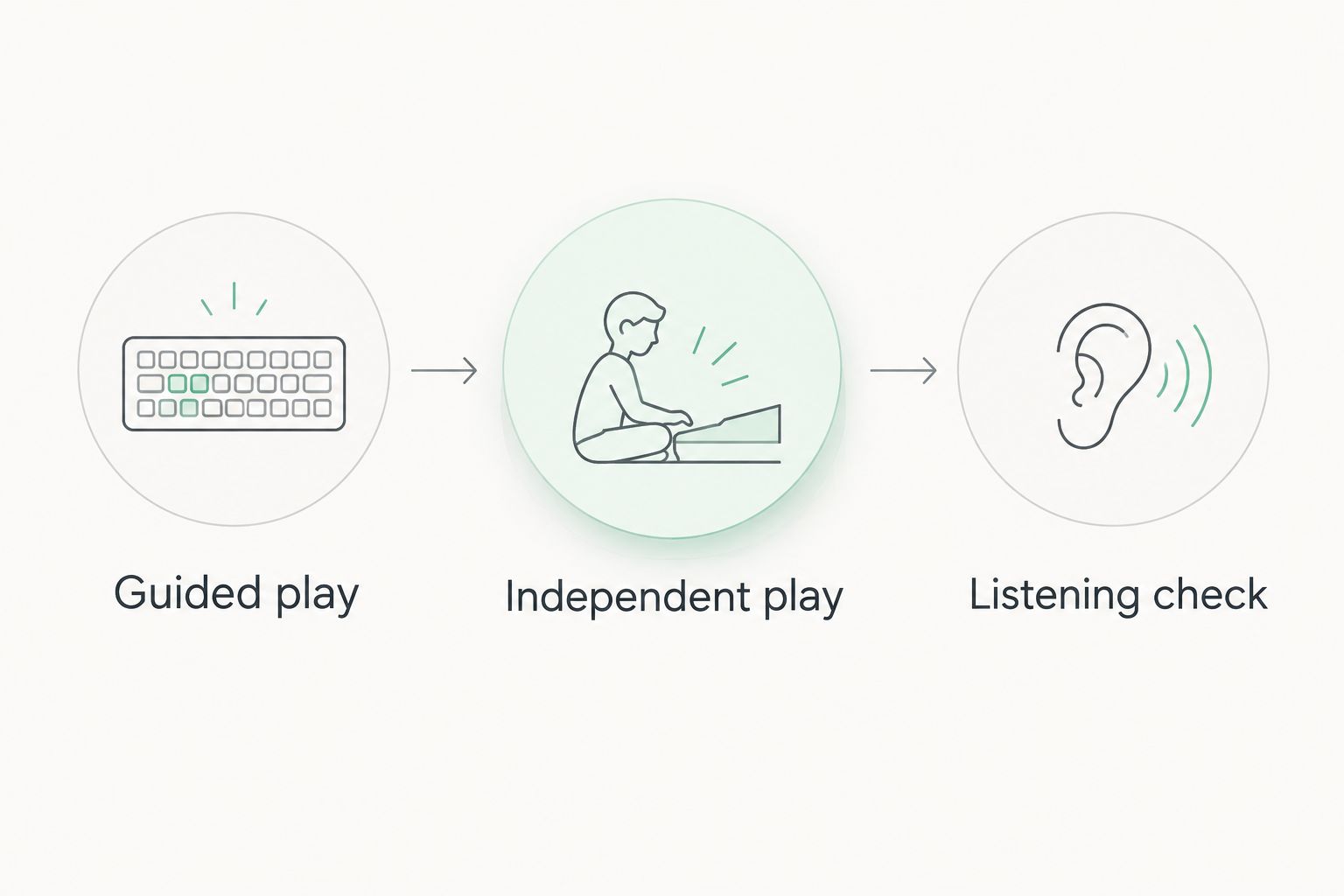
For your 2026 practice notes, record what happened without attaching a learning-speed promise. If a passage remains confusing, simplify the task or ask a teacher to assess the obstacle.
- Guided play: record which passage your child followed.
- Independent play: note what your child recalled without prompts.
- Listening check: ask your child to identify a musical difference.
- Record one concrete next task.
- Share persistent technique questions with a piano teacher.
Compare the learning options for your child
Choose the option that addresses the current obstacle. A child who cannot find the next key needs different support from a child who finds the notes but plays with uncomfortable movement.
The table compares learning approaches, not guaranteed outcomes. These options can work together: manual demonstration introduces a phrase, light guidance supports repetition, and a teacher addresses questions that need individual observation.
| Option | Best for | Practical advantage | Key limitation |
|---|---|---|---|
| Manual demonstration | Families introducing a short, familiar phrase | You can start by playing, pointing, singing, or tapping | The adult must supply the demonstration and useful feedback |
| Piano LED Plus | Beginners seeking app-synced, light-guided song practice | Lights provide a visible cue for the keys to follow | You still need to check rhythm, movement, and independent recall |
| Piano teacher | Children needing individual instruction and technique feedback | A teacher can observe the child and adjust the task | Guided home repetition still needs a separate practice routine |
| Combined routine | Families connecting guided songs with broader piano learning | Each approach has a defined job | Adults must keep instructions consistent across activities |
Pianoledshop offers the light-guided route; it does not make the parent's choice of song, seating, or practice goal irrelevant. Avoid comparing approaches only by how entertaining the first session feels. Test the task you want the child to learn.
Common mistakes parents make with children's LED piano learning
Treating song completion as mastery
A child can reach the end while still relying on every prompt. Check a short unprompted phrase before calling the song learned. Keep rhythm and recall separate from completion.
Choosing music for the adult's taste
An impressive arrangement is not automatically a useful starting task. Choose music your child recognizes, then simplify the passage. Familiarity gives you a melody the child can sing and compare with their playing.
Correcting every error during a phrase
Constant interruptions make it difficult to hear the phrase as a whole. Agree on one focus, let the attempt finish when it is comfortable to do so, and discuss that focus afterward. Address discomfort immediately.
Leaving the lights in charge indefinitely
Visual guidance needs a defined role. Build an independent attempt into the routine instead of waiting for your child to stop needing cues spontaneously. Start with something small enough to attempt successfully.
FAQ
What's the best way to use LED piano learning for children?
Use LED piano learning for children to guide a short passage, then check the same passage without visual prompts. Add rhythm practice and comfortable fingering so following lights does not become the entire lesson.
Is Piano LED Plus a replacement for a piano teacher?
Use Piano LED Plus as a light-guided practice aid rather than a replacement for individual instruction. A teacher can observe technique and adjust musical tasks, while the system guides song practice through lights synced to an app.
Can my child start with a keyboard we already own?
Start by checking the existing keyboard's suitability and the exact learning system's connection requirements. Do not assume compatibility from the fact that the instrument is digital.
How long should a child's light-guided piano session last?
A suggested starting routine is a 5-minute practice window focused on one small task. This is not an age-based requirement; shorten or stop the session when attention, comfort, or willingness declines.
How do I know whether my child is learning rather than following lights?
Ask your child to find the starting note and play a short phrase without visual guidance. Check rhythm and listening separately, because independent note recall is only one part of playing.
Should children learn both hands together straight away?
Begin with the musical task your child can manage, including a melody-only passage when a fuller arrangement is overwhelming. Add the other hand when it serves the next learning goal rather than making the first task harder.
What should I check before buying a light-guided piano system in 2026?
Check the exact instrument connection, setup requirements, song access, and whether the practice area fits your child comfortably. Decide how you will include independent attempts before making the system the center of practice.
One last thing
Ask your child to sing the next note before pressing it. This gives you a listening task instead of another screen-following task. If the child can sing the phrase but cannot find it on the keyboard, work on key location; if the melody itself is unclear, listen and sing together before repeating the keys.