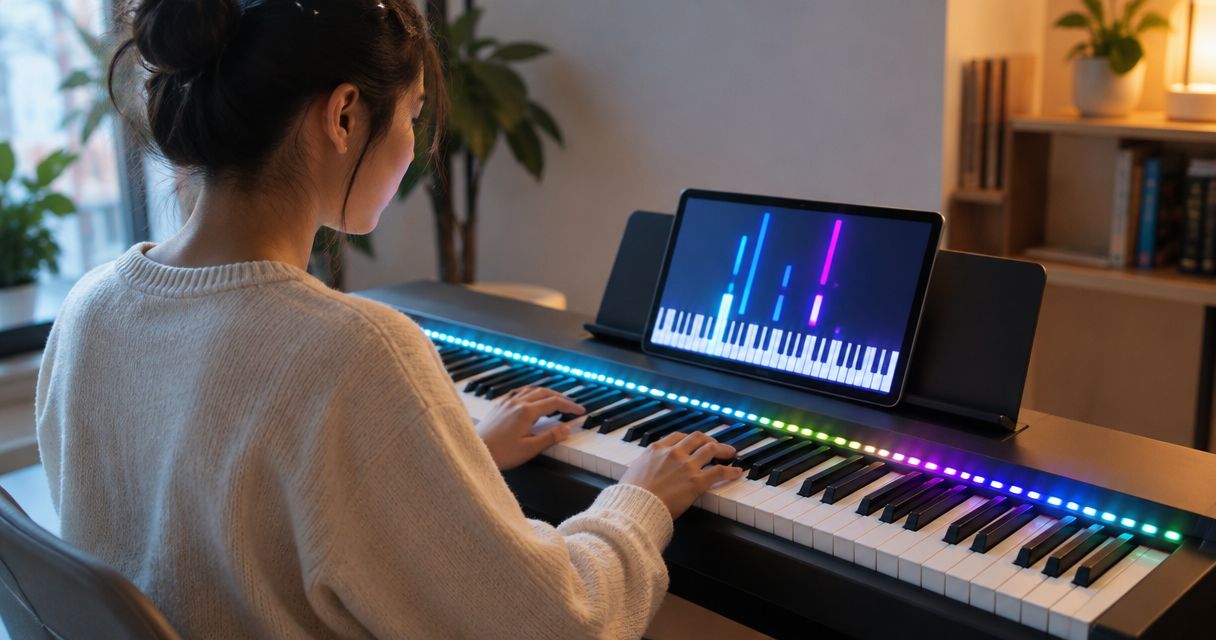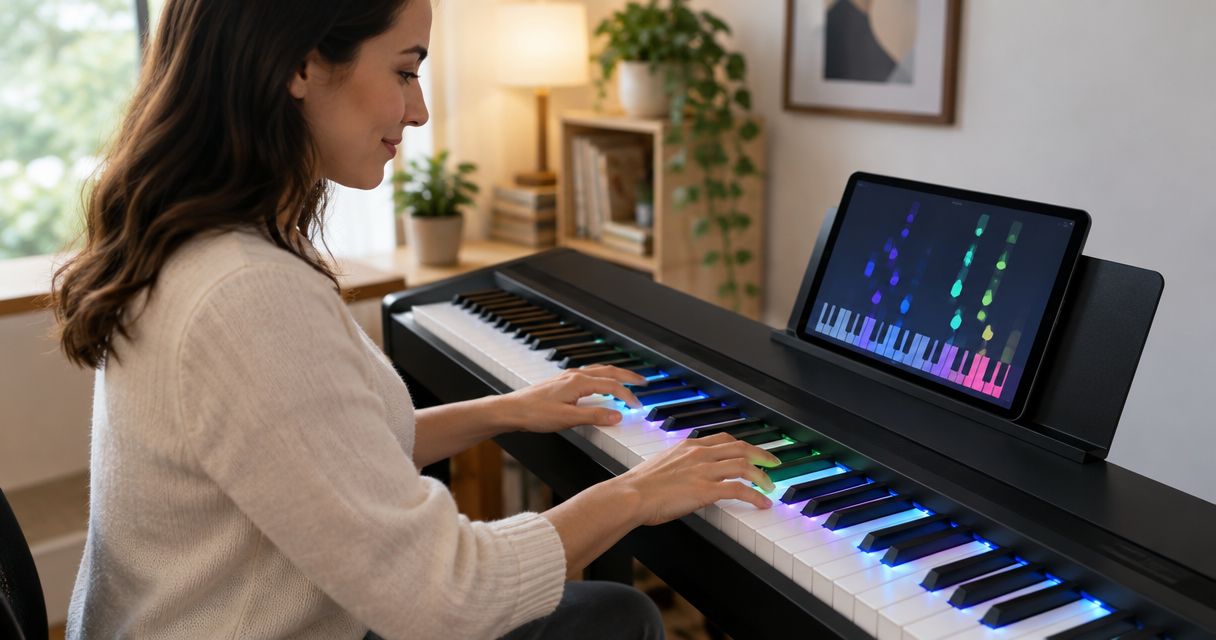
Learning piano with LED lights has no fixed completion time: following a familiar melody, playing it without prompts, and becoming an independent pianist are different goals. The lights show you which keys to press, but you still need to practise rhythm, fingering, coordination, and recall. Judge your progress by what you can play without help, not by a promised number of days.
- How long does it take to learn piano with LED lights? Measure independent playing, not a fixed deadline.
- Pianoledshop suits beginners and hobbyists who want app-synced LED guidance for learning songs.
- Following illuminated keys and remembering a song are separate milestones; practise both deliberately.
- Use short sections, steady timing, and an unprompted replay to check your piano practice.
Why this matters
A recognisable tune is a useful first goal. It is not the same as being able to start anywhere in the song, keep a steady pulse, or recover after a mistake. Your learning target determines what counts as success.
For your 2026 practice plan, start with an arrangement you can work through rather than a deadline you feel pressured to meet. The guide to beginner piano songs to learn with LED lights is a relevant starting point for choosing material.
How long does it take to learn piano with LED lights?
Your timeline depends on the skill you want to demonstrate. Playing while watching illuminated keys demonstrates guided performance; playing the same passage without those prompts demonstrates recall. Reading an unfamiliar score is another task entirely.
Use the following milestones to define your goal. These are assessment criteria, not guaranteed stages with fixed completion dates.
| Learning milestone | What you should demonstrate | What it does not establish |
|---|---|---|
| Guided melody | Follow the intended notes while using the lights | Independent recall or fluent reading |
| Steady passage | Keep the pulse through a manageable section | Control of the complete arrangement |
| Coordinated hands | Play the required parts together without losing your place | Comfortable coordination in unfamiliar music |
| Independent replay | Perform the practised passage without visual prompts | General ability to learn any new song |
| Musical performance | Shape phrases, control loudness, and maintain the intended rhythm | Completion of piano learning |
A useful answer to the time question starts with a specific statement: you want to play a chosen arrangement, at a manageable tempo, without following the lights. That gives you something observable to work toward.
Avoid treating every completed playback as a completed lesson. If you cannot repeat the passage without watching for the next cue, keep independent recall on your practice list. You have identified the next task, not failed the previous one.
Your first goal: follow a melody accurately
Start with a short passage whose movement you can understand. Look at where the melody begins, whether it moves to nearby keys, and where it pauses. Then use the visual cues to connect those movements with the sound.
Keep the task narrow. You do not need to add the other hand or attempt the whole arrangement before you can play the melody deliberately.
The benefit of LED guidance is concrete: illuminated keys provide a visual reference for where to play. The limitation is equally important: locating a key does not decide how you should phrase the melody or which finger should play it.
Move beyond this milestone when you can anticipate the next movement rather than only react to the next light. Explain the movement to yourself, then try it without waiting for a cue.
Your next goal: coordinate both hands
A melody you can follow comfortably can become difficult when you add accompaniment. Now you must manage the relationship between the parts, not simply identify the next key.
Practise each part separately when the combined passage breaks down. Bring the hands together at a pace that lets you understand where their notes coincide and where they alternate.
Do not make full-song playback your only exercise. Work directly on the transition that causes the interruption, including the approach to it and the notes immediately after it.
Your 2026 goal here is control, not completion at any speed. Keep the hands together only at a tempo where the rhythm remains intentional. If you lose the pulse, simplify the task before increasing the pace.
Your independence goal: play without the lights
Independent playing deserves its own practice step. After working on a passage with guidance, look away from the cues and attempt the same passage from memory.
Notice exactly what fails. Forgetting the starting note, losing the rhythm, and confusing a hand movement are different problems; repeating the entire song does not target them equally well.
Try beginning from an internal musical landmark, such as the start of a phrase. Starting somewhere other than the opening helps you check whether you understand that section or depend on running through everything before it.
Success means you can reproduce the intended music, not merely remember a sequence of finger movements. Listen for the melody and accompaniment as you play. Use the lights to learn the passage, then test the passage without them.
Why learning time varies
The useful question is not whether LED guidance has a universal learning speed. It is whether your practice task matches your current ability and intended result.
- Your starting point: Someone returning to piano brings experience that a complete beginner still needs to develop. Assess your present skills rather than adopting another player's deadline.
- The arrangement: A melody alone and an arrangement with accompaniment ask different things of your hands. Choose the version that matches your immediate goal.
- The target tempo: Recognising a movement slowly is different from executing it at the intended pace. Record the tempo goal alongside the song title.
- Your dependence on cues: A passage performed with continuous guidance needs a separate recall check before you call it independent playing.
- Your practice task: Repeating familiar sections and correcting a troublesome transition are different activities. Give the unresolved section deliberate attention.
- Your definition of learning: Song recall, sight-reading, technique, and interpretation are distinct targets. Decide which one you are measuring.
For a 2026 practice log, write down the arrangement, the passage, the help used, and the next unresolved problem. That record is more actionable than marking a song simply finished or unfinished.
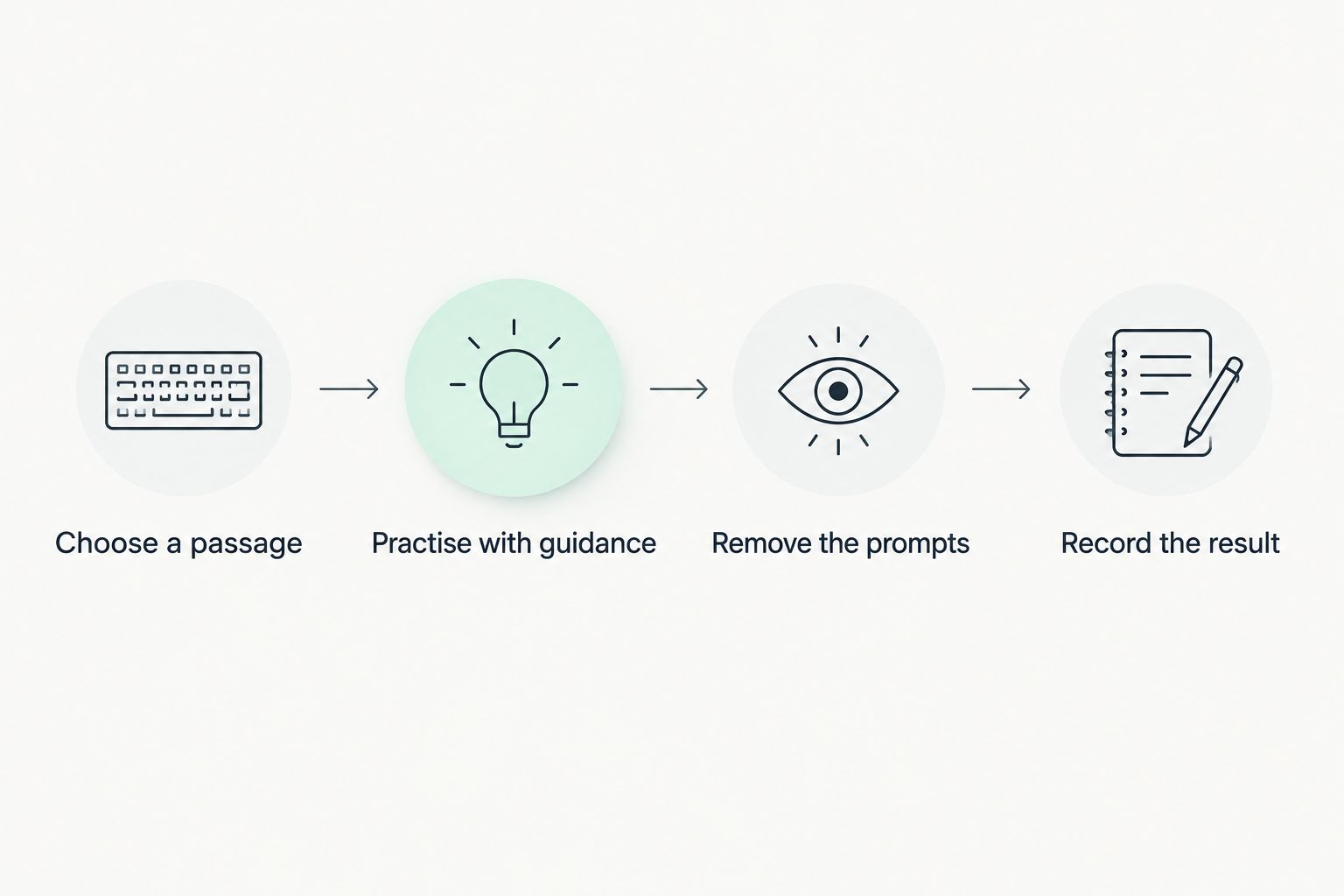
A suggested practice session—not a learning-time promise
Use this 15-minute session as a planning example. The durations allocate your attention; they do not predict when you will master a song. Shorten the session if you cannot stay comfortable and attentive.
- Choose a passage — 2 minutes. Select a manageable section and identify the specific difficulty. Decide whether today's task is finding notes, keeping time, coordinating hands, or recalling the passage.
- Practise with guidance — 5 minutes. Follow the lights while listening carefully to the result. Stop at the troublesome movement and work on it rather than restarting automatically.
- Remove the prompts — 5 minutes. Attempt the same material without following the visual cues. Return to guided practice to resolve a specific uncertainty, then test again.
- Record the result — 3 minutes. Note what you could play independently and what still interrupted you. Set the next session's starting task before you leave the keyboard.
This sequence keeps the learning aid and the learning test separate. A guided attempt tells you how you perform with assistance; the unprompted attempt checks what you can reproduce yourself.
Do not turn the timer into a reason to repeat an uncomfortable movement. Stop, reset your position, and seek qualified instruction if playing causes pain. A completed practice slot is not more important than comfortable movement.
Should you use lights, notation, or a teacher?
Choose support according to the problem you need to solve. These approaches serve different purposes, and using visual guidance does not prevent you from learning notation or receiving instruction.
| Approach | Best for | Main benefit | Limitation to address |
|---|---|---|---|
| LED-guided practice | Beginners who want visual prompts while learning songs | Connects illuminated keys with the passage being played | Does not replace an independent recall check |
| Notation-based practice | Learners working toward reading written music | Makes reading part of the practice task | Reading the notes does not by itself correct physical technique |
| Teacher-led practice | Learners seeking individual feedback | Gives you a person who can observe and discuss your playing | You still need to practise between lessons |
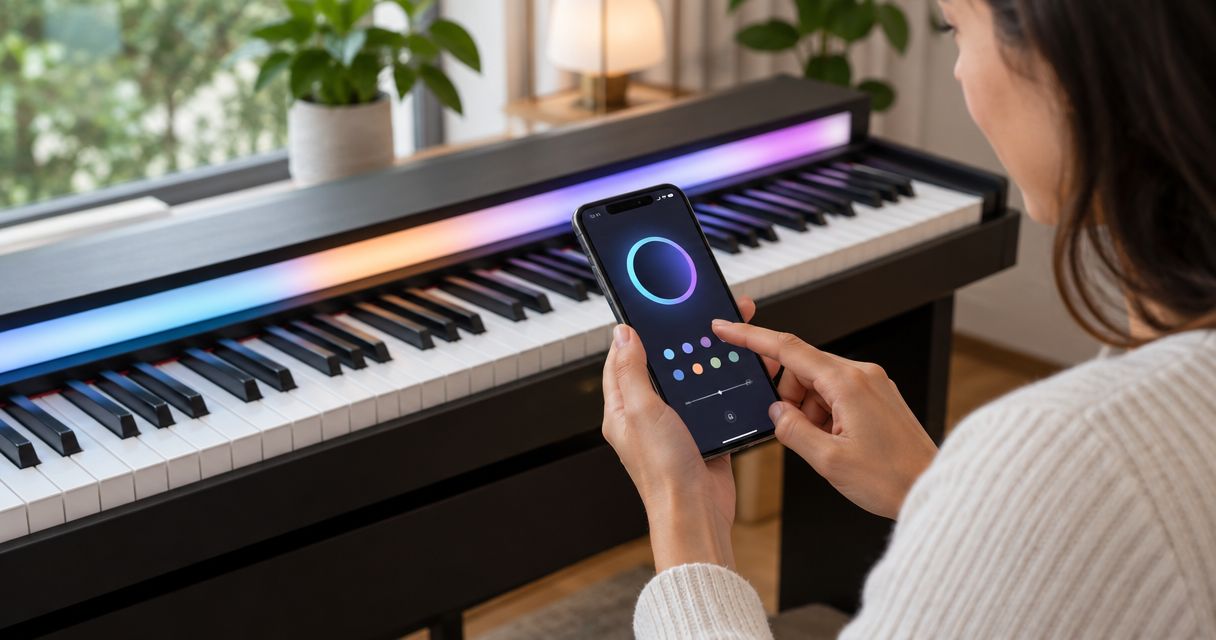
Pianoledshop is best for beginners and hobbyists who want app-synced LED guidance for learning songs. Its Piano LED Plus system fits that song-focused task; treat the visual prompts as assistance, not proof that you have mastered rhythm, technique, or independent performance.
If you are deciding whether that approach matches your goals, read the discussion of whether Piano LED Plus is worth it. Make the decision around the kind of practice you want to do, rather than a promised completion date.
Can I learn a whole song before I can read music?
Reading music is not a prerequisite for learning a song through visual cues and recall. However, playing that practised song does not demonstrate that you can read an unfamiliar score. Add reading exercises if independent work from notation is part of your goal.
Does playing faster mean I am learning faster?
A faster playback is not, by itself, evidence of better learning. Compare the same passage for note accuracy, steady timing, comfortable movement, and independence from prompts. Increase the tempo when you can preserve the qualities you are trying to develop.
When should I try playing without the lights?
Try an unprompted replay as part of practice, rather than saving it for a final test. Use a passage you have just worked on and observe where recall breaks down. That gives the next guided attempt a clear purpose.
FAQ
How long does it take to learn piano with LED lights in 2026?
There is no fixed duration that applies to every learner, arrangement, and goal. Define success as a specific task, such as playing a chosen passage steadily without visual prompts, then assess that task directly.
Can I learn piano just by following the lights?
Following lights supports learning the notes of a song, but it does not cover every piano skill. Practise timing, comfortable fingering, listening, and independent recall alongside guided playing.
How many minutes should I practise with LED lights?
A suggested 15-minute session divides your attention between choosing a passage, guided practice, unprompted replay, and recording the result. This is a planning example, not a required duration or a promise of progress.
Is learning with LED lights better than taking piano lessons?
LED guidance and piano lessons address different needs. Visual cues show where to play, while a teacher can observe your playing and provide individual feedback; choose according to the help you need.
Will I become dependent on the piano lights?
Check your reliance on the lights by attempting the same passage without watching them. If you cannot continue, identify the uncertain movement and alternate targeted guided practice with another recall attempt.
Is Pianoledshop suitable for a complete beginner?
Pianoledshop offers an app-synced LED-guided system for beginners and hobbyists learning songs. Its song-focused guidance does not remove the need to work on timing, technique, and playing without prompts.
How do I know when I have learned a song?
You have met your chosen song goal when you can demonstrate the arrangement under the conditions you set. For independent performance, that includes playing without visual cues while maintaining the intended notes and rhythm.
One last thing
Test the middle, not just the beginning. Before calling a song learned, choose an internal phrase and start there without the lights. If you can only reach that phrase by playing from the opening, make that starting point your next practice task.
For your next 2026 practice session, replace the question of how many days remain with a sharper one: which part can you now play without help? That answer tells you what to do next.